
Sabine Mauderer on the past, present and future of the NGFS
Bundesbank official discusses green policy, the Fed, data blind spots and future prospects

How has the work and the mission of the Network for Greening the Financial System evolved since its foundation to today?
The NGFS was founded in the aftermath of the Paris Agreement in December 2017. You can tell from the name, Network for Greening the Financial System, that it was meant to be a community reflecting on the role of the financial system with a view to the objectives of the Paris Agreement. I think the organisation did a pretty good job of reflecting on the broader economic impacts of climate change and how those impacts affect the mandates of central banks and supervisory agencies.
From my perspective, rather than ‘greening’ the financial system it’s about dealing with climate- and nature-related risks, addressing and managing them. We don’t make climate policy, but we do have a duty to address and mitigate financial risks and, over the past few years, those climate and nature risks have become increasingly important. That’s crucial everywhere, not just in the global south. Climate change can also influence inflation, particularly through food and energy prices.
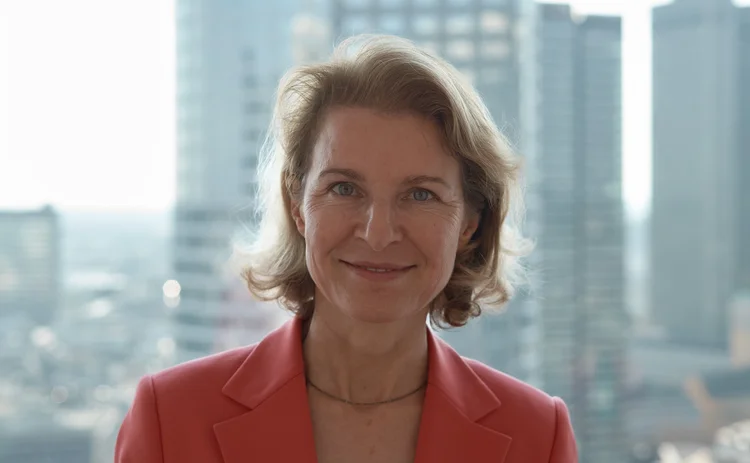
Sabine Mauderer is the first deputy governor of the Deutsche Bundesbank, responsible for markets and sustainability, as well as controlling, accounting and organisation. Mauderer is the alternate to the president of the Bundesbank on the ECB’s Governing Council and the Bundesbank’s deputy in the G20 and G7 and at the International Monetary Fund. In addition, she is chair of the Central banks and Supervisors Network for Greening the Financial System (NGFS), and a member of the Exchange Experts Commission.
Prior to becoming first deputy governor in September 2024, she had been a member of Deutsche Bundesbank’s executive board since September 2018. Previously, she also held several senior positions at the KfW Banking Group, and worked as a senior adviser at the Federal Ministry of Finance and at the German Embassy in Washington, DC.
Mauderer was born in Schleswig in 1970. She studied law in Germany and Spain, holds a PhD from Osnabrück University and an Executive MBA from ESSEC & Mannheim Business School.
Does this mean higher price volatility for food and energy, or these items showcasing higher price growth rates thanks to climate events?
It depends on the region. In many countries, especially in the global south, weather events such as droughts and floods occur frequently enough to generate recurring and persistent inflationary pressures. In other places, climate effects are less frequent and tend to push prices only episodically, not necessarily over the medium to long term. So, for today, yes: we see direct impacts on prices, particularly for food and energy.
Has there been a change in work for the network since its foundation?
I wouldn’t say the work has changed. When we started, it was rather a network, now it is an international organisation. In 2017, there were just eight members reflecting on the issues. Now we’re 149. We were trying to understand what climate change meant and how it affected us: to what extent and in what direction. So, it’s less a change of mandate than a deeper reflection on the role of central banks and supervisors in this area.
What is the role of central banks and supervisors today in greening the financial system?
To put it in one sentence: our goal is to be vocal about an increasing source of financial risk, at the same time as addressing it and trying to mitigate it.
What does the process of onboarding a central bank look like?
We should depoliticise climate risk as a source of financial risk. It’s not about politics; it’s about numbers and managing financial risk
Practically, a central bank or supervisory agency usually gets in touch with our secretariat in Paris to say they’re interested in joining. Either I or the general secretary then contacts the governor or deputy governor to discuss their motivation. We explain what membership entails and what we typically expect. Over a few weeks, we check that both sides share the same understanding; if so, we start a formal approval process with the steering committee and then the plenary, which can raise any concerns.
New members are often asked to share experience, provide data, staff time or research capacities, but membership is fundamentally based on voluntary contributions. It’s important to understand how the NGFS works: there isn’t a single office that does everything. Our outputs, handbooks, guidelines and scenarios are produced through international collaboration and extra effort from our colleagues, often in the evenings or at weekends. So, what we expect from a new member are two things: first, alignment with our analysis that climate change matters and has economic impacts; and second, a willingness to contribute, whether by leading a workstream, joining a task force, sharing experience, or offering training and exchanges.
There are parts of the world where climate change is still more politically contentious. There are also still questions about whether tackling climate change is within central bank mandates. What is your response to them?
This has been an issue since we were founded, and there’s a single clear answer. All central banks stick to their mandates. In Europe, for example, we have a lean mandate focused on price and financial stability, not on economic growth or climate policy. That doesn’t mean we ignore climate issues: if climate change creates growing financial risks, we can’t ignore them for ideological reasons. As technocrats, we look at the data and act to keep financial risk moderated. I’d add one final point: we should depoliticise climate risk as a source of financial risk. It’s not about politics; it’s about numbers and managing financial risk.
You clearly have a very technical focus, but are there any internal politics at play? How do you make sure the network remains technically driven rather than driven by politics?
We just had our annual meeting in South Africa (March 9–11, 2026). Despite flight constraints, more than 70 countries participated and roughly 180 members attended, including many deputy governors and governors. The discussions were vivid; by the second day we were still working through curves and charts and had to work hard to stick to the programme because the debates were so valuable. I said at the start of that session that you really must be a technocrat to love this kind of work. That underlines the point: there’s no room here to downsize or politicise our activity. We remain focused on the technical tasks we are meant to do.
What happened with the Federal Reserve exit?
First, I regret that the Fed exited in January 2025. I feared others might follow. In practice, though, nothing major changed. We continued our work and activities as before. Our annual meeting last year in India, hosted by the Reserve Bank of India, showed the opposite effect: we had a record turnout of around 25 governors and deputy governors, and we received more requests to join the NGFS. So far, no other central bank or supervisory agency has exited. It didn’t have an impact on our work.
Do you think it had an impact on the network’s credibility?
Not at all.
How did the Fed contribute to the work of the NGFS?
I generally don’t comment on who contributed what, or to what extent. International collaboration is based on voluntary, shifting inputs: sometimes a region will contribute heavily, then step back for a while, then return. It’s a long-term give-and-take. People do what they can to keep the collaborative spirit alive.
What are the largest or more important publications that you are expecting to publish over the coming year?
At the beginning of April, we expect to publish new guidance for banking supervision that includes nature-related risks. It’s the first time we’re addressing nature to this extent, and the handbook is quite progressive because it puts nature alongside climate as a major threat to an economy that depends on natural assets.
One example: at Deutsche Bundesbank we looked at data on German banks and firms and found that in 2025 about 51% of loans to companies depended on at least one water-based ecosystem service. So, the dependency on water is significant, even in Germany. That’s just a small snapshot, but it signals what we observe globally: awareness of nature-related risks and of economies’ dependence on nature will grow, and that awareness needs to be strengthened.
How do you see the banking sector’s reaction to these statistics?
Banks generally have more data on climate than on nature-related assets. Nature is a very broad category. Beyond water and deforestation, there are many other ecosystem services, like plants and wildlife. Understanding each of these issues requires specific data – and we mostly don’t have that yet. So, we’re still at an early stage: trying to understand where to look and how to measure these risks. We’re not yet at the point of addressing or managing them.
The corporate sector needs to understand its supply chains and dependencies on ecosystem services – many firms probably don’t fully grasp those links yet. As that awareness improves, there will be pressure from multiple stakeholders for better data
What would you say the biggest data blind spots are today?
Definitely nature-related data.
And is that consistent across geographies? Why is that the case?
It’s similar to the situation when we started with climate data. Initially, there was very little. Even climate research took decades to build up. Early reports from the 1970s flagged risks, but comprehensive data only accumulated as the issue became more visible, especially in the global south. With nature, we’re only slowly realising its relevance, and research and central bank engagement follows that recognition. So, availability varies by region. But, overall, we’re at an early stage; I expect far more data to become available over the next 10 years as attention and investment in research increase.
Do you believe central banks have to take on more staff to improve data collection? What is the best way forward?
It’s not just for central banks. The corporate sector needs to understand its supply chains and dependencies on ecosystem services – many firms probably don’t fully grasp those links yet. As that awareness improves, there will be pressure from multiple stakeholders for better data.
Certain industries make the point clearly. The pharmaceutical sector depends on plants and water, and the fashion sector uses large amounts of water. A pair of jeans may require around 8,000 litres. So, data collection is a collective task: firms, regulators, researchers and data providers must co-operate. Central banks will likely need more analytical capacity, but the real progress comes from standardised corporate reporting, public‑private data platforms, and greater investment in research and international co-ordination.
Moving back to central banks and sovereign balance sheets, how vulnerable do you think they are to climate change today?
This is a topic that’s still barely addressed. For years we focused on corporates’ climate exposure and hardly discussed sovereign exposure, so it’s hard to quantify it exactly, but the impact on sovereigns is definitely real. One way to see the interaction is the annual insurance gap. For example, Munich Re reported roughly $224 billion in losses in 2025 due to natural disasters, with about $108 billion insured. That’s just one year. As extreme weather events become more frequent, uninsured losses will rise and, in some regions, insurance may simply be unavailable. When homeowners lose houses or firms lose plants and remain uninsured, the media coverage and public pressure on governments can be huge, and that translates into fiscal risks for sovereigns. This is just one example to illustrate that sovereigns are exposed to financial risks caused by climate change.
Sovereign balance sheets are vulnerable. So, it is important to raise the awareness of governments and prepare for those risks.
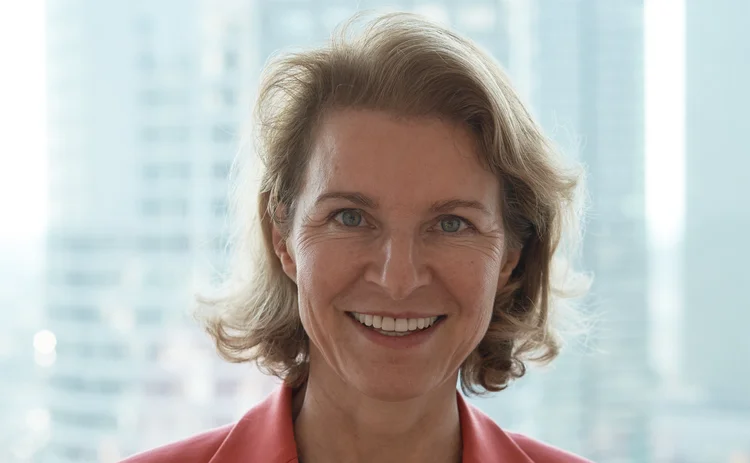
There is no such thing as greening the monetary policy of central banks. Rather, what central banks do is to take climate risk into account
Sabine Mauderer, Bundesbank
Is there not a cynical assumption there, from corporates or individuals who suffer these losses, that taking insurance out is not that important because they will end up being bailed out by their governments?
There are two things to bear in mind. First, governments need to understand what’s at stake for their fiscal space, how much burden a disaster could create and whether they can or should cover it. Second, once governments recognise the risk to their finances, they should be vocal in encouraging people and firms without insurance to get covered, and being clear on how to deal with uninsured losses.
Do you think that there should be a form of green monetary policy, or climate-friendly asset purchases?
There is no such thing as greening the monetary policy of central banks. Rather, what central banks do is to take climate risk into account. Central banks take climate risk into account within their existing frameworks. That’s an important distinction: the goal isn’t to be maximally green, it’s to ensure we cover all relevant risks in our policies and operations. For example, when the Eurosystem adjusts collateral rules to reflect climate risk, it’s acting from a risk‑management perspective. The same logic applies when evaluating corporate bonds for asset purchase programmes. Given that many central banks have been shrinking their balance sheets, it is not the moment to launch climate‑targeted asset‑purchase programmes, any action has to be driven by the mandate and by risk considerations – for example, collateral quality.
What effect will the new Eurosystem collateral framework have in this regard?
The main effect will be to make issuers and our counterparties, the banks and financial institutions, more aware of climate‑related risk factors. By reflecting those risks in collateral rules, it should also enhance the financial market participants’ understanding of their own exposures.
What can supervisors do to ensure transition plans are credible and not just box‑ticking exercises?
Supervision becomes harder when reporting frameworks are changing. A supervisor’s job is to make sure institutions identify and address the risks they face, and that includes climate and nature‑related risks. That means banks must engage with their corporate clients and ask, ‘what are your risks, how are you managing them, what does your portfolio look like?’ It’s a difficult task for banks, especially while regulatory requirements for their clients change, but it’s essential because these are material financial risks.
Is this the attitude you would like to see supervisors taking?
I’m not advocating for any particular policy, as I’m not a climate policy-maker. The point is procedural. Supervisors should consider all potential financial risks. If climate or nature risk is a financial risk, they must take it into account from a risk management perspective, not to push green policy.
Do you foresee a future where climate-related risks start entering monetary policy discussions?
Diversity of experience matters. As someone from Europe, I see our risks from droughts, wildfires, some water scarcity and floods; but colleagues from Mozambique, Jamaica and other island states report back‑to‑back shocks
Yes. Our last NGFS annual meeting in Pretoria made that clear. Governors and deputy governors, especially from the global south, described how climate impacts are already materialising for them, through spikes in energy and food prices. It is hard for them to understand why some regions don’t acknowledge these effects, because they experience them directly.
That diversity of experience matters. As someone from Europe, I see our risks from droughts, wildfires, some water scarcity and floods; but colleagues from Mozambique, Jamaica and other island states report back‑to‑back shocks. They tell us people turn up at the central bank asking why interest rates are rising and central banks are keeping reserves when they’ve just lost homes or livelihoods. Those realities make international co-operation essential, and they already push climate‑related risks into central bank conversations.
Do you think in the next five to 10 years the NGFS will mature into a sort of forum where central banks from the global north will either choose to, or be forced to, learn from their southern counterparts?
This is already the case. Returning from South Africa, and earlier from India, made that clear. As chair, my priority has been to make the NGFS even more inclusive: to encourage African, Latin American and South-east Asian central banks to join and to participate, share their experiences and contribute more actively.
That engagement is already paying off. Hearing directly from colleagues in those regions teaches us things we wouldn’t learn otherwise: what kind of inflation drivers they face, the time horizons they worry about, how economies and firms cope with repeated extreme events, and how households react. Those lessons are hugely valuable for all members, and I expect that learning to deepen over the next decade.
How does that affect the work of the network overall?
Adaptation work has become another point of focus. For example, the Task Force on Adaptation is led by the European Insurance and Occupational Pensions Authority together with the Central Bank of the Philippines. It was crucial to involve an emerging economy that’s already severely affected by climate change. Their experience will be reflected in our reports and shared documents. For us, it’s essential to learn from and share this knowledge and experience globally.
What is the unique feature of the NGFS that enables this to take place?
The NGFS’s unique feature is that it’s a voluntary platform. We ask members to contribute, but we don’t require them to implement our recommendations, documents or scenarios – that choice is up to each institution. That keeps us agile.
Let me give an example from my own experience. I joined NGFS in May 2019 as head of the monetary policy workstream. My first major paper proposed various measures to integrate climate into monetary policy operations, including targeted lending, a tool already used in some emerging markets. When the paper was published, I got many calls from former central bankers saying, “What are you doing? Our mandate is price stability.” I was clear. I respect those mandates. At the same time, NGFS is an international forum reflecting many different mandates. Back then we had 89 members, some with much broader responsibilities than, say, the Eurosystem. So, we offered options for those who might want them; nobody was obliged to adopt them.
That’s the point. Because we’re voluntary and diverse, we can present a menu of approaches and let each member pick what serves them. And because we’re agile, we can produce useful documents quickly, often within 18 months rather than several years.
We are one of the few, if not the only, organisations that officially address the economic impacts of climate change, and we provide a public good. That’s why maintaining political independence is essential
What do expect to be the biggest achievements for the NGFS in the next five to 10 years?
For me, the NGFS scenarios must remain our flagship product. I expect our recently-released short-term scenarios – covering a time horizon of three to five years – to become even more prominent. However, long‑term scenarios will still be essential. Today, we rely a lot on external resources for this work; the goal over the next five to 10 years is to internalise more of that work within central banks. That requires much stronger interdisciplinary collaboration: economists need to understand the scientists, and scientists need to understand the economists.
I also want to see our work on adaptation and on nature risks expand. And it’s important to offer training so every central banker can understand climate- and nature‑related risks and translate that understanding into daily work. Language barriers matter too, as most documents are in English, so practical tools (AI translations, tailored courses) will help broaden access.
I think the NGFS’s work is becoming increasingly important in these politically difficult times. We are one of the few, if not the only, organisations that officially address the economic impacts of climate change, and we provide a public good. That’s why maintaining political independence is essential. As you may have noticed, I always argue from our mandate. I’m very aware that our independence is an asset. Our independence, combined with our analytical strength, is what makes us effective on climate‑ and nature‑related financial risks.
As younger generations grow up more climate‑aware, will the NGFS take responsibility for communicating more actively to the broader public, or will it remain a forum for central banks to disseminate through their own channels?
Our goal is to communicate much more vividly, and in a way the broader public can understand. I gave a talk at a university today and was asked how we translate our work for ordinary people. That’s a task for central banks and academia together: to bring the abstract scenarios and macro numbers down to how climate and nature risks affect everyday life. It’s not easy, but we need to move from the boardrooms to the living rooms and explain clearly what is at stake.
Only users who have a paid subscription or are part of a corporate subscription are able to print or copy content.
To access these options, along with all other subscription benefits, please contact info@centralbanking.com or view our subscription options here: www.centralbanking.com/subscriptions
You are currently unable to print this content. Please contact info@centralbanking.com to find out more.
You are currently unable to copy this content. Please contact info@centralbanking.com to find out more.
Copyright Infopro Digital Limited. All rights reserved.
As outlined in our terms and conditions, https://www.infopro-digital.com/terms-and-conditions/subscriptions/ (point 2.4), printing is limited to a single copy.
If you would like to purchase additional rights please email info@centralbanking.com
Copyright Infopro Digital Limited. All rights reserved.
You may share this content using our article tools. As outlined in our terms and conditions, https://www.infopro-digital.com/terms-and-conditions/subscriptions/ (clause 2.4), an Authorised User may only make one copy of the materials for their own personal use. You must also comply with the restrictions in clause 2.5.
If you would like to purchase additional rights please email info@centralbanking.com
More on Strategic Planning

Strategic Planning Benchmarks 2026 – model banks analysis
Additional data breakdowns shed light on different planning approaches across cohorts

Strategic Planning Benchmarks 2026 – executive summary
Data reveals shifting focus of strategic plans, plus data use and AI adoption

Strategic Planning Benchmarks 2026 report – digital strategy
Benchmarks reveal widespread data use, AI as a growing focus and ongoing digital transformation

BNM and BI boost co-operation amid ‘challenging’ geopolitics
Banks say agreement aims to promote regional stability and sustainable growth
Three-fifths of central banks use strategic progress monitoring tools
Respondents with wider set of objectives report highest usage of tools
Central banks increasingly use KPIs for strategic planning
Practice more widespread in jurisdictions that link annual reviews to all staff
Strategic control processes often data driven
Processing is implemented quarterly or bi-annually across jurisdictions
Annual reviews usually linked to strategic plans for some staff only
Remuneration commonly not linked with progress on strategic goals