
International

Dombret paints gloomy picture of low rates’ impact on banks
Bundesbank board member spells out risks associated with low interest rate environment, noting banks are more likely to take risky assets onto their books the longer it prevails

Emerging markets hit harder by US rate hikes than domestic policy – Bank of Korea paper
US rate hikes have a larger impact on growth and financial flows in emerging markets than changes in domestic policy, researchers find
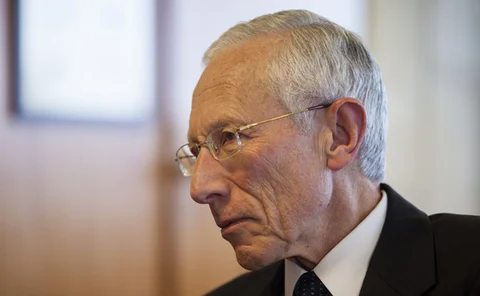
US affected by spillovers as well as causing them – Fed’s Fischer
Foreign developments can be a “substantial headwind” to US monetary policy, vice-chair says; hints at continued momentum towards a December rate hike
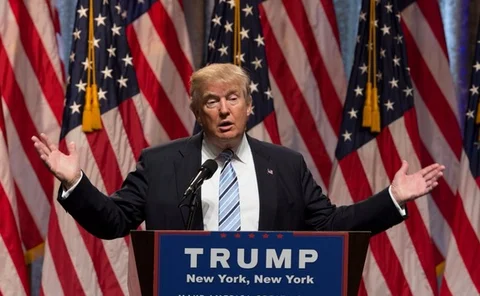
Central banks respond as markets roiled by Trump victory
Mexico hit by large capital outflows, while Swiss and Japanese central banks face large inflows; Federal Reserve likely to come under pressure

No ‘insidious’ German plan for EMU competitive advantage, says Issing
Otmar Issing says Germany didn't even have 'the economic intelligence' to design such a plan; country suffered years of high unemployment as others such as Italy failed to capitalise on price stability

Euro architect says ECB has ‘destroyed’ market discipline in Europe
Otmar Issing, the man who designed the operational framework for the euro, says failures by European politicians and the ECB mean “all the elements” are in place to bring “disaster” to the monetary union

US spillovers stronger for some countries than others – IMF paper
Paper assesses how US normalisation will spill across borders, identifying conditions where countries are most likely to be affected

ECB officials and Borio disagree on falling real rates
Vítor Constâncio and François Villeroy de Galhau emphasise importance of saving-investment mismatch, while Claudio Borio stresses financial cycle, but speakers find some points of agreement

Carney: green finance could help reverse long-run rate decline
Bank of England governor says green finance has the potential to send capital where it is most needed, and help advanced economies escape the problem of falling equilibrium interest rates

The Chinese G20 presidency may mark a turning point
Mark Uzan defends the oft-criticised G20 communiqué, arguing the Chinese presidency of the global group has created genuine progress

Japanese researchers model success and failure of international cooperation
Various factors can lead to cheating on global monetary policy cooperation, paper published by the BoJ finds – but careful design can help the agreement hold up

BIS paper digs into complex spillovers from US rates
Authors find short-run US rates have little impact on long-term rates elsewhere, but transmission at longer maturities and via bond markets is high

A year of progress for Chinese reforms, but there is much still to do
Pan Gongsheng, deputy governor of the People’s Bank of China, writes about China’s growth prospects, RMB exchange rate reform and the past years’ stock market fluctuations

Mexican deputy calls for reinforced ‘global financial safety net’
Javier Guzmán Calafell sees IMF as key player in maintaining global financial stability, but says it needs more resources, tools and legitimacy

Establishing rules of the game for the international monetary system
A traffic-light system for monetary policies could be adopted to prevent a ‘race to the bottom' spate of tit-for-tat measures adopted to address international spillover effects, argues Prachi Mishra

The renminbi and the international monetary system
Zhou Yueqiu, director of the Urban Finance Research Institute of the Industrial and Commercial Bank of China, offers some perspectives on the future role for the renminbi post-SDR inclusion

Lin Jianhai: The state of the global economy
Secretary general of the IMF Lin Jianhai offers his views on global challenges and China’s economic transition

Han Seung-soo: financial opening and the renminbi
former prime minister of the Republic of Korea Han Seung-soo explains why the time is right for a rethink on the current international financial system as well as China’s role in a proposed new system

Stanford's John Taylor on the global monetary system and central bank co-operation
The Stanford University professor talks to Daniel Hinge about how central banks can co-ordinate policy to break free from a downward spiral in interest rates

John Taylor offers way out of downward interest rate spiral
Stanford University professor says a return to more “rule-like” policy-making could help bring easing cycle to an end, with the Fed playing a key role

Towards a more stable monetary world order
A global network of independent central banks could act as a manager of expectations for asset and foreign exchange prices to reduce the burden of future crises, argues David Harrison

Latin American countries may be especially exposed to US monetary policy, paper finds
These economies may be more vulnerable than most emerging markets to the normalisation of US monetary policy, claims a Bank of Spain paper

Rajan and Mishra lay down rules of the monetary game
Authors warn current models may display the policy biases of those who built them, calling for better dialogue and analysis of monetary policy spillovers

Fed QE drives portfolio rebalancing towards foreign assets, Brazil paper finds
Research analyses ‘comprehensive’ dataset for Brazilian capital flows and a smaller one for other EM economies