
Merchants in the cash system
As policy-makers seek to protect cash acceptance and increasingly look to retailers to facilitate access to cash, Martina Horakova argues that merchants need adequate cash services themselves – and that providing cash to the public should not come at their expense
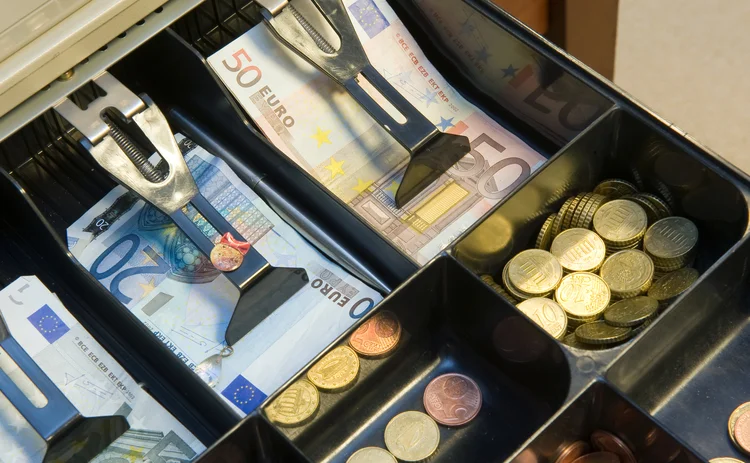

In policy-making debates, legal and other efforts on cash acceptance, the role of merchants’ access to and deposit of cash is frequently neglected. Across jurisdictions, many merchants are facing adverse and deteriorating conditions for continuing to accept cash payments. These include difficulties in deposit-taking, obtaining change (coins and low denominations), restrictive deposit limits and opening hours, longer travel distances, and rising fees. At the same time, merchants are increasingly being expected to ‘voluntarily’ provide – and pay for – access to cash as banks reduce their branch and ATMs network.
Without a framework that ensures reasonable access to cash depositing, change and related services for merchants, the resilience of the cash infrastructure and overall payments resilience are at risk.
“Cash disposal, particularly for retailers and especially for small and micro-enterprises, must also be considered in a second step, as money deposit options at banks are constantly decreasing and often have to travel long distances,” the National Bank of Austria said in a report to the country’s parliament.1 “The often complicated disposal of cash from retail (as examples from other European countries also show) can lead to fewer and fewer shops wanting to accept cash, thus denying consumers freedom of choice when paying for their purchases.”
This logic is already being recognised in forthcoming ‘digital euro’ legislation. Granting the digital euro legal tender status, combined with mandatory acceptance, implies that merchants would have no practical choice but to accept it. The draft legislative proposals from both the European Commission (EC) as well as the Council of the European Union state2 that fees charged for mandatory digital euro payment services directly erode the face value of payments received and “must be objectively justified and proportionate”. Without similar reasoning being applied to cash it risks creating a situation whereby mandatory acceptance without regulated merchant access and deposit conditions – alongside worsening conditions imposed by banks – results in uncompensated obligations falling on the commercial sector.
Such approaches are emerging in some nations.
In Sweden, for example, Sveriges Riksbank has proposed extending banks’ statutory obligations to include cash deposit and change services for corporate customers. In the Netherlands, the ‘new access to cash act’ (Wet Chartaal Betalingsverkeer)3 legislation includes explicit requirements for deposit and change services for businesses and caps on fees.
The strong desire by banks to reduce costs for cash services will not suddenly disappear. Therefore, we think an obligation for banks to continue to offer cash services to merchants at a certain level is a good thing
Roel van Anholt, DNB

The Netherlands Bank (DNB) believes that if merchants’ access to cash services – especially for depositing money and providing change – deteriorates or becomes more expensive, then companies are more likely to go cashless. “We see that, each year the acceptance rate declines, which we think is undesirable,” says Roel van Anholt, principal policy adviser for cash policies and oversight at the DNB. “In general, it is still at a relatively high percentage, except in some sectors, eg, pharmacies, cinemas and parking, as well as in large cities where one in 11 shops is ‘pin only’ (card only).”
Van Anholt explains that merchants’ access to cash services are a structural issue that requires regulatory or legislative attention: “The strong desire by banks to reduce costs for cash services will not suddenly disappear. Therefore, we think that an obligation for banks to continue to offer cash services to merchants at a certain level is a good thing.”
The new Dutch access to cash legislation, following an earlier voluntary ‘covenant agreement’ therefore specifically covers “withdrawal and deposit provision to business customers”, where banks “should not be able to make such access subject to unreasonable requirements, conditions or procedures, and fees for cash services for businesses shall be capped”.
This commitment to control costs is viewed as important as retail representatives stress that merchants’ willingness to continue accepting cash payments is conditional. Indeed, Alexis Waravka, director for digital and competitiveness at Independent Retail Europe, says retailers have experienced a marked increase in the cost of cash handling over the past decade.
“Unless there is a major safety or practical limitation (eg, automated shops), as long as consumers want to use cash – and it is not a very small proportion – retailers will keep offering those possibilities, if the cost is reasonable,” he says. The issue, Waravka stresses, is not acceptance per se, but whether cash-related costs remain proportionate and manageable in day-to-day operations.
This conditionality is central to the position of the German Retail Federation (HDE).

Ulrich Binnebössel, head of payments at Germany’s national retail-sector representative body, says the HDE is opposed to a general obligation to accept cash unless specific minimum conditions are met. Mandatory acceptance would only be fair and practicable, he argues, if the costs of cash logistics and cash management are regulated and kept at an acceptable level. In practical terms, this requires a framework that guarantees merchants receive cost-efficient and locally accessible cash deposit services, as well as reliable and affordable supplies of coin rolls for change.
Notably, the proposed euro cash legal-tender legislation recognises a temporary lack of sufficient change as a valid exception to the obligation to accept cash. Moreover, the proposed legislation does not sufficiently address merchants’ access to, or deposit conditions for, change money, merchant representatives say. As access to change money deteriorates and fees for obtaining it increase, this exception risks becoming systemic rather than temporary. In Poland, where cash acceptance is mandatory, a 2023 study by the National Bank of Poland found that a lack of change was the most frequently indicated reason for refusing to accept cash (77%).4
The Swedish experience: Riksbank warns on mandating cash acceptance without adequate cash services for merchants
Sveriges Riksbank explicitly links mandatory cash acceptance to the need to correct deteriorated merchant cash-service conditions. The Swedish central bank highlights that existing access to cash legislation has “rather led to a consolidation of the service offering towards a de minimis level where withdrawal and deposit services are not provided to meet the needs of society, but rather to meet the minimum possible requirements of the legislation”.5 This is “particularly clear on the service side for overnight deposits”, where banks comply formally by installing deposit machines “with very low limits for deposited amounts and without the ability to handle coins”.
Against this background, Sweden’s central bank has said that “a regulation that ensures overnight deposit and exchange services for agents that are obliged to accept cash payments is a minimum requirement” and that “major banks should be obliged to ensure that businesses can make cash deposits in accounts and be able to obtain cash exchange services”. It further stresses that “some form of regulation of reasonable prices for these cash services is necessary”, warning that, otherwise, “there is a risk that the services will be very expensive for participants subject to the cash obligation, not least as there is no functioning competition on the market for petty cash and change services”, and that pricing could even be used strategically “so that traders choose to stop accepting cash altogether as a result of excessive costs”.6
Anne-Louise Kroon, a board member at Småföretagarnas Riksförbund, the Swedish small business association, agrees with this diagnosis. She notes that, “previously, there were daily open bank offices and night safes for depositing daily cash in all major localities or cities” and that banks also operated service offices providing change, “usually free of charge or at an agreed low cost for businesses”. From the perspective of traders, new legislation must therefore ensure “open local bank offices and more functioning ATMs with deposit and withdrawal services, night safes for daily cash deposits, or exchange offices”, alongside the principle that “no-one should have to travel many miles to gain access to cash or change” and that “costs must also be regulated with a maximum cap”.
While the subsequently enacted legislation ‘Measures to strengthen the functioning of cash’7 requires credit institutions to provide businesses with needs-adapted and otherwise appropriate services for change handling and daily-cash deposits, it omits several of the safeguards proposed during the consultation process. Entering into force on July 1, 2026, the framework requires covered credit institutions to provide businesses with appropriate and needs-adapted services for change handling and daily-cash deposits. However, the final legislation does not impose statutory price caps for these services or specific geographic-distance requirements governing their provision, leaving banks considerable discretion over how the obligations are fulfilled.
No-one should have to travel many miles to gain access to cash or change
Anne-Louise Kroon, Småföretagarnas Riksförbund
Niels Riedel, senior lead expert in the banknote directorate at the European Central Bank, agrees: “Indeed, access to change money and cash deposit facilities provided by credit institutions are key for a functioning cash cycle and should be further analysed, especially for SMEs or micro-enterprises which often do not use cash-in-transit [CIT] services.”
One of the main findings of the ECB’s latest8 ‘Use of cash by companies in the euro area’9 survey is that acceptance of cash has declined. According to the survey, 88% of companies accepted cash in 2024, compared with 96% in 2021. The survey predominantly covers SMEs,10 which particularly rely on cash access and deposit via bank branches and ATMs/night deposits, rather than hiring CIT services.
Belgium, Finland and the Netherlands: low acceptance, low preference, deteriorating conditions
In Finland, 83% of SMEs accept cash, meaning that close to one in five SMEs no longer do so. Cash preference by SMEs is barely at 8%, the lowest in the sample. Cash-service conditions have also deteriorated: 44% of SMEs report worsening availability and distance to access banknotes and coins; 50% report reduced opening hours; and 53% report higher total fees. The Finnish Commerce Federation also believes it is important to secure a nationwide network of unmanned cash deposit services and night storage facilities, as these are especially needed by small shops.11 Finland appears to illustrate how low acceptance coincides with weak merchant cash-service conditions.
An analysis, Significant differences across industries and regions in the costs of processing cash, by the Bank of Finland12 from this year pointed to a growing reliance on non-traditional cash handling practices among merchants. It found that especially small companies use ‘other’ methods for cash access and deposit, including reusing cash within the business or storing it in a safe for later use, rather than depositing it in banks.
As Anja Harju, senior expert in the payments systems department of the Bank of Finland, notes, merchants “make strategic choices based on the availability and pricing of traditional cash services” adjusting their arrangements in line with what is practically and economically feasible. Her analysis finds that cash handling “appears to impose significant costs on merchants”, reflecting fees, logistical burdens and operational constraints. These cost pressures are not neutral: “high costs can lead to restrictions on cash acceptance”, potentially weakening accessibility, particularly for smaller businesses and in more remote areas. In this context, the increased use of alternative arrangements could be seen as an adaptive response where traditional deposit and access channels become less accessible or more costly.
In the Netherlands, 79% of SMEs accept cash, one of the lowest levels in the eurozone, while 18% say cash is their preferred means of payment. At the same time, 65% of SMEs report worsening availability and distance for banknote deposit and withdrawal services, 68% for coin services, and 70% report higher total fees. This alignment of low acceptance, low preference and sharply worsening conditions is consistent with a structural erosion of cash viability at a merchant level.
In Belgium, cash acceptance stands at 89% – the eurozone’s deteriorating average – and cash preference is 29%. Crucially, 62% of Belgian SMEs report worsening availability and distance for banknote services, 64% for coin services, 66% report reduced opening hours, and 52% report higher total fees.
The experience of Belgian merchants illustrates how cash acceptance becomes fragile when access, deposit and change services deteriorate, even where cash use remains significant. Lieven Cloots, legal adviser in the research department of the Union of Independent Entrepreneurs (Unizo) – Belgium’s association of entrepreneurs, SMEs and liberal professions – notes: “The problem is not only that ATMs disappeared. Bank branches disappeared, as well. And for merchants, depositing cash at an ATM is not the same as depositing cash at a bank office.”
Deposit-accepting ATMs are widely perceived as a poor substitute because “merchants do not want to stand in a queue at an ATM to deposit large amounts of cash”, Cloots adds. Merchants see the use of ATMs as inefficient, unsafe and not always readily available. “You want to deposit cash and the machine is full … then you drive 5km to the next village – and it is full, as well,” he says, citing the frustrations faced by some merchants. Such experiences could help explain why survey categories such as ‘deposit or withdrawal inconvenience’, ‘security risk’ and ‘time-consuming’ overlap in merchants’ responses.
This burden is particularly striking, given that cash remains widely used. “Despite everything, around 45% of all point-of-sale payments in Belgium are still made in cash. If that is the reality, you need a properly functioning cash system,” says Cloots.
However, merchants increasingly struggle to obtain change money, he says: “It is becoming increasingly difficult for merchants to obtain change – especially coins. That alone pushes some of them to abandon cash altogether.”
The contrast with the past is stark, the Unizo official says: “Previously, merchants simply went to their bank branch and received what they needed. That relationship has largely disappeared.”
Cloots stresses that the issue is not related to an ideological resistance to cash: “If merchants had to choose between mandatory cash acceptance and mandatory digital payment acceptance, they would choose cash – provided the cash-handling system actually works.”
The core issue is cost allocation, he says: “Merchants do not perceive cash as a cost. They perceive digital payments as a cost.” From this perspective, the current policy impasse reflects a disconnect between formal compliance and economic reality. Cloots states: “If you ask the government, they will say: ‘Yes, we have done enough.’ If you ask merchants, the answer is clearly: ‘No.’”
The problem is not only that ATMs disappeared. Bank branches disappeared, as well. And for merchants, depositing cash at an ATM is not the same as depositing cash at a bank office
Lieven Cloots, Unizo

France: mandatory acceptance supported by solid conditions and strict enforcement
France combines a high cash acceptance (94%) with comparatively stable cash-service conditions. Only 14% of French SMEs report a deterioration in availability and distance for banknote or coin services, 9% report worsening deposit limits and 10% report deterioration in the range of banking services. Although cash preference is low (19%), the French case indicates that mandatory acceptance rules operate in a context where merchant cash infrastructure remains functional, making enforcement more economically defensible than in countries with deteriorating conditions.
Austria: high acceptance and high preference
Austria is a country where acceptance and preference are well aligned. A total of 92% of SMEs accept cash, while 54% report cash as their preferred means of payment – the highest share in the sample. However, 25% of SMEs report worsening availability and distance, 19% report worsening limits, and 24% report deterioration in the range of services.
Germany: relatively high acceptance under operational pressure
Germany exhibits a pattern of declining cash acceptance, with 87% of SMEs accepting cash in 2024, down from 98% in 2024. At the same time, German SMEs report a significant deterioration in cash access and deposit conditions. According to the survey, 32% of firms report worsening availability and distance for banknote services, 42% for coin services and 46% report reduced opening hours. In addition, 45% of SMEs say withdrawal fees are not reasonable, 51% say deposit fees are not reasonable and 60% report deterioration in total fees paid. These figures place Germany above the eurozone average.
Germany, therefore, appears to be in a transitional position, with worsening infrastructure and rising costs increasingly cited as constraints. If these trends persist, Germany may follow the trajectory already observed in countries where declining access and deposit conditions have been accompanied by lower acceptance and weaker preference for cash among merchants.

These findings are corroborated by the HDE’s assessment. German retailers have experienced a “progressive deterioration of cash services provided by commercial banks”, most visibly through sharply rising deposit fees and increasingly costly access to coins and change, according to HDE payments expert Binnebössel. In some cases, banks have discontinued cash services altogether. Where merchants previously relied on a nearby branch for deposits and change, they are now often required to travel significantly longer distances to the remaining service points. This has led to higher costs, increased security risks and substantial additional staff time devoted to cash logistics. Not all retailers, Binnebössel notes, are willing or able to rely on secure but expensive CIT services.
The Deutsche Bundesbank, in a recent study The costs of payment methods in the retail sector13 explicitly links the continued acceptance of cash to the availability and affordability of cash access and deposit infrastructure. Although its earlier study from 2019 is not fully comparable, the results suggest that average per-transaction costs for cash have increased substantially. This underlines concern that the gradual contraction of Germany’s still comparatively well-developed cash infrastructure may increasingly confront smaller retailers with higher time costs and, in some cases, higher fees.
The central bank stresses that, although cash “remains a cost-effective and reliable means of payment for many retailers”, this is conditional on maintaining “reliable nearby access points for merchants – such as bank branches and ATMs – where cash can be withdrawn and deposited at low cost”. Only under these conditions, the Bundesbank notes, can “efficient and secure use of cash” be ensured for retailers and consumers alike.
“The costs of payment methods differ significantly by firm size. Given that cash is often comparatively cost-effective for small businesses, a dense network of cash-access and -deposit points is particularly important for them,” says Fabio Knümann, co-author of the study, and senior economist in the cash department at Deutsche Bundesbank.
Cashback and merchants facilitating cash access
The idea of using retailers as cash-access infrastructure in response to the decline of bank branches and ATMs is also gaining significant ground. The EC’s 2026 report on financial-sector preparedness14 links Payment Services Directive 3 (PSD3) to efforts to boost cash access in shops by allowing retailers to offer withdrawals without a purchase, while proposed amendments to the legal tender for euro cash legislation in the European Parliament have similarly proposed or encouraged retailer-based cash withdrawals.15
Retailer cash withdrawal may be useful as an additional service. For banks, the model is commercially attractive: cashback and ‘cash-in-shop’ arrangements allow part of the physical cash-distribution function to be shifted away from bank branches and ATMs and onto retailers; while banks may reduce their own infrastructure and continue to earn fees on transactions in which merchants are effectively serving the banks’ own customers. But there is a concern that policy-makers should not demand the effective transfer of bank obligations onto retailers without first addressing an equitable cost distribution for cash services between banks and merchants.
Central bankers generally stress that cashback or cash-in-shops is viewed only as an add-on, access-to-cash option.
Riedel from the ECB observes “while cashback can serve as a convenient, supplementary method for citizens to access small amounts of cash, it is neither a banking service nor a viable alternative to cash access points when assessing potential gaps in local banking services. Furthermore, its effectiveness depends on merchants having surplus cash on hand, which may not always be the case, particularly at the beginning or end of the business day, or in remote areas with lower cash usage.”
The costs of payment methods differ significantly by firm size. Given that cash is often comparatively cost-effective for small businesses, a dense network of cash-access and -deposit points is particularly important for them
Fabio Knümann, Deutsche Bundesbank

The DNB’s van Anholt agrees: “Cash-in-shops for sure contributes to access to cash as it becomes easier for the public to withdraw cash at more places. However, this cannot be a replacement for ATMs, as cash-in-shops do not have the same capacity as backup for times of crises or outage of the electronic payments system.”
Nevertheless, the payment card and banking industry16 has moved to externalise cash access infrastructure costs onto retail, according to Germany’s HDE. Merchants are required to pay standard girocard fees on every cashback transaction, calculated on the entire transaction amount – purchase value plus cash-out amount. “These fees represent an unjustified burden, as retailers are providing a service that properly lies within the responsibility of banks,” the HDE says. In practice, girocard costs amount to around 0.17% of turnover for large retailers, while small merchants may pay up to 0.2%, leading to “significant cumulative costs for retailers”, the German retail federation says.
According to the EHI Retail Institute,17,18 cashback is accepted by almost all major grocery retailers in Germany, and is increasingly used by consumers, with annual volumes rising from €2.23 billion ($2.5 billion) in 2019 to €15.18 billion ($16.5 billion) in 2025. This expansion coincides with a sharp contraction in bank-branch and ATM networks. Since 2019 alone, the number of ATMs in the co-operative banking sector had fallen by around 4,000 machines, and damaged machines are frequently not replaced. As a result, “customers increasingly have to travel long distances to obtain cash in the conventional way”, while retail has emerged as a central access point, the institute says.
From the banking sector’s perspective, this development has become a clear win-win, the EHI Retail Institute states, adding: “the retail sector views any active promotion of the system by the banking industry as overstepping, given that banks profit financially from shifting the burden away from ATMs and onto retail checkout counters.” Cashback generates fee income for banks, while allowing them to “continuously reduce the number of cash dispensers and thus save considerable costs”. Retailers, by contrast, incur annual cashback costs of around €21.56 million in 2025, which “flow to banks and savings banks”, while assuming an increasingly system-relevant role in cash provision.
In addition, the retail sector rejects the notion that the use of cashback materially reduces merchants’ own cash-handling burden. “Cashback is not a solution for cash handling in retail,” says Binnebössel. While it may reduce banknote holdings at the till, retailers still require cash-logistics services to supply coinage and remove surplus cash, and these services involve fixed costs. At the same time, “the potential savings from cash payout are often neutralised or even overcompensated by the card fees incurred for the payout”, Binnebössel says, adding that the “fundamental problems of change provision” and the costly deposit of surplus cash remain.
Against this background, the HDE believes “the primary role of cashback is not cost optimisation for retailers, but the assumption of a bank-typical service, for which compensation should be provided”. The federation explicitly warns against a policy drift in which responsibility for public access to cash is implicitly shifted to merchants.
“Policy-makers must not offload responsibility for nationwide cash provision onto retail to mitigate the consequences of bank branch closures and ATM reduction,” says Binnebössel. In its current form, cashback remains “a voluntary customer service offered by some retailers” with limited potential, since “only the cash previously taken in through cash purchases can be paid out”.
To make cashback a sustainable model, the HDE argues that “either card fees on the cash-out amount must be eliminated, or retailers must receive appropriate remuneration from banks for providing this service”. Beyond cashback, the body calls for “a stable cash logistics framework” amid declining volumes at “acceptable prices” with policy-makers, Deutsche Bundesbank and commercial banks made jointly responsible for safeguarding both consumer access to cash and merchants’ access to cash services.
New Zealand: testing support for merchant cash services
The Reserve Bank of New Zealand’s (RBNZ) cash trials test a different approach to the role of retailers in cash distribution. Conducted in a rural area relatively under-served by traditional bank branches and ATMs, the trials combine remuneration for retailers providing fee-free cash-outs with access to deposit and change services designed to support their own cash operations. As the RBNZ explains in its Future of money – cash system redesign paper:19 “The absence of bank remuneration for some portion of merchants’ cash-out-related costs does not seem to be an efficient outcome.”
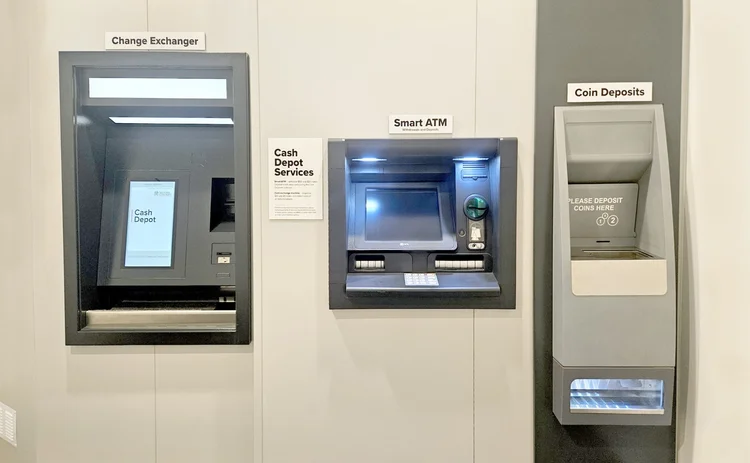
The trials consist of two complementary components. A local ‘cash depot' services approved retailers and community organisations such as sports clubs and charities. The depot provides multi-bank deposit, withdrawal and change services in a single secure location within a retailer’s town, to reduce reliance on fragmented arrangements or long-distance travel to bank branches and so lower the operational burden for merchants. Change money is available through a ‘cash-exchanger’ machine, allowing banknotes to be exchanged for coins or lower-denomination notes. These services are provided free of charge during the trial and funded directly by the RBNZ.
As the depot is restricted to approved users, however, it does not itself expand cash withdrawal options for the wider public. Restricting the depot access to only those approved users is a response to safety concerns around depositing larger amounts of cash for these users. Therefore, participating retailers that perform this cash-access function, traditionally provided through bank branches and ATMs, are remunerated with a flat monthly payment for doing so. The flat-payment model was chosen to simplify the operation of the trial while automated reporting was being established, and other remuneration approaches could also apply.
The significance and difference to European debates lies in acknowledging that retailers who dispense cash perform an important, distinct role in cash distribution. Retailers providing cash-outs are remunerated, while participating retailers have improved access to deposit and change money access infrastructure tailored to their needs. The trials are not conceived by the RBNZ as a permanent public subsidy, but as a testing ground for alternative arrangements and sustainable long-term solutions for an inclusive cash system.
Norway: legal bank responsibility, fragmented delivery and unresolved adequacy
Norway provides a particularly instructive case for understanding the relationship between legal responsibility and practical access to cash. The Norwegian Financial Institutions Act enshrines the principle that access to cash is inseparable from the core functions of deposit-taking institutions. The preparatory material for the legislation notes that the obligation to offer cash services is the counterpart to the statutory exclusive right of banks to receive deposits, elaborating that confidence that “account money” can be quickly and easily converted into an equivalent amount of cash is important for confidence in the status of account money as a generally accepted means of payment. Similarly, it is important that cash can be easily deposited in banks.
In formal terms, banks are therefore responsible for ensuring that consumers and businesses can withdraw and deposit cash in line with their needs and expectations. This responsibility applies both in normal times and in contingency situations.
Torbjørn Hægeland, executive director for financial stability at Norges Bank, states: “If consumers are to have a genuine opportunity to pay with cash, they must be sufficiently able to withdraw (and deposit) cash, and businesses must be able to access change and to deposit cash revenue. This includes both sufficient geographical availability and other necessary functionality.”

The legislation allows banks to fulfil this obligation through agreements with other providers. As a result, cash services in Norway are delivered through a combination of channels, including ATMs, bank branches with counter services, and ‘cash services in shops’ (KiB). In practice, more than half of physical cash access points now operate through merchant-based solutions, fundamentally reshaping how cash is delivered. While KiB has become an important part of banks’ cash-service offering, merchants’ access to cash services is more complex. Businesses may use KiB deposit machines or night safes, or enter into private agreements with cash-management companies. As Hægeland notes: “The statutory obligation on banks to offer cash services applies to both private and business customers. Merchants’ costs for accepting cash will, among other things, depend on the range and availability of cash services provided by banks.”
Both the Norwegian Financial Supervisory Authority and Norges Bank have pointed out that it remains unclear whether business customers’ access to cash services can be considered satisfactory. The most recent in-depth survey of banks’ cash services to businesses was conducted in 2021 by the Financial Supervisory Authority on behalf of the Ministry of Finance, and no comprehensive reassessment has since been carried out. This lack of clarity persists, despite the formal legal obligation placed on banks.20
Norges Bank, in its Financial Infrastructure Reports,21 points out that the current provision of cash services is vulnerable and has weaknesses. Over time, the number of bank branches offering over-the-counter cash services has steadily declined, as has the number of ATMs. In-store cash services, available in approximately 1,450 of NorgesGruppen’s groceries, now account for a substantial portion of banks’ cash services. These services are largely adequate for most consumers, but are only available to BankAxept cardholders. They also fail to cover the needs of businesses that need to make large cash deposits and access change.
Access by business customers with larger volumes of cash appears to be reduced and not satisfactory. This is due to a reduction in branches with cash services and in the number of night safes. The in-store cash service cannot be regarded as a full service for larger business customers because of the relatively low amount limits and because deposits must be made by placing cash into the shop’s cash-register banknote feeder. The ability for business customers to make deposits needs to be viewed in the context of their obligation to accept cash as legal tender, Norges Bank stresses.
Against this background, Norges Bank has cautioned against assuming that market-based arrangements alone can secure adequate access to cash. According to Hægeland, “it would be preferable that the banking sector without detailed regulation ensures an adequate nationwide provision of cash services – should banks fail to establish satisfactory solutions themselves, more detailed regulation should be considered”.
While banks increasingly rely on merchant-based delivery channels such as KiB, these solutions do not replicate the geographical coverage, functional breadth or resilience of earlier arrangements, such as the nationwide banking services previously provided through the postal network.
With regard to the role of retailers, Hægeland says KiB is a service offered by banks in Norway, enabling deposits and withdrawals of cash at most NorgesGruppen stores across the country. He notes that, “in many aspects, this represents an effective solution”, while also emphasising that “NorgesGruppen accounts for between 40% and 45% of the grocery market”, and that its geographical distribution varies across regions: “Cashback, on the other hand, is a service offered by retailers themselves, acting on their own behalf.”
While no comprehensive overview exists, “it is likely that several stores outside of NorgesGruppen offer cashback”, and, “in this way, cashback enhances opportunities for cash withdrawals”. The Norwegian case therefore shows that legal bank responsibility must still be tested against functional adequacy: geographical coverage, deposit capacity, access to change, amount limits, resilience and usability for both consumers and businesses.
Cash acceptance and payment resilience: the retailer perspective
From the perspective of the German retail sector, payment resilience has become a central concern that cannot be addressed through legal acceptance obligations alone. As the HDE’s Binnebössel says, retailers already have practical experience with disruptions to non-cash payment systems, and these experiences are becoming more relevant as dependence on digital infrastructure deepens. While short-term outages are generally manageable, he warns that “resilience, particularly with regard to longer-lasting outages of non-cash payment instruments, must be regarded as critical” in an increasingly digitised retail environment.
According to Binnebössel, modern retail operations rely on a dense chain of digital dependencies. Many processes in a contemporary retail shop depend on functioning internet connections and the continuous availability of multiple external counterparties. In payments, this includes the links between checkout systems, payment terminals, network operators and banks. Retailers themselves have only limited influence over these systems. Apart from narrowly defined offline procedures – such as girocard-based electronic direct debit – merchants are largely exposed to failures that lie outside their control. Against this background, cash acceptance functions as a practical safeguard, rather than a symbolic option.
For cash payments to contribute to crisis management, customers must first have cash available or be able to obtain it
Ulrich Binnebössel, HDE
At the same time, Binnebössel believes cash can only fulfil a resilience function if the entire cash cycle remains operational: “For cash payments to contribute to crisis management, customers must first have cash available or be able to obtain it.” If households do not hold cash and access points such as ATMs or bank branches are unavailable, retail cash acceptance alone cannot compensate. In such situations, “the retail sector itself can do nothing”, even if it remains legally obliged to accept cash. He says that what is required instead is a functioning cash circulation that encompasses both the population’s access to cash and commercially viable cash logistics for retailers.
This tension becomes particularly visible when emergency preparedness guidance is contrasted with everyday operating conditions for merchants. In the Netherlands, retailers are explicitly advised to prepare for scenarios in which electronic payments may fail for up to 72 hours, including by holding sufficient cash and change to continue operations.22 Such guidance presupposes that merchants are able, in practice, to operate on a cash-only basis for several days.
Evidence from Sweden suggests that many merchants already internalise this logic. Even in a highly digitalised payment environment, and even in sectors with low day-to-day cash usage – such as art-, culture- and event-based activities – businesses continue to accept cash as a form of preparedness.23 Cash is retained not because it is the most convenient payment method in normal times, but because it remains usable when electronic systems fail.
Swedish SMEs report24 that, following a pronounced decline in cash usage, businesses are now facing a sharp increase in fees for card and digital payments, precisely because cash has lost its role as a competitive alternative in negotiations with payment service providers. Once cash is no longer a credible fallback option, payment systems are able to raise fees with limited resistance, in the knowledge that both merchants and customers remain locked into electronic payment channels.
From this perspective, the Swedish experience illustrates a structural risk of a near-cashless environment: the disappearance of cash as a negotiating counterweight weakens merchants’ bargaining position, and removes an effective cost discipline in the payments market. For Binnebössel, the Swedish experience should serve as an acute warning for German retailers and policy-makers alike. This also explains the HDE’s emphasis on payment diversification and its insistence on safeguarding the attractiveness and acceptance of cash as counterbalance to rising digital payment fees.
Furthermore, Småföretagarnas Riksförbund, the Swedish SMEs federation argues in its response to the Swedish Cash Inquiry25,26 that cost-shifting and digitisation have created new risk exposures. It says that “the high cost and lack of service” in providing cash has “forced companies to invest in various digital payment solutions” that are “inherently increasingly expensive and insecure”. “Security flaws in the systems have enabled new forms of crime and fraud against companies,” it adds. When asked to elaborate, Anne-Louise Kroon makes a direct comparison: “The fraud and crimes that today affect businesses through burglary and robbery of cash are very small compared to the digital fraud and intrusions now occurring via account hijacking, fraudulent transfers and false invoices. Here we can mention millions stolen from accounts within seconds. Banks’ protection of business accounts has not been upgraded quickly enough.”
The federation also calls for better customer service support to address technical problems and mismanagement of invoices and other payments: “Customer service should be easily accessible and quick to reach to effectively resolve issues.”
Overall, if retailers are expected to function as a line of defence for payment continuity in crisis situations, they may need support in maintaining cash acceptance in everyday business. Emergency preparedness cannot rely on cash acceptance in exceptional circumstances while allowing access, deposit conditions and cost structures to deteriorate in normal times. Without such support, resilience is at risk of becoming an expectation placed on merchants, rather than a property of the payment system as a whole.
Notes
- National Bank of Austria, Report to the Finance Committee of the Parliaments gem. NBG § 32 (5), June 27, 2024, page 12.
- Council of the European Union, Digital euro regulation – mandate for negotiations with the European Parliament, doc. 16695/25, December 17, 2025; https://data.consilium.europa.eu/doc/document/ST-16695-2025-INIT/en/pdf
- https://zoek.officielebekendmakingen.nl/kst-36711-2.html
- National Bank of Poland, Report on cash circulation in Poland in 2023, 2024; https://nbp.pl/wp-content/uploads/2025/01/Raport-o-obrocie-gotowkowym_EN_2023_v2_INT.pdf
- https://www.riksdagen.se/sv/dokument-och-lagar/dokument/kommitteberattelse/uppdrag-att-utreda-mojligheterna-till-att-betala_hcb2fia/
- https://www.riksbank.se/globalassets/media/remisser/riksbankens-remissvar/svenska/2025/remissvar-om-finansdepartementets-promemoria-kontantutredningen-fi202402595.pdf
- https://www.riksdagen.se/sv/dokument-och-lagar/dokument/proposition/atgarder-for-att-starka-kontanternas-funktionssatt_hd03199/html/
- The European Central Bank published a new edition of this survey as this article went to print. However, the new report did not make available the dataset details on access to cash, deposit condition developments and merchant satisfaction (banking distances, fees, coin services, opening hours, etc.). To ensure that the figures for cash acceptance and cash services remain methodologically consistent and directly comparable, this article relies exclusively on the 2024 survey data.
- https://www.ecb.europa.eu/stats/ecb_surveys/use_of_cash_by_companies_in_the_euro_area/html/index.en.html.
- As defined by the EC by staff numbers, companies with less than 250 employees – https://single-market-economy.ec.europa.eu/smes/sme-fundamentals/sme-definition_en. The ECB companies survey sampled in total 7,675 companies, of which 98.68% were SMEs.
- https://api.hankeikkuna.fi/asiakirjat/608cf1cd-0f5c-4d3d-8e51-87fc0ce7477e/8f45032f-dc68-4f20-8315-891173cd44df/LAUSUNTO_20230528091729.pdf
- https://www.bofbulletin.fi/article/analysis/2026/significant-differences-across-industries-and-regions-in-the-costs-of-processing-cash/
- https://www.bundesbank.de/en/publications/reports/studies/the-costs-of-payment-methods-in-the-retail-sector-972484
- https://finance.ec.europa.eu/document/download/bd5b4871-2bb6-4681-a982-b3bebad46b00_en?filename=260310-report-eu-financial-sector-preparedness_en.pdf
- https://www.europarl.europa.eu/doceo/document/ECON-AM-781237_EN.pdf
- https://www.visa.de/support/verbraucher/bargeldservice.html
- https://www.handelsdaten.de/handelsthemen/zahlungssysteme
- https://www.stores-shops.de/technology/payment/cashback-rekordsumme-bei-wachsenden-herausforderungen/
- https://www.rbnz.govt.nz/-/media/project/sites/rbnz/files/consultations/banks/future-of-money/cash-system-redesign-issues-paper.pdf
- https://www.regjeringen.no/contentassets/45a26f28e53047c68c4dc2072e5fec8c/no/pdfs/nou202420240021000dddpdfs.pdf
- https://www.norges-bank.no/en/news-events/publications/?selectedFacets%5bType%5d=80159
- https://www.dnb.nl/media/a0zjhrlj/adviezen-mob-denk-vooruit-ook-voor-betalen-uk.pdf
- https://www.riksbank.se/globalassets/media/rapporter/staff-memo/engelska/2025/small-businesses-views-on-payments.pdf
- https://smaforetagarna.se/naringspolitik/remissvar/remiss-av-promemorian-kontantutredningen-fi2024-00068/?fbclid=IwY2xjawPJzH1leHRuA2FlbQIxMABicmlkETFEUVZqenhKUjZOSE9MR05Xc3J0YwZhcHBfaWQQMjIyMDM5MTc4ODIwMDg5MgABHn1ZembXwnu6RSxNFSke-DMac095Jm8WRvCvlTD46okd2ErkqIRoKk8OEM_T_aem_M4AmpEXqxPIz6hGPWjuXjA
- https://www.regeringen.se/rattsliga-dokument/departementsserien-och-promemorior/2024/12/kontantutredningen/
- https://smaforetagarna.se/wp-content/uploads/2025/05/Remisssvar-Kontantutredningen-Fi2024-00068.pdf
Only users who have a paid subscription or are part of a corporate subscription are able to print or copy content.
To access these options, along with all other subscription benefits, please contact info@centralbanking.com or view our subscription options here: www.centralbanking.com/subscriptions
You are currently unable to print this content. Please contact info@centralbanking.com to find out more.
You are currently unable to copy this content. Please contact info@centralbanking.com to find out more.
Copyright Infopro Digital Limited. All rights reserved.
As outlined in our terms and conditions, https://www.infopro-digital.com/terms-and-conditions/subscriptions/ (point 2.4), printing is limited to a single copy.
If you would like to purchase additional rights please email info@centralbanking.com
Copyright Infopro Digital Limited. All rights reserved.
You may share this content using our article tools. As outlined in our terms and conditions, https://www.infopro-digital.com/terms-and-conditions/subscriptions/ (clause 2.4), an Authorised User may only make one copy of the materials for their own personal use. You must also comply with the restrictions in clause 2.5.
If you would like to purchase additional rights please email info@centralbanking.com
More on Banknotes
Germany sees surge in €100 fakes amid overall counterfeit decline
Deutsche Bundesbank says overall levels of forged money remain low
Iraq receives $500m from Fed as government faces cash shortage
Oil-exporting country’s income comes under strain as Hormuz uncertainty persists

ECB unveils shortlist of new euro banknote designs
Bank invites public to share their views, offers vertical designs for first time

Sudan to withdraw low-value notes from circulation
Smaller denominations have lost purchasing power amid inflation and currency depreciation

Central Bank of Syria opens new branches
Bank also says it will begin measures to end circulation of Turkish currency

Monetary split deepens in Sudan as new banknotes circulate
Expert says rebel forces may be printing their own version of national currency

Novel AI could help with banknote quality control – paper
Tool could help prevent defective currency from entering circulation, Bank of Italy researchers find
Banknotes: April to June 2026
A round-up of news and salient issues that have affected central bankers in the past three months