
Algorithms
Ukraine’s ESG lessons from a war zone
NBU governing council member Olena Shcherbakova speaks about how environmental, social and governance rules can be adapted for dual-use and defence requirements




Latest AI models, such as Mythos, pose new cyber risks – Nagel
Bundesbank president underlines large language models’ high costs and tendency to hallucinate

Algorithmic pricing not yet a ‘menace’ to inflation – BoE study
Dynamic and personalised pricing may upend CPI measurements and expectations, research says

Central Banking Awards 2026: the winners in full
Awards recognise extraordinary achievements in another challenging year for central banks

Artificial intelligence initiative: Bank of Namibia
A concerted effort to implement AI has delivered efficiency gains within and across the financial sector

AI and tokenised finance are reshaping financial trust
Amro’s CEO Yasuto Watanabe argues that sustained policy attention is needed to ensure the foundation of trust remains resilient amid financial transformation

Rethinking policy transmission in the age of AI
Managing machine expectations related to faster, more non-linear and potentially asymmetric price dynamics will require analytical innovation and potentially new forms of oversight, argues Elisa Vilorio de Painter

Eurozone payment systems not ready for quantum – research
Bank of Italy paper calls for more robust cryptographic algorithms and quantum roadmaps from suppliers

How FX pricing is adapting to Trumpian markets
Dealers are tying pricing engines to new signals in effort to cope with out-of-the-blue moves

Towards a new monetary policy framework for the AI age
AI may render the traditional monetary policy toolkit less effective and the familiar rules of engagement obsolete, argues Biagio Bossone

Working group minutes: seeking better interactions on social media
Building engagement is a challenge and brings risks for central bankers

The GFXC chair on the next steps for the FX global code
Global FX Committee chair Gerardo García speaks with Christopher Jeffery about updating FX best practice, improving buy-side engagement and revising settlement risk estimates in the BIS’s triennial survey

How AI is shaping the future of payment system oversight
Biagio Bossone explains that sound AI policies can be a powerful ally supporting financial stability
Financial system needs to be ‘quantum-ready’ – BIS study
Working paper reviews benefits and risks of computing technology
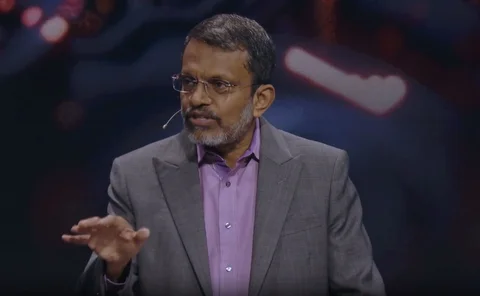
AI, quantum computing and tokenisation set to transform finance – Menon
But significant barriers remain preventing the technologies from unlocking their full potential

European Commission opens consultation on AI in finance
As AI use in financial services increases, regulators must balance innovation with risk

Lkhagvasuren Byadran on geopolitics, gold and 100 years of central banking on the steppe
Bank of Mongolia governor Lkhagvasuren Byadran speaks about monetary and financial reform, embracing AI and fintech, and Mongolia’s new SWF

Cecilia Skingsley on monetary policy tech and a unified ledger
Head of the BIS Innovation Hub speaks about tokenisation, CBDCs and the ‘black box problem’ in AI

Data sharing as a policy intervention
Increasing access to data represents another policy lever regulators can pull to achieve their objectives, writes David Bholat

BIS wraps up cross-border CBDC trial
Project Mariana explored FX settlement using ‘automated market-makers’

A suptech transformation: using tech to support the full supervisory lifecycle
Regnology explores how – with the appropriate platforms, partners and processes in place – supervisory technology can be utilised as a driver of transformation.