
Europe

Bank of Italy publishes unconventional monetary policy papers
Papers and presentations cover models and data on unconventional programmes

ECB sets out protection scheme monitoring guidelines
Central bank aims to harmonise national practices across eurozone

Negative oil shocks outweigh positive ones, says Irish paper
Researcher uses TVAR model to examine eurozone data; concludes size of oil price and economic shock also affects impact on inflation

Eurozone banks need to change business models – Constâncio
ECB vice-president points to Swedish banks’ profitability despite low and negative rates

EBA raises concerns over banks’ implementation of IFRS 9
Profit and loss volatility likely to rise due to new credit risk guidelines, banks say
EBA suggests new model for prudential regulation of investment firms
Capital model should be based on firms’ risks to markets and to customers, EBA says

Weighting models by performance is better than taking simple averages, researchers say
Weighting models by performance is better than taking simple averages, researchers say
ECB’s economic bulletin paints mixed picture of eurozone investment
Business investment recovering overall but several factors may limit further growth, ECB says
More research needed on exchange rate pass-through, ECB article says
Research on effects of different shocks on inflation “still in an incipient phase”
EBA recommends changing basis of resolution finance
“Crucial” that new measure reflect ability to call on funds in case of resolution crisis, EBA says; new measure should be based on total liabilities

Brexit may not lead to ‘new dominant location’ for European finance – Irish governor
Regulatory considerations should not drive firms’ location decisions, Lane argues

EBA recommends tighter regulation of European banks’ ‘large exposures’
Report calls for stricter limits on bank exposure to single clients and cautions against premature application of “standardised approach” to large exposures

ECB issues latest macro-prudential bulletin
Papers look at second order effects of financial shock, de-risking and high-frequency trades
Systemically important investment firms should come under CRR and CRD-IV, EBA says
European Banking Authority calls on regulators to re-examine guidelines for identifying most important investment firms
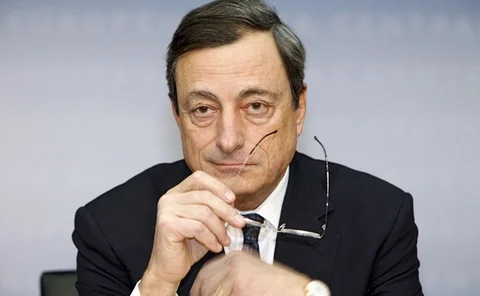
Draghi postpones decision on extension of QE
ECB president is aiming to build governing council support for further asset purchases, one analyst argues
Output gap in euro area is much larger than official estimates – paper
Official estimates predict output gap 3–4% less negative than author’s results; current models do not “adequately capture” inflation developments

Bank of Spain paper explores links between fiscal consolidation and private deleveraging
Larger and faster fiscal consolidations have greater impact on output, authors argue

ECB’s Mersch: central banks have failed to correctly assess growth potential
Central banks were “over-reliant on pro-cyclical forecasts” before the financial crisis, ECB board member says; repeats call for fiscal stimulus and structural reform

Belgian paper studies work of pioneer of regional economics
Robert Triffin was the “architect” of the European Payments Union
Paper examines effects of financial crisis on European long-term debt issuance
Bank of Spain paper uses large database on most frequent issuers of long-term debt

Esma says regulators should wait before imposing quantitative SFT haircut triggers
Decision on policy change should wait until 2018, authority says; chairman says “sheer size” of market makes transparency important
Mersch says eurozone deposit rates are only ‘mildly’ negative
ECB board member says rates can be “mildly” but not “wildly” negative before costs outweigh benefits; calls for faster progress on banking union
Draghi defends ECB policy to German lawmakers
Monetary policy not causing low profitability at some German banks, ECB president says; calls on policy-makers to initiate structural reforms

EBA default standards could prove ‘burdensome’, banks warn
Implementation likely to be costly, especially for IRB-based firms, authority admits; standardisation necessary in view of wide range of current practices