
Thomas Hoenig
Will Kevin Warsh’s communications gambit pay off?
Fed chair believes less is more with comms, but experts say time is ticking on his credibility



US Basel III delay to 2026 seen as almost inevitable
Reprioritisation and leadership changes cast doubts on timing of new proposals

Mr Bessent goes to Basel: the fate of global bank regulation
US resistance to international standards could spark greater fragmentation of prudential rules

US has got what it wanted from Basel, say former regulators
Process has been "essentially driven" by US interest, says former Fed vice-chair

Basel uniformity fades as members defy dress code
Rule-makers diverge from Basel III standards, denting aims of comparability and fuelling fears over fair competition
Supervisors grapple with the smaller bank dilemma
How are the guardians of stability moving to address risks linked to smaller banks in the aftermath of SVB’s collapse?

Paul Volcker, 1927–2019
The Fed chair made his name battling inflation, and left his mark on independence and post-crisis financial regulations
FDIC’s Hoenig warns on relaxing bank capital requirements
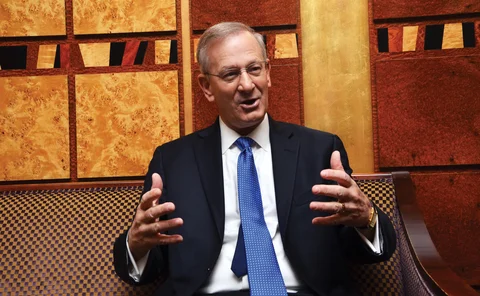
The Trump administration claims regulations hamper lending and economic growth, but Thomas Hoenig argues capital is an essential source of funding for banks

Let the market regulate banks – FDIC’s Hoenig
Vice-chairman offers proposal that would take an axe to risk-based capital, stress testing and parts of the Volcker rule

Hoenig warns reliance on long-term debt could represent systemic vulnerability
FDIC vice-chairman warns of danger of substituting long-term debt for equity and comments on disagreement with Fed over ‘living wills’

Fed publishes FOMC transcripts from 'crisis year' 2008
Transcripts of FOMC meetings from the year Lehman Brothers went bust reveal thinking behind exceptional monetary policy decisions

FDIC's Hoenig says government backstops remain 'generous subsidy' for big banks
The competitive inequities that result from too big to fail remain mostly unaddressed, Hoenig says; calls for separation between commercial banks and broker-dealers

Fed and FDIC agree 6% leverage ratio for US Sifis
Banking agencies announce rules to increase organisations' leverage ratios; measures remain controversial with the banking lobby and regulators, notably FDIC's Hoenig

Basel Committee finds ‘considerable variation' in bank risk-weights
Variation in bank risk-weights 'driven by diversity in bank and supervisory practices', says Basel Committee as it also moves to strengthen oversight of investments in equity funds

Fed presidents in conflict over 'too-big-to-fail'
Lacker, Fisher, Hoenig and Bair called before US Congressional committee to voice their opinions on Dodd-Frank Act's Orderly Liquidation Authority
FDIC’s Hoenig blasts Basel III risk weights as insufficient
Thomas Hoenig argues that Basel III can be ‘gamed' and that the capital ratios may over-represent the actual state of banks’ balance sheets
FDIC's Hoenig calls for more action to correct incentives for financial companies
Speech to Asian bankers in Jakarta examines role of incentives in leading to the crisis, and hampering recovery
FDIC vice-chair says Basel III capital requirements provide illusion of safety
Thomas Hoenig says capital ratios allow banks to leverage up while outwardly appearing safe; warns systemically important banks have much worse leverage ratios than smaller institutions
FDIC name new leadership
President Obama names acting-chairman Martin Gruenberg as the new FDIC head and ex-Kansas City Fed president Thomas Hoenig as his number two
Hoenig supports bank ring-fencing in the US
Federal Deposit Insurance Corporation director says public trust in financial institutions and government must be rebuilt; wants banks' safety net retracted
Robert Pringle’s Viewpoint: Central bankers gamble for high stakes
The world’s major central banks have made high-stakes bets in a bid to stabilise economies. But their efforts may do little to promote confidence in the longer-term future of monetary management