
Barry Eichengreen

Will new reforms lift the veil of secrecy at the Bank of England?
The Bank of England has unveiled a broad package of reforms to its transparency. Daniel Hinge speaks with transparency experts to assess the changes
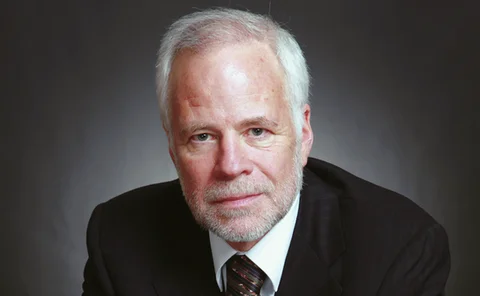
Eichengreen says central banks should worry more about deflation than 'profits and losses'
The Berkeley professor on what last week's SNB move says about big central banks 'wrong-footing' markets and the Fed's problematic response to financial crisis

Bank of England unveils sweeping transparency changes
Bank of England to publish transcripts of monetary policy meetings, cut number of meetings, revamp committee structures and more; Barry Eichengreen says benefits likely to ‘dominate’ costs
End of Bretton Woods has helped dollar reserves, says ECB paper
The collapse of the Bretton Woods System has resulted in significant upheaval of currency reserve trends, says an ECB working paper co-authored by Barry Eichengreen

Sveriges Riksbank overhauls communication strategy
Sweden's central bank will focus on ‘dialogue' to better explain its operations; 'openness and clarity' remain guiding principles for the bank, which regularly tops transparency rankings
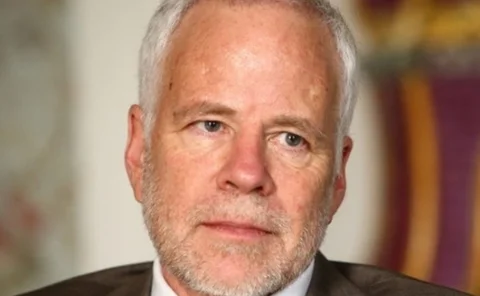
Central banks are getting more transparent, study finds
Study conducted by Barry Eichengreen and Nergiz Dincer finds trend towards greater transparency was not knocked off course by the financial crisis; independence, however, is more patchy
Fiscal stimulus crucial for recovery
Centre for Economic Policy Research (CEPR) compares the Great Depression with the global credit crisis
Bleak new outlook from Eichengreen and O'Rourke
Respected economists still find few green shoots
Rethinking decoupling
The decoupling hypothesis has been one of the casualties of the crisis, Martina Horáková argues
Explaining America's Great Inflation
Acceleration of US inflation in the 1960s caused by Bretton Woods the exit and the Treasury's role in defending the dollar, say Michael Bordo and Barry Eichengreen, in a new paper.
Eichengreen: ideology slowed response to crisis
Ideology delayed US officials in taking necessary steps after the credit crisis erupted, says Barry Eichengreen, a financial historian based at the University of California, Berkeley, in a new paper.
Top economists have their say on G20 summit
A group of 21 of the world's most prominent economists have called on officials from the G20 countries meeting in Washington this weekend to start thinking outside the box about longer-term reforms.
Building Asia's bond markets
The BIS in Basel has published a collection of papers by scholars, researchers, central bankers and market participants on issues and prospects in Asia's bond markets.
Is the IMF still useful?
IMF reform has been on the policy agenda for a long time. In the last year, however, reform discussions acquired a new sense of urgency, this article by Barry Eichengreen published Thursday 4 May says.
Academics discuss East Asian Monetary Union
Academics meeting on Friday 19 August called for Asian nations to set up a regional cooperative body similar to the EU and adopt a common East Asian currency.
A not-so-merry Christmas message
Giving the Henry Thornton lecture at the Cass Business School in London on Wednesday 15 December, the economic historian Barry Eichengreen gave his view on the international financial system, and issued a worrying warning to those that downplay the…
Eichengreen urges controlled yuan float
Barry Eichengreen, a senior policy adviser to the International Monetary Fund (IMF) during the Asian financial crisis has said that China should immediately stop pegging the yuan to the US dollar and instead move to a controlled float of its currency.
Review of Financial crises and what to do about them
Barry Eichengreen finds a middle way between past policy failings and current lofty aims in his financial crisis handbook, says Benedict Mander.
Is the crisis problem growing more severe?
ARTICLE - In the latest issue of journal Economic Policy, economist Barry Eichengreen et al ask whether financial crises are becoming more frequent and more disruptive. Looking back over 120 years of financial history, the authors find that there is …
The EMS crisis in retrospect-Eichengreen
This Centre for Economic and Policy Research discussion paper by Barry Eichengreen reconsiders the 1992/3 crisis in the European Monetary System in light of its emerging market successors. That episode was a predecessor of the Mexican and Asian crises in…
'Banking Crises in Emerging Markets'-Eichengreen
Barry Eichengreen and Carlos Arteta from the University of California have written an article "Banking Crises in Emerging Markets: Presumptions and Evidence". Using a large sample of data, the authors find that robust causes of emerging-market banking…