

BoE flags global risks in ‘opaque’ commodities market
LME disruption reveals “highly leveraged” participants within financial system
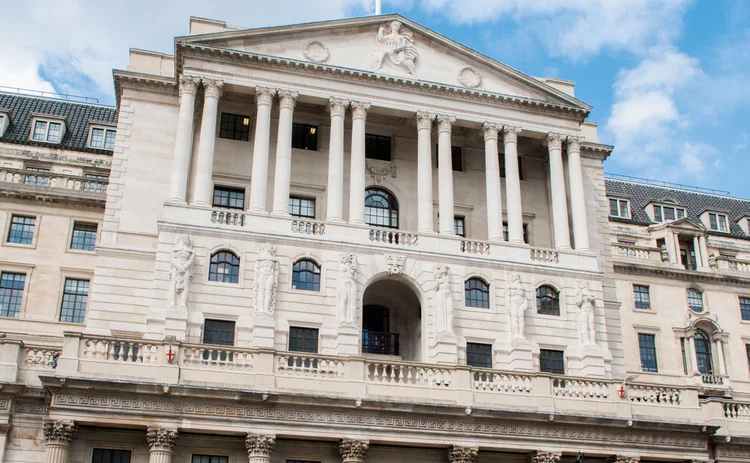

Commodity markets are volatile, prices elevated and liquidity thin, the Bank of England warned today (July 5), problems that are exacerbated by the market’s opacity.
Meanwhile, the economic outlook for the UK and globally has “deteriorated materially”, in large part due to higher commodity prices, BoE governor Andrew Bailey said at the launch of the central bank’s latest financial stability report.
Vulnerabilities in “opaque” commodities markets and their links to the broader financial system came to a head when the London Metal Exchange temporarily suspended trading in nickel contracts and cancelled trades between March 8 and March 15.
The extreme stress event was due to “a very large short position in the over-the-counter market, which could not be seen”, deputy governor Jon Cunliffe told reporters.
Volatile commodity markets meant some participants struggled to raise liquidity to meet “unexpected and sharp” increases in margin requirements. Banks faced “significant” calls on revolving credit facilities due also to credit risk exposure from intermediating in the derivatives market.
The disruption highlighted the presence of “highly leveraged” participants in the commodities markets and a liquidity mismatch “at the centre of some participants’ business models,” according to the financial stability report.
Vulnerabilities within commodity markets – and interconnections with the wider financial system – could amplify shocks to the real economy, Bailey said. “Opacity and lack of data” make quantifying the size and scale of these vulnerabilities and interconnections “challenging”.
Addressing vulnerabilities will “require engagement from a broad range of financial and non-financial authorities, both domestic and global”, the financial policy committee (FPC) said. Some market participants exist outside of the regulated financial sector and are not regulated by any authorities.
The FPC said it will continue to monitor signs of stress building in the commodity markets and seek to increase transparency. Addressing this globally should be a “priority”, the committee added.
“We stand ready to engage with other authorities as necessary,” Bailey continued. The FPC stressed “heightened uncertainty” in commodities markets following Russia’s invasion of Ukraine.
FPC decisions
The FPC raised its counter-cyclical buffer (CCyB) from 1% to 2%. The rate will come into effect on July 5, 2023. “It’s the right time to lock in resilience so we are well prepared for future shocks,” Bailey said.
UK banks’ CET1 capital ratios – the capital of the institution as a percentage of its risk-weighted assets – declined to 14.5% in the first quarter of 2022 but were still well above the 4.5% minimum. The BoE said the drop had been expected and was due to regulatory adjustments and dividends.
Members of the FPC stressed tightening credit availability to defend capital ratios would be “counterproductive”, and could prevent creditworthy businesses and households from accessing funding. They said excessive tightening would harm the broader economy and ultimately banks themselves. If conditions lead to lending being restricted, the CCyB will be cut.
The BoE also announced its annual cyclical stress test will be conducted in September, after being delayed in March due to the impact of Russia’s invasion of Ukraine. The stress tests will include looking at “deep simultaneous recessions in the UK and global economies”, Bailey said.
Only users who have a paid subscription or are part of a corporate subscription are able to print or copy content.
To access these options, along with all other subscription benefits, please contact info@centralbanking.com or view our subscription options here: www.centralbanking.com/subscriptions
You are currently unable to print this content. Please contact info@centralbanking.com to find out more.
You are currently unable to copy this content. Please contact info@centralbanking.com to find out more.
Copyright Infopro Digital Limited. All rights reserved.
As outlined in our terms and conditions, https://www.infopro-digital.com/terms-and-conditions/subscriptions/ (point 2.4), printing is limited to a single copy.
If you would like to purchase additional rights please email info@centralbanking.com
Copyright Infopro Digital Limited. All rights reserved.
You may share this content using our article tools. As outlined in our terms and conditions, https://www.infopro-digital.com/terms-and-conditions/subscriptions/ (clause 2.4), an Authorised User may only make one copy of the materials for their own personal use. You must also comply with the restrictions in clause 2.5.
If you would like to purchase additional rights please email info@centralbanking.com
More on Financial Stability
Paraguay lowers bank reserve requirements to boost liquidity
Move follows request from banking association

Financial stability units report increases in FTE staff
But departments are generally more satisfied with non-staff resources than staffing
Libya’s new central bank governor faces uphill battle
Experts warn Boukhzam is inheriting a politically compromised institution

BIS and Amro publish ‘ready-to-run’ global liquidity stress test
‘Open access, top-down’ framework aims to overcome data and comparability issues

Head of Turkey’s banking watchdog submits resignation
Former CBRT governor says he wishes to avoid further reputational damage to agency over investment scandal

Small nations can offer big lessons – ECCB deputy
Valda Henry tells Virtual Meetings why collaboration and resilience are crucial in today’s volatile world

Canada’s Tiff Macklem on the US trade dispute, AI and framework renewal
BoC’s governor speaks about declining economic resilience, the need for decisions despite policy dilemmas, Canada’s new structural model, lessons from QE, and more

Paraguay’s central bank credibility ‘in crisis’ over Ueno
Experts raise questions over institution’s supervisory actions and its ties to collapsed digital lender