
Monetary Policy

Hungarian central bank eases by scrapping deposit facility
The central bank announces the closure of its two-week deposit facility in April, in a move it hopes will lead banks to buy government bonds and lower long-term yields

Financial market risk being pushed into ETFs, Noyer warns
Central bankers must develop oversight of ETFs and similar securities, Noyer tells farewell seminar; must also convince markets and public of opposition to low inflation and deflation

PBoC looks to expand lending programme for SMEs
Central bank to 'steadily advance' refinancing scheme as economy expected to slow further; Ma Jun clarifies PBoC's position on exchange rate fluctuations

IMF supports tighter monetary policy in Mozambique
Rate rises are necessary to counter the inflationary pressures of currency depreciation, Fund says

Spanish paper models synergies between demand and supply policies in monetary union
Working paper model sees benefits in jointly implementing structural reforms in the ‘periphery’ of a union, with fiscal expansion in the ‘core’ and forward guidance on interest rates

Bank of England paper explores exchange rate pass-through using ‘big data’
Author finds the pass-through to import prices varies depending on the size of the exchange rate movement at the micro level, but it is a different story at the macro level

IMF paper compares impact of monetary and macro-prudential policies
Research considers effects of measures in ‘systemic advanced economies’ on financial conditions both at home and abroad; monetary shocks in US can have ‘significant’ impact

US delivers strong jobs growth to end 2015
Report shows nonfarm payrolls expanded by 292,000 in in December, while figures for both October and November revised up; unemployment rate unchanged at 5% for the third consecutive month

Riksbank minutes reveal debate over monetary framework
Board members welcome debate over target variable and possible reinstatement of tolerance band, but af Jochnick warns changes should not be made simply because of recent failures to hit target

Risk that US public lowers inflation expectations, Chicago Fed president warns
The Federal Reserve’s undershooting of its inflation target in recent years may lower the inflation expectations of the American public, making future monetary policy harder, Evans warns

Denmark hikes deposit rate after record drop in reserves
Central bank lifts deposit rates and reduces banks’ current account limits; capital outflows accelerated in December following ECB actions

BoJ board reveals miscommunication fears
New ‘summary of opinions’ reveals some on board concerned about giving impression stimulus is at its limit, while some see dangers to taking further action
Some FOMC members still see ‘considerable’ risks to inflation forecasts
The Federal Reserve’s decision to increase the federal funds rate target was a ‘close call’ in the view of ‘some’ FOMC members; mixed views among governors and presidents on inflation outlook

PBoC cut in renminbi fix prompts market volatility
Central bank cuts fix by 0.51%, triggering second equities slump in a week and further divergence in onshore and offshore exchange rates

Lagarde calls for ‘fundamental change’ in Nigerian policy
IMF managing director tells leaders to shore up the banking system, strengthen the external position and exercise ‘restraint’, during visit to Nigeria

IMF paper sees Indian food prices shaping inflation dynamics
Working paper suggests food inflation will continue to outpace non-food inflation in the coming years, while potentially contributing 1.25 percentage points annually to headline figure

Cleveland Fed president ‘fully supported’ rate hike
Loretta Mester expresses support for FOMC’s decision in December, but notes greater importance of policy path than date of lift-off for macroeconomic performance
PBoC injects liquidity following market rout
Central bank intervenes with $20bn reverse repo operation as markets slump, restoring a semblance of calm

Norges Bank paper seeks to improve modelling of money
Researchers aim to capture the role of money as both a medium of exchange and a liquid asset, with the resulting equilibrium underscoring the need for a liquidity coverage ratio
Emerging markets more vulnerable than developed economies to policy reversals, paper finds
Working paper published by the IMF considers impact of unconventional monetary policy in major economies on global liquidity and monetary conditions

Riksbank prepared to ‘instantly intervene’ in krona
Executive board hands governor and first deputy the power to determine interventions to hold down the value of the krona, at unscheduled monetary policy meeting

Rate rises may be appropriate when asset prices are high, Fischer says
The Fed's vice-chair says raising interest rates may be appropriate if asset prices reach ‘excessively high’ levels across the economy; he weighs the options for tackling ZLB constraint
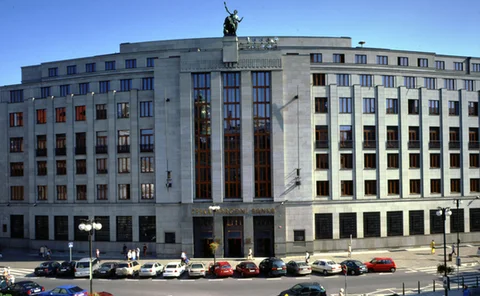
Czech Republic chooses not to set target date for euro adoption
Government decision follows central bank and ministry of finance advice; authorities cite need for greater real economic convergence as a ‘main barrier’ to adoption

Chilean central bank spells out risks to outlook
Central bank expects inflation to return to 3% target by end of 2017 according to latest forecasts; details risks from home and abroad to macroeconomic outlook