Raskin withdraws Fed candidacy

Nominee cites “relentless attacks by special interests” after key senators oppose bid

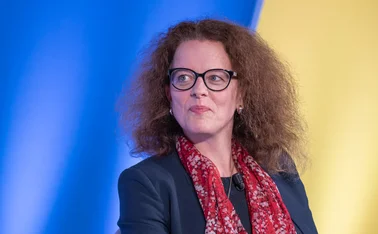
Sarah Bloom Raskin
Sarah Bloom Raskin
CSIS

Sarah Bloom Raskin withdrew her name from consideration for Federal Reserve vice-chair of supervision on March 15, a day after key senators signalled they would not vote to confirm her.

The New Yorker published Raskin’s letter to president Joe Biden withdrawing her candidacy.

Raskin blamed “relentless attacks by special interests” and Republicans. She said these opponents had taken issue with her “frank public discussion of climate change and the economic costs associated with it”. The nominee also accused her opponents of launching “diversionary attacks on my ethics and character”, which she characterised as “fully refuted” and baseless.

Raskin said she was withdrawing to end a Republican boycott of the president’s slate of five nominations for Federal Reserve positions. Raskin was nominated in January alongside economists Lisa Cook and Philip Jefferson, whom Biden chose for two vacancies on the Board of Governors. Biden also nominated Raskin to a 10-year partial term as a Fed governor.

In November, Biden proposed Jerome Powell for a second term as Fed chair, and Lael Brainard to a four-year term as vice-chair.

Raskin had previously served as a Fed governor between 2010 and 2014. She was then deputy secretary of the Treasury in the Obama administration from 2014 to 2017.

Senate Republicans had blocked a vote on all five nominations scheduled for February 15 by refusing to attend a meeting of the banking committee. The body then lacked a quorum to proceed.

Republicans said they specifically objected to Raskin, and were willing to vote on the other four. The committee’s Democratic chair, senator Sherrod Brown, had refused to decouple Raskin’s nomination from the rest of the slate.

At a committee hearing on February 3, Republican senators objected to Raskin’s stance on climate policy. In his opening statement, Pat Toomey, the most senior Republican on the committee, said “unelected officials like Ms Raskin want to misuse bank regulation to impose environmental policies that Congress has refused to enact”.

Senate Republicans charged Raskin with acting improperly while serving on the board of a Colorado non-bank financial company, Reserve Trust, between 2017 and 2019. Wyoming senator Cynthia Lummis said Raskin had lobbied the Federal Reserve Bank of Kansas City to grant Reserve Trust a Fed master account.

The Kansas City Fed reversed its earlier decision to deny Reserve Trust’s application, granting Reserve Trust the master account in 2018. Lummis questioned why Raskin’s employer had succeeded in getting this account when similar Wyoming institutions had not. Lummis also said that a venture capital firm, in which a former Treasury colleague was a partner, had paid Raskin nearly $1.5 million for her Reserve Trust stock in 2020.

Raskin’s nomination ultimately foundered thanks to opposition from West Virginia Democrat Joe Manchin – who represents a coal-mining state and once owned a coal-brokerage firm – and moderate Republicans.

Manchin said on March 14 that Raskin’s “previous public statements have failed to satisfactorily address my concerns about the critical importance of financing an all-of-the-above energy policy to meet our nation’s critical energy needs”.

Republicans Susan Collins and Lisa Murkowski also declared they would not support Raskin. The former said Manchin’s opposition doomed Raskin’s chances, and the latter called the candidate “flawed”.

Paul Kupiec, a senior fellow at the conservative American Enterprise Institute, says “when nominated, it was far from obvious that [Raskin’s] candidacy would be rejected”. He said Raskin’s chances of success fell because senators came to believe Biden was serious about reducing lending to fossil fuel companies.

“Raskin had been a particularly vocal advocate of choking off capital flows to the oil and gas industries. It was hard for her to escape that legacy, as it should be,” Kupiec says.

Sarah Binder, a senior fellow at the Brookings Institution and professor of political science at George Washington University, believes that “climate will continue to be an issue for Fed nominees”. However, “I don’t think this precludes current or future Fed attention to those risks”, she adds.

Todd Phillips, director of financial regulation and corporate governance at the liberal Center for American Progress, said “regulators must continue their efforts to ensure banks and other financial institutions are prepared for the climate-related risks they face”.

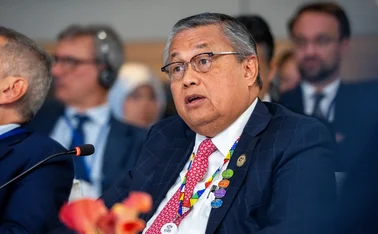
Reuters published an article on March 15 proposing some potential replacements for Raskin. Among them were Nellie Liang, undersecretary of the Treasury for domestic finance; Raphael Bostic, president of the Federal Reserve Bank of Atlanta; acting comptroller of the currency Michael Hsu; former Obama Treasury official Mary Miller; and Richard Cordray, the first director of the Consumer Financial Protection Bureau.

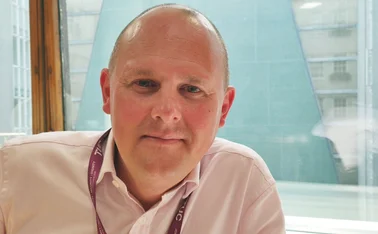
George Selgin, director emeritus of the Center for Monetary and Financial Alternatives at the Cato Institute, a conservative think-tank, told Central Banking that Liang might be a candidate. President Donald Trump nominated her to be a Federal Reserve governor in 2018, but she withdrew her candidacy in early 2019 after the Senate failed to act on it.

Selgin added Biden could potentially get a candidate concerned with climate change through the Senate. He suggested that Raskin aroused opposition because she wanted “to use the Fed’s regulatory powers to specifically discriminate against banks that lend to the fossil fuel sector”.

Empty chairs at far from empty tables

An unusually large number of Federal Reserve positions are unfilled at present. Jerome Powell’s term as Fed chair ended in February. He is currently serving as chair pro tempore.

Both the vice-chair positions are also vacant. Biden had declined to nominate the previous vice-chair for supervision, Randal Quarles, allowing his term to expire last October. The other vice-chair, Richard Clarida, resigned in January, 17 days before his term as governor ended, after controversies over his equities trading during the pandemic.

There are currently three vacancies on the Board of Governors. Clarida’s former seat is the most recent. Quarles left the Federal Reserve Board in December 2021 after Biden declined to give him a second term as vice-chair. Biden nominated Raskin to Quarles’s seat and his vice-chair post.

The third empty seat – formerly held by Janet Yellen, now Treasury secretary – has been vacant since early 2018.

Only users who have a paid subscription or are part of a corporate subscription are able to print or copy content.

To access these options, along with all other subscription benefits, please contact info@centralbanking.com or view our subscription options here: subscriptions.centralbanking.com/subscribe

You are currently unable to copy this content. Please contact info@centralbanking.com to find out more.

Most read articles loading...

You need to sign in to use this feature. If you don’t have a Central Banking account, please register for a trial.

Sign in
You are currently on corporate access.

To use this feature you will need an individual account. If you have one already please sign in.

Sign in.

Alternatively you can request an individual account

.