

New York Fed paper argues for wage insurance
The programme would pay for itself and increase lifetime earnings, researchers say

US workers should have wage insurance to compensate them if they transition to lower-paying roles, a Federal Reserve Bank of New York report argues.
“Wage insurance provides income support to displaced workers who find re-employment at a lower wage,” Benjamin Hyman, Brian Kovak and Adam Leive say in the report. “Because the subsidy amount is proportional to the earnings decline, the policy is designed to shorten unemployment durations by making re-employment more attractive, particularly in
Only users who have a paid subscription or are part of a corporate subscription are able to print or copy content.
To access these options, along with all other subscription benefits, please contact info@centralbanking.com or view our subscription options here: www.centralbanking.com/subscriptions
You are currently unable to print this content. Please contact info@centralbanking.com to find out more.
You are currently unable to copy this content. Please contact info@centralbanking.com to find out more.
Copyright Infopro Digital Limited. All rights reserved.
As outlined in our terms and conditions, https://www.infopro-digital.com/terms-and-conditions/subscriptions/ (point 2.4), printing is limited to a single copy.
If you would like to purchase additional rights please email info@centralbanking.com
Copyright Infopro Digital Limited. All rights reserved.
You may share this content using our article tools. As outlined in our terms and conditions, https://www.infopro-digital.com/terms-and-conditions/subscriptions/ (clause 2.4), an Authorised User may only make one copy of the materials for their own personal use. You must also comply with the restrictions in clause 2.5.
If you would like to purchase additional rights please email info@centralbanking.com
More on Financial Stability

The next financial crisis may start outside the banks
The warning signs are multiplying and the window for preventive action is narrowing, writes Stijn Claessens

IMF approves $695 million funding for Sri Lanka
Funding comes as country grapples with rising inflation and currency depreciation

Fed’s Cook touts use of AI in financial stability analysis
Technology can analyse complex patterns at scale and produce efficiency gains, governor says

Economists use AI to expand data on cross-border flow limits
IMF paper draws lessons from 40,000 policy moves designed to control financial flows
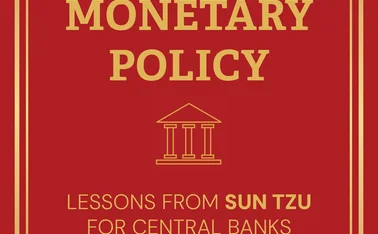
Book notes: The art of monetary policy, by Kristin Forbes
The message that effective monetary policy-making requires judgement, flexibility and realism alongside technical expertise is both persuasive and highly relevant

AI architecture ‘a source of financial instability’ – ECB paper
LLMs and Q-learning trading algorithms both amplify market distress, researchers find

BoE accelerates multi-money, multi-asset tokenised agenda
Breeden urges ‘earnest’ work amid systemic risks from innovations abroad

Helder Lopes on Timor-Leste’s transformation now the oil has run out
BCTL governor speaks about dollarisation, the Petroleum Fund, Asean membership, digitalisation and financial deepening