
How credible is Venezuela’s debt restructuring?
Aggressive timetable and lack of IMF involvement raise feasibility concerns for restructuring up to $240 billion of debt
Venezuela is undertaking one of the largest and most complex debt restructurings in history. But plans for a rapid process, potentially ignoring some of the thorniest credit exposures, without the involvement of the International Monetary Fund have raised serious questions about its credibility.
In May, the Venezuelan government commenced a restructuring process for both sovereign and state oil company (PDVSA) debt, and it hired Centerview Partners, a US investment bank, as its financial adviser.
The current debt load “constrains external financing, limits public investment capacity and prevents full re-engagement with the international financial system”, the government said in a statement. A macroeconomic framework and debt sustainability analysis (DSA) was set to be published in June.
That deadline has since come and gone.
One reason for the delay is that Venezuela was struck by two earthquakes on June 24, the second of which was the most powerful to hit the country in more than a century. The authorities have reported more than 6,400 deaths, with around 86,000 injuries and tens of thousands remain missing. The World Bank estimates that the earthquakes caused $19.6 billion in physical damage alone.
Nonetheless, on July 13, Calixto Ortega, vice-president for the economy and former president of the Central Bank of Venezuela, said plans for the debt restructuring were still on track and would be revised to incorporate the economic impact of the disaster.
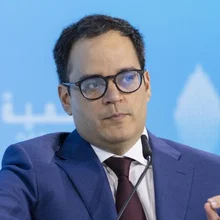
“We expect to publish these reports in the coming weeks, and they will provide a solid foundation for advancing an orderly, transparent and credible restructuring process that will create the necessary fiscal space for the country’s reconstruction,” Ortega said.
Venezuela entered a protracted default in 2017 under its then president Nicolás Maduro after it stopped making payments on its obligations. The development followed years of severe economic mismanagement, a collapsing oil sector, and US and other sanctions that cut Venezuela off from international capital markets.
Unpaid interest and legal claims tied to expropriations under the Hugo Chávez and Maduro regimes have seen estimates of the total debt owed snowball. In late June, the Financial Times reported that Venezuela was set to reveal a $240 billion debt pile, significantly larger than market estimates of $150 billion to $200 billion.
A restructuring of that size would be on the scale of Greece’s workout of €206 billion ($269.9 billion) bond indebtedness in 2012, the largest in the history of sovereign defaults. The report added that Venezuela was aiming to reach a deal with creditors by the end of this year.
Debt in the dark
One of the biggest impediments for Venezuela’s restructuring is the opaque nature of the country’s finances. While sovereign and PDVSA bonds are the biggest and most verifiable part of Venezuela’s debt, totalling $102 billion including accrued interest, the rest is harder to pinpoint.
There is a total absence of financial information. This is why it’s like walking in the dark when we talk about how much debt Venezuela owes
José Ignacio Hernández, Aurora Macro Strategies
“The main challenge is the extraordinary lack of transparency surrounding Venezuela’s public finances,” says Hector Torres, a senior fellow at the Canada-based think-tank Centre for International Governance Innovation and a former executive director at the IMF. “There is considerable uncertainty about the origin, size and composition of the public debt and the underlying macroeconomic outlook.”
“There is no centralised information about the non-financial debt. For instance, the Chinese loans are confidential. PDVSA has not published any financial reports since 2016, so there is no way to know how much PDVSA owes,” adds José Ignacio Hernández, head of public debt markets at Aurora Macro Strategies and former special attorney general of Venezuela. “There is a total absence of financial information. This is why it’s like walking in the dark when we talk about how much debt Venezuela owes.”
Steven Kargman, president of US-based international restructuring advisory firm Kargman Associates, says that the restructuring is going to be one of the most challenging in recent times. “One of the principal reasons is the diversity and sheer size of the creditor body,” he says.
Creditors include arbitration award holders, multilateral institutions, trade creditors and promissory noteholders, as well as bilateral creditors such as China and Russia. The exact amount Venezuela owes Beijing and Moscow is not known, but some public estimates put it at around $10 billion and $5 billion, respectively. While the debt owed to China and Russia constitutes a relatively small part of the overall outstanding debt, Kargman says the presence of the two countries could complicate the restructuring.
“China and Russia won’t be marching to the same drummer as financial creditors. They may have major non-financial objectives, such as pursuing geopolitical goals or maintaining access to natural resources, that could come into play in dealing with the restructuring,” he says.
Another hurdle for the restructuring concerns debt statistics produced by Venezuela. “Any numbers that the Venezuelan government produces may be subject to considerable questioning and scrutiny because there have been long-standing questions about the reliability and credibility of Venezuela’s economic data,” Kargman adds.
Venezuela has begun producing partial economic data in recent months. In March, the central bank published balance-of-payments data for the first time in seven years and inflation figures for the first time since October 2024. In an interview on state television in May, the central bank’s president Luis Pérez said the statistics it produced were not being tampered with. “We don’t cook the books,” he said.
That pushback has not alleviated concerns regarding the reliability of the data. “There is a great uncertainty regarding the accuracy of the limited information that the central bank has so far published,” Hernández says, referring to lingering questions over the central bank’s methodology and technical expertise on hand.
The Central Bank of Venezuela did not respond to requests to comment for this article.
Fund or no fund?
Most – but not all – major sovereign debt restructurings since the Mexican default that triggered the international debt crisis in 1982 have taken place under the umbrella of an IMF programme. These restructurings involve a fund-led debt sustainability analysis (DSA), which determines how much debt the country can carry in the future on a sustainable basis. The lack of IMF involvement in Venezuela’s restructuring has raised alarm among experts.
Torres says he was surprised by Venezuela’s announcement in May. “The IMF has not been able to conduct an Article IV consultation with Venezuela since 2004, meaning the country’s macroeconomic data have not been independently assessed for more than two decades,” he says. “Launching what could become the largest sovereign debt restructuring in history without a reliable and independently verified statistical base is highly unusual.”
China and Russia won’t be marching to the same drummer as financial creditors. They may have major non-financial objectives, such as pursuing geopolitical goals or maintaining access to natural resources, that could come into play in dealing with the restructuring
Steven Kargman, Kargman Associates
Lee Buchheit, a leading sovereign debt expert who has represented more than two dozen countries in restructurings since the 1980s, believes the IMF’s absence is a major issue. “There have been large sovereign debt restructurings done without the IMF, but the most infamous example is Argentina in 2005 – and everyone knows that did not end well.”
Buchheit is referring to Argentina’s 2005 attempt to restructure around $100 billion of debt and interest due. The package offered failed to achieve full resolution as many holdout creditors rejected the terms and sought restitution in foreign courts, which prolonged Argentina’s exile from the international capital markets for a decade.
Venezuela’s initial timeline to have a ‘homemade’ DSA produced by June was also viewed with scepticism. “That was quite a surprise because – by any measure – it was not possible then, and it is not possible today, to have a credible debt sustainability analysis in such a short period,” Hernández says. “This intention to conduct and expedite the restructuring is quite challenging considering the many challenges and problems in Venezuela.”
Buchheit argues that the process of “debt reconciliation” for Venezuela will take time – many months – in view of the diverse nature of the debt stock. Debt reconciliation is a process in which creditor claims are matched and verified against the sovereign debtor’s own records.
There have been large sovereign debt restructurings done without the IMF, but the most infamous example is Argentina in 2005 – and everyone knows that did not end well
Lee Buchheit
Torres says that Argentina’s 2020 debt restructuring offers a cautionary lesson for Venezuela. “Although Argentina restructured its [$65 billion] debt without the IMF’s financial support, its macroeconomic framework had at least been independently assessed by the fund. The government assumed that securing an agreement with private creditors first would strengthen its hand in subsequent negotiations with the IMF,” he says.
“Instead, the absence of an IMF financial backstop undermined investor confidence that the restructuring would restore debt sustainability rather than merely postpone another crisis,” Torres says. “As result, instead of enjoying the customary ‘honeymoon’ that often follows a successful debt restructuring, Argentina’s new bonds quickly traded at deep discounts.”
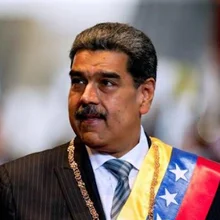
The IMF and World Bank resumed dealings with Venezuela in April this year following a break since in 2019 over disputes about the recognition of its government. The resumption came amid improving relations between the country and the international community under interim president Delcy Rodríguez, who came to power after US forces captured Maduro in January. Maduro is currently being held on drug-trafficking charges in a federal jail in New York.
“We have not been involved in the debt restructuring process announced by Venezuela,” an IMF spokesperson tells Central Banking. “Fund staff maintain regular engagement with the Venezuelan authorities, including on the macroeconomic outlook, as we do with all our member countries. The fund stands ready to assist the authorities as needed.”
Venezuela’s Ministry of Economy and Finance and Centerview Partners did not respond to requests for comment for this article.
‘Down and dirty’
Venezuela’s desire for a rapid deal likely comes down to political considerations. Buchheit says there are three factors that are driving the ‘down and dirty’ restructuring, referring to a Venezuelan deal that only focuses on the bond claims and leaves the rest unaddressed in the hope of regaining access to international capital markets.
“I don’t think the Delcy administration particularly wants a bunch of IMF economists running around Caracas figuring out where all the money went in the last 25 years, so she is probably predisposed to do this without the IMF,” he says.
Another factor, he says, is that some bondholders believe a DSA produced by the IMF could be more conservative. “Finally, [US president] Donald Trump has never had much use for multilateral organisations like the IMF. He is 100% focused on the oil sector. As far as he’s concerned, every available dollar should be going into its refurbishment,” Buchheit adds.
In a press conference in January following Maduro’s capture, Trump said that the US was going to run Venezuela’s oil industry. “We’re going to have our very large United States oil companies, the biggest anywhere in the world, go in, spend billions of dollars, fix the badly broken infrastructure, the oil infrastructure and start making money for the country,” he said.
I have heard [Trump] say nothing about the legacy debt-holders in Venezuela that either suggests solicitude for them or antipathy toward them. I don’t think he cares about the legacy debt-holders
Lee Buchheit
“I have heard him say nothing about the legacy debt-holders in Venezuela that either suggests solicitude for them or antipathy toward them. I don’t think he cares about the legacy debt-holders,” Buchheit says.
In a speech to supporters in Nevada in August, Trump said that the US had taken “billions and billions” of oil revenues from Venezuela. US imports of Venezuelan oil have surged in recent months: the four-week average of imports reached 630,000 barrels a day in the week ending July 24, the highest since 2017 and nearly six times the figure at the start of the year. That rise has come as the US has gradually unwound its sanctions on Venezuela’s oil industry that were imposed during the first Trump administration.
The revenues generated from Venezuela’s oil exports are currently being deposited in US Treasury accounts. In January, Trump issued an executive order that immunised Venezuelan oil revenues held in US accounts from attachment by creditors. “This action represents a significant shift in the administration’s approach to Venezuela, prioritising US foreign policy and national security over the claims of commercial judgement creditors,” the order said.
Torres says Venezuela has become a “kind of protectorate” of the US that has complicated the debt restructuring. “I think the speculation is that the US involvement in running the country will supplant the transparency and credibility that you get from an Article IV from the IMF and from the debt sustainability analysis.”
Hernandez says his base case is that Centerview Partners will present its macroeconomic framework and that it is possible the US issues a licence to allow Venezuela to kick off debt negotiations. In May, the US Treasury granted a licence authorising the country to hire advisers for potential debt talks. However, the licence in its current form does not permit direct negotiations between Venezuela and its creditors or “the restructuring, transfer or settlement” of sovereign or PDVSA debt.
“If that is the case, I anticipate that the negotiations will not be successful because there are too many uncertainties,” Hernandez says. “Without a credible framework and political stability, the debt restructuring will face a gigantic information asymmetry cost.” Hernandez adds that there are also structural hurdles to overcome: most PDVSA bonds do not contain collective action clauses, which would allow a supermajority of bondholders to agree to a restructuring that can bind all creditors.
A restructuring that only focuses on the bondholders would also not provide a long-term resolution to Venezuela’s debt problems, Kargman says. “There would still be substantial non-bond debt that would remain outstanding. Even if Venezuela were to restructure the bond debt and regain access to the capital markets, a significant volume of creditor claims would remain unresolved, including claims that could be subject to litigation and enforcement efforts,” he says.
“Venezuela might be able to reach some deal with the bondholders,” Kargman says, “but the question is whether that would be what one would reasonably consider to be a long-term, sustainable solution.”
Venezuela’s bonds currently trade at around 60 cents on the dollar, up from 33 cents before Maduro’s removal. But prices have declined in recent weeks amid subdued investor sentiment in the wake of the earthquakes.
“I doubt that this restructuring alone will restore Venezuela’s access to international capital markets. Without a credible macroeconomic [assessment] supported by the IMF and accompanied by institutional reforms, investors are likely to remain cautious,” Torres says. “That said, well-connected private creditors may acquire claims at deep discounts and eventually make lots of money.”
An odious wildcard
US machinations in Venezuela could end with a new government in power. Venezuela’s interim administration and figures from the opposition ended their first round of US-backed talks in mid-August, which could establish the terms for democratic elections in the future. The two sides agreed to reform the judicial system and concentrate efforts on securing Venezuela’s gold reserves held at the Bank of England, which have been frozen pending litigation since 2019.
A new government dealing with the debt restructuring could investigate whether any of its obligations fall under ‘odious debt’ – the idea that debt issued with no benefit and no consent of the people should not be inherited by successor governments. The principle dates to the 1898 peace negotiations of the Spanish-American War, when Spain ceded Cuba to the US.
Before the war had ended, Spain contracted debt – which gave the creditor the right to collect from Cuba’s revenues – to quash a popular rebellion. The Americans refused to take this on, arguing that the loans had not been taken out for the benefit of the Cuban people.
In the early 20th century, Alexander Sack, a legal scholar born in Tsarist Russia, coined the term ‘odious debt’ to describe a class of sovereign debt that deserved to be cancelled. To qualify as odious, the debt issued must have been “literally or effectively stolen by a tyrant, leaving the population [they] once ruled to pick up the check”, according to a 2007 paper by Bradley Lewis in the Boston University International Law Journal.
While ‘odious debt’ has not gained widespread currency in international law, the idea came to renewed prominence during Iraq’s $130 billion debt restructuring between 2004 and 2008. Iraq’s debt had rocketed under Saddam Hussein following the Iran-Iraq conflict in the 1980s and the imposition of crippling international sanctions in the 1990s. By 2003, Iraq had become the most indebted nation in the world, with a debt-to-GDP ratio of 570%.
Buchheit advised Iraq on its restructuring in the aftermath of the US-led invasion in 2003. The US government under president George W Bush publicly backed idea that Saddam-era debt should be declared odious. “I resisted that and said, ‘look, the plurality of this debt is held by the Paris Club. If we go to Paris and try to ask for debt relief and justify it by invoking the doctrine of odious debt, they will be obliged to throw us out of out of the room,’” Buchheit says.
“The problem with odious debt is there’s no definition of who is odious and what debt is odious,” he says. Iraq eventually got very substantial debt relief without publicly invoking the concept of odious debt. Saddam-era claims against Iraq (both commercial and official bilateral claims) were uniformly settled at a value equal to 10.25 cents on the dollar. “By the end of the process, 13,124 separate claims were settled in this way,” says Buchheit, “a write-off (in net present value terms) of 89.75%.”
In an article for The International Economy published in May, Kargman said the concept of odious debt, although it has not achieved general recognition as a legal doctrine, could influence restructuring negotiations in Venezuela by highlighting the circumstances in which certain debt obligations were incurred and the purposes for which the proceeds were used. “This could potentially give a new government moral and political leverage vis-à-vis those creditors who financed the debt obligations at issue,” he wrote.
Buchheit says the criminality of the Chavez and Maduro regimes makes the concept of odious debt relevant in Venezuela’s case. “It’s very much almost a criminal-run state and, transaction by transaction, you really should look at whether the transaction itself was corrupt,” he says.
A number of Venezuelan bonds denominated in foreign currency are thought to have been sold to regime insiders at deep discounts for bolivars calculated at the official exchange rate, which stands at a small fraction of the black-market rate. Those bonds were later resold on the international market, with the proceeds either scurried away or converted back into bolivars at the black-market rate.
In 2023, the former National Treasurer of Venezuela, Claudia Patricia Díaz Guillen, and her husband were sentenced in the US to 15 years in prison for their roles in a similar scheme. According to the Department of Justice, a Venezuelan billionaire businessman allegedly paid over $136 million in bribes to Díaz to “obtain access to purchase bonds from the Venezuela National Treasury at a favourable exchange rate, resulting in hundreds of millions of dollars of profit”.
“The question for any legitimate government will be, do you investigate the fraudulent element of those transactions, and do you adjust the recovery value to take that into account?” Buchheit says.
Only users who have a paid subscription or are part of a corporate subscription are able to print or copy content.
To access these options, along with all other subscription benefits, please contact info@centralbanking.com or view our subscription options here: www.centralbanking.com/subscriptions
You are currently unable to print this content. Please contact info@centralbanking.com to find out more.
You are currently unable to copy this content. Please contact info@centralbanking.com to find out more.
Copyright Infopro Digital Limited. All rights reserved.
As outlined in our terms and conditions, https://www.infopro-digital.com/terms-and-conditions/subscriptions/ (point 2.4), printing is limited to a single copy.
If you would like to purchase additional rights please email info@centralbanking.com
Copyright Infopro Digital Limited. All rights reserved.
You may share this content using our article tools. As outlined in our terms and conditions, https://www.infopro-digital.com/terms-and-conditions/subscriptions/ (clause 2.4), an Authorised User may only make one copy of the materials for their own personal use. You must also comply with the restrictions in clause 2.5.
If you would like to purchase additional rights please email info@centralbanking.com
More on Economics

Why an independent Scotland would need a new currency
Scottish government’s plan to keep sterling would lead to a central bank in name only, say economists

Firms, not tech, set pace of AI adoption, economists tell Warsh
Use of AI is ‘wide but shallow’ and white-collar workers may experience ‘China shock’

BIS develops AI-agentic modelling framework
System designed so human researchers approve key decisions and AI agents explain rationale

Oil price feeds into core inflation more than before Covid – study
Costlier crude results in sevenfold hit to price levels, Fed economists find
Eurozone exposure to AI debt ‘remains low for now’ – Lagarde
ECB ‘closely monitors’ AI financing and financial stability implications, bank’s president notes
Book notes: Keynes for our times, by Robert Skidelsky
Skidelsky skilfully reframes economic debates in this distilled biography, but overreaches in the final chapters
Bahamian economy faces ‘elevated’ downside risks – Rolle
FX reserves more than adequate to support currency’s US dollar peg, central bank governor says

AI borrowing boom poses stability risks – BIS bulletin
Sustained bond issuance by tech firms could exert pressure on broader long-term yields, study says