

Currency round-up
New notes for Paraguay, printing error for Thailand, and news from Peru, Costa Rica and Tonga

Paraguay: The Central Bank of Paraguay announced on October 5 that it would introduce a new banknote series from 2023.
The BCP said the move would help combat counterfeiting and introduce more up-to-date security features. The new series will also standardise the format of banknotes, as the country’s existing banknotes are a mix of different issues designed over decades.
The central bank also said it wanted to incorporate new imagery and produce more durable currency. It said it would preserve
Only users who have a paid subscription or are part of a corporate subscription are able to print or copy content.
To access these options, along with all other subscription benefits, please contact info@centralbanking.com or view our subscription options here: www.centralbanking.com/subscriptions
You are currently unable to print this content. Please contact info@centralbanking.com to find out more.
You are currently unable to copy this content. Please contact info@centralbanking.com to find out more.
Copyright Infopro Digital Limited. All rights reserved.
As outlined in our terms and conditions, https://www.infopro-digital.com/terms-and-conditions/subscriptions/ (point 2.4), printing is limited to a single copy.
If you would like to purchase additional rights please email info@centralbanking.com
Copyright Infopro Digital Limited. All rights reserved.
You may share this content using our article tools. As outlined in our terms and conditions, https://www.infopro-digital.com/terms-and-conditions/subscriptions/ (clause 2.4), an Authorised User may only make one copy of the materials for their own personal use. You must also comply with the restrictions in clause 2.5.
If you would like to purchase additional rights please email info@centralbanking.com
More on Banknotes
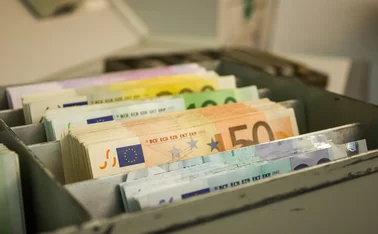
Rethinking the narrative on cash
Antti Heinonen explores recent developments of cash that go against the prevailing narrative
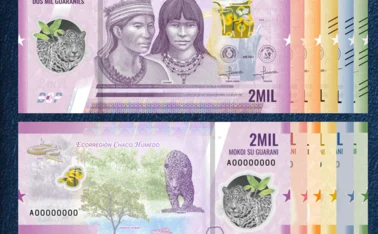
Paraguay’s central bank unveils new series of banknotes
Designs come with updated security and accessibility features
Banknotes: July to September 2026
A round-up of news and salient issues that have affected central bankers in the past three months
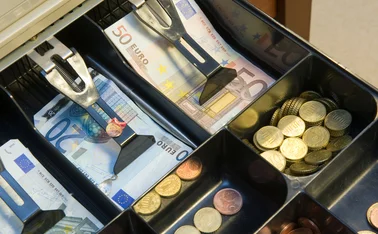
Merchants in the cash system
As policy-makers seek to protect cash acceptance and increasingly look to retailers to facilitate access to cash, Martina Horakova argues that merchants need adequate cash services themselves – and that providing cash to the public should not come at their expense
Germany sees surge in €100 fakes amid overall counterfeit decline
Deutsche Bundesbank says overall levels of forged money remain low
Iraq receives $500m from Fed as government faces cash shortage
Oil-exporting country’s income comes under strain as Hormuz uncertainty persists

ECB unveils shortlist of new euro banknote designs
Bank invites public to share their views, offers vertical designs for first time

Sudan to withdraw low-value notes from circulation
Smaller denominations have lost purchasing power amid inflation and currency depreciation