

BoE exhibition to juxtapose new fiver with historical banknotes
Bank of England to open currency gallery a week before launch of new £5 note

Some of the world's earliest paper money will feature alongside the Bank of England's (BoE) most technologically sophisticated banknote in a new permanent gallery to be housed in the central bank's museum later this month.
Due to open on September 7, the Banknote Gallery will present the story of the banknote from its earliest days, when paper money was widely mistrusted, to the new £5, or 'fiver', due to be launched next week.
"The new polymer £5 note... gives us the perfect opportunity to show off the most beautiful, significant and, in some cases, surprising notes in the Bank's collection," says Jennifer Adam, curator of the BoE museum.
"The pairing of notes from the 1690s with the new note shows how far we have come, but while the original notes may appear simple in comparison, they were packed with design tricks designed to outwit counterfeiters."
Some of the highlights of the gallery include the earliest paper notes from the Ming dynasty in China and the ‘running cash' notes – as old as the Bank of England itself – accepted as payment in place of a pile of gold.
"The new gallery will build a clear picture of how banknotes have changed since the Bank was established in 1694," the BoE said in a statement.
Displaying fakes
One of the key themes of the new exhibition is the creation of forgeries, emphasising the fact that as soon as banknotes appeared, so did counterfeits.
"Since its foundation, the Bank of England has been in a constant battle to stay several steps ahead of forgers," the BoE explains, noting even the simple black and white notes of the 18th century contained a plethora of subtle security features, including complex watermarks and minute secret marks that helped clerks identify genuine notes.
Among those forgeries on display will be notes used during ‘Operation Bernhard', the Nazi plan to ruin the British economy during the Second World War by flooding it with fake money.
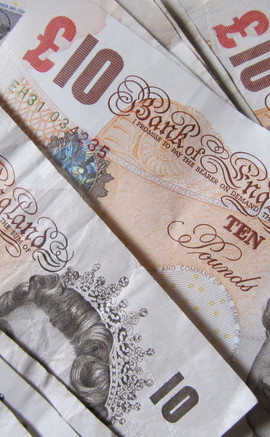 The museum will illustrate how banknotes have changed over time, adopting more security features as counterfeits became more sophisticated
Created by prisoners at Sachsenhausen concentration camp, the notes were intended to be dropped by plane over Britain, picked up and used by members of the public. While the drop never happened, the BoE was still forced to withdraw all notes over £5 and redesign the £5 note after many of the forgeries found their way into circulation.
From design to circulation
The gallery will also display previously unseen artwork used for designing various banknote series, helping to illustrate the complete process of creating a note.
Sketches from Daniel Maclise, Harry Eccleston, Stephen Gooden and Roger Withington will be featured alongside initial design sketches, detailed master drawings, test prints and printing plates, presenting a "roll call" of characters that have found their way on to banknotes.
The gallery will also display a geometric chuck lathe – a large, historic piece of design machinery. Built in 1905 and in use until the 1980s, the machine created the ‘Spirograph' patterns that decorated banknote series produced in 1928 and the 1960s.
Using a combination of art and mathematics, the lathe generated an "almost infinite" number of complex patterns, "virtually impossible" to copy exactly, either by hand or machine, the BoE said.
"I hope the new gallery will make people regard the note in their pocket differently, as a beautiful, innovative work of art, before they have to part with it," says Adam.
The gallery is free to visit and will be open Monday-Friday from 10am–5pm.
Only users who have a paid subscription or are part of a corporate subscription are able to print or copy content.
To access these options, along with all other subscription benefits, please contact info@centralbanking.com or view our subscription options here: www.centralbanking.com/subscriptions
You are currently unable to print this content. Please contact info@centralbanking.com to find out more.
You are currently unable to copy this content. Please contact info@centralbanking.com to find out more.
Copyright Infopro Digital Limited. All rights reserved.
As outlined in our terms and conditions, https://www.infopro-digital.com/terms-and-conditions/subscriptions/ (point 2.4), printing is limited to a single copy.
If you would like to purchase additional rights please email info@centralbanking.com
Copyright Infopro Digital Limited. All rights reserved.
You may share this content using our article tools. As outlined in our terms and conditions, https://www.infopro-digital.com/terms-and-conditions/subscriptions/ (clause 2.4), an Authorised User may only make one copy of the materials for their own personal use. You must also comply with the restrictions in clause 2.5.
If you would like to purchase additional rights please email info@centralbanking.com
More on Banknotes
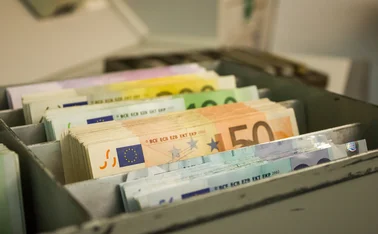
Rethinking the narrative on cash
Antti Heinonen explores recent developments of cash that go against the prevailing narrative
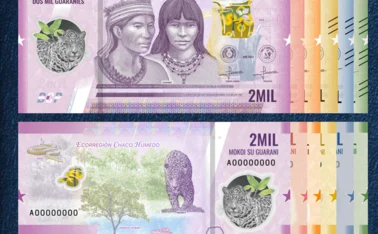
Paraguay’s central bank unveils new series of banknotes
Designs come with updated security and accessibility features
Banknotes: July to September 2026
A round-up of news and salient issues that have affected central bankers in the past three months
Merchants in the cash system
As policy-makers seek to protect cash acceptance and increasingly look to retailers to facilitate access to cash, Martina Horakova argues that merchants need adequate cash services themselves – and that providing cash to the public should not come at their expense
Germany sees surge in €100 fakes amid overall counterfeit decline
Deutsche Bundesbank says overall levels of forged money remain low
Iraq receives $500m from Fed as government faces cash shortage
Oil-exporting country’s income comes under strain as Hormuz uncertainty persists

ECB unveils shortlist of new euro banknote designs
Bank invites public to share their views, offers vertical designs for first time

Sudan to withdraw low-value notes from circulation
Smaller denominations have lost purchasing power amid inflation and currency depreciation