Payments and FMIs (Part 1): Capacity building
About the course
Participants on this course will delve into the evolving landscape of payment systems and financial market infrastructures (FMIs). The training will address the implications of operational, cyber, and geopolitical risks on payment frameworks and highlight best practices for enhancing resilience. Key topics include the evolution of Real-Time Gross Settlement (RTGS) systems, the potential role of Central Bank Digital Currencies (CBDCs), and the regulatory challenges associated with stablecoins. This engaging course will equip participants with the essential tools and knowledge to understand the complexities of modern payment systems.
Tutors
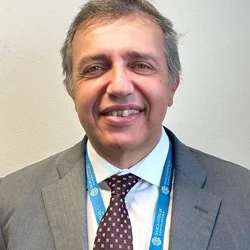
Paolo Bramini
Manager, payment systems directorate
Bank of Italy
Paolo Bramini joined Banca d ‘Italia in 1996 and was initially assigned to what would soon become the Payment Systems Directorate. Although this Directorate did not formally exist at the time, its foundations were being laid with the implementation of the BI-REL domestic gross settlement system. He then worked closely on the design and implementation of the European payment systems: first TARGET, then TARGET2 from 2008, then TARGET2-Securities and finally the new consolidated platform for TARGET Services. Five years ago, he was appointed Head of Banca d ’Italia’s Wholesale Payment Systems Division, which includes the Italian National Service Desk for TARGET Services. More recently, he was assigned to the staff of the Head of his Directorate General, leading and coordinating the analysis of the developments in the wholesale payment market and their impact on Eurosystem infrastructures and national operators.

Evaldas Ruzgys
Member of the board and former director, market infrastructure department
Bank of Lithuania
Evaldas Ruzgys started his professional career in 2002 at the then AB bank NORD/LB Lietuva and held various positions at AB bank HANSABANKAS, AB DnB NORD bank and AB DNB bank until 2013. In 2013–2020, he was the Head of the Digital Channels Department for the Baltics at AB DNB bank and its successor Luminor Bank AB.
In 2020–2023, Ruzgys was a freelance technology and business consultant and implemented projects for the State Enterprise Centre of Registers, UAB Žemės ūkio paskolų garantijų fondas and fintech companies. He started his career at Lietuvos bankas in June 2023 as the Director of the Market Infrastructure Department.
Ruzgys holds a MSc in Finance and Banking and a BSc in Economics from Vytautas Magnus University in Kaunas.

Marianne Bechara
Senior counsel, legal department, and fintech department supervisor
International Monetary Fund (IMF)
Ms. Marianne Bechara serves as Senior Counsel in the Fiscal and Financial Law Division of the IMF Legal Department. She possesses extensive expertise in financial and banking law, providing guidance on central banking, financial law as well as Fintech with a focus on digital payments, CBDC, stablecoins and AI. Ms. Bechara supervises the Fintech work of the IMF Legal Department. Throughout her career, she has contributed to numerous publications analyzing the intersection of law and Fintech. Ms. Bechara holds an LL.M. in Banking and Financial Law from Boston University and is licensed to practice law in both California and New York.
Agenda
Welcome and context-setting
- Speaker introductions
- Course overview
Introduction to new-age payment systems
- Basic evolution of payment principles
- Current payments landscape:
- RTGS
- Fast/Instant payments
- Cross-border payments
- DLT and CBDCs
- The future of payment systems
The evolution of RTGS: The Eurosystem as paradigm
- History and current features, including instant settlement
- Safeguarding against outages and attacks
- Collaborative approaches to cross-border transactions
CBDCs: Central bank money in the digital age
- Motivations for central banks entering the digital payment space
- Implications and risks of CBDCs and measures to address them
- Wholesale CBDCs reconsidered given the surge of DLT
- Regulatory and governance aspects of CBDCs
Stablecoins: Balancing trust with innovation
- Background: Market overview, quick comparison with other forms of means of payment
- International guidance and standards: IMF, FSB, CPMI, IOSCO, UNIDROIT
- Comparative overview of current stablecoin legal regimes
- Focus on classification, eligible issuers, global stablecoins, reserves, segregation, remuneration, redemption, foreign issuers, insolvency
Closing remarks
- Course summary
- Closing remarks
Learning objectives
Understand the current payment system landscape
Explore ongoing developments to RTGS systems across the globe
Evaluate the role of CBDCs for central banks
Assess regulatory challenges associated with stablecoins
Examine future trends towards interoperable payment systems
Who should attend
- Directors of payments and market infrastructures
- Heads of payments systems oversight
- Heads of market infrastructure development/management
- Heads of retail payment instruments
- Heads of clearing and settlement
- Payment systems officers
- Chief strategy officers
- Directors of monetary policy
- Policy analysts
- Heads of innovation/fintech/digital currency
- Heads of technology risk supervision
- Clearing houses and local regulators