
Quantitative easing

EMs should work to avoid ‘macro-prudential war’ – BIS article
Use of macro-prudential policies should be co-ordinated internationally for maximum effect, say Luiz Pereira da Silva and Michael Chui

ECB taper unlikely to upset major European equity investors
Norway’s sovereign wealth fund is boosted by its €200 billion investment in European stocks
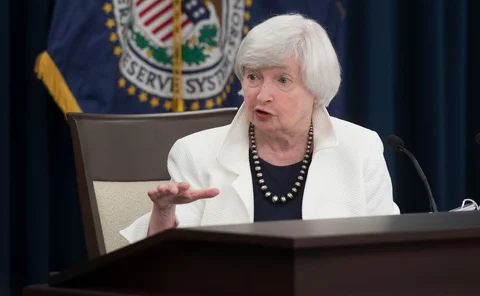
FOMC triggers balance sheet wind-down
Fed will begin allowing securities to roll off its balance sheet from October; Janet Yellen stresses changes will proceed gradually

Cleveland Fed’s Mester upbeat on prospects for US economy
Loretta Mester backs continued gradual rate rises and the commencement of balance sheet normalisation “in the near future”

ECB will take ‘bulk of decisions’ on asset purchases in October – Draghi
ECB staff revise eurozone inflation decisions downwards despite higher expected growth

The Treasury could make QE exit faster and smoother
Swapping longer-term bonds for Treasury bills or floating-rate bonds would expedite the process of reducing bloated central bank balance sheets

St Louis Fed explains Fed’s plans to unwind balance sheet
Fed expected to stop replacing maturing securities to reduce $4.5 trillion balance sheet

Draghi’s ‘whatever it takes’ is not credible – Nobel laureate
Chris Sims says ECB cannot be sure it will be able to stop a run on the euro until it is backed by a central eurozone fiscal authority

QE has positive spillovers into south-eastern Europe, ECB paper says
Some countries experience stronger inflationary effects than eurozone - researchers

QE has not increased eurozone inequality - ECB’s Constâncio
Low-income households benefit most from stimulus, ECB vice-president says

German court refers ECB bond purchases to ECJ
“Doubtful” whether PSPP is authorised by German and European law, says court

The changing composition of central bank balance sheets
Quantitative easing may have been necessary, but it has created worrying distortions and has probably discouraged structural change, while deflecting attention away from ever-greater levels of debt leverage

Fed paper: corporate bond buying can misallocate capital
Capital misallocation effects can mean corporate bond purchase schemes underperform QE based on sovereign bonds, say economists

Brexit drives a wedge between BoE and markets
Market expectations of future UK interest rates appear out of line with views expressed by the Bank of England’s Monetary Policy Committee. It comes at a time when Brexit ‘news’ often trumps economic data

Fed can no longer ‘wait and see’, says Williams
Waiting to unwind the balance sheet could “overheat the economy”, says San Fran president, who believes the US has “fully recovered” from the recession

Piecing together a financial theory of stagnation
Ideas presented at recent BIS annual meetings reveal an emerging framework that explains how the financial system may be dragging down the real economy; Hélène Rey was the latest to contribute

Fed to begin shrinking balance sheet ‘relatively soon’
Rates remain on hold as the FOMC eyes below-target inflation, while the wording change implies that action on the balance sheet could begin sooner than previously expected

ECB will look afresh at policy this autumn – Draghi
Draghi says recovery is continuing, but strikes a cautious note on inflationary pressures

The BoJ’s exit policy and balance sheet risks
The Bank of Japan will need to follow a meticulous sequencing of events as its ‘normalises’ monetary policy, making current concerns about negative equity appear premature

Policy mix has important implications for spillovers – Fed’s Brainard
Fed governor says degree of divergence between central banks and choice of policy tool affects the exchange rate impact and therefore spillovers

BoJ faces growing communications challenge
Japanese central bank embarks on its third attempt at unlimited fixed-rate outright JGB purchases; further fiscal stimulus would do little to help

St Louis’s Bullard on the future of the Fed and its monetary policy record
St Louis Fed president James Bullard rails against east coast dominance, favours aspects of the Choice Act and says Fed monetary policy was a “factor” that fuelled crisis

BoE bloggers suggest central banks could use equity-financed QE
Economists raise ideas for future balance sheet innovations, including digital currencies, helicopter money drops and equity-based quantitative easing

Bank of Japan strikes upbeat tone as it keeps policy on hold
The Bank of Japan decided to leave policy settings unchanged at its June meeting, but sounded more upbeat on the outlook