
Quantitative easing

Goodfriend nominated to Fed board
Central bank veteran to fill one of the four vacant spots on the board of governors

Powell to explain policy outlook before US Senate
Nominee set to defend loose policy stance and independence of central bank as new chair

ECB’s public sector asset purchases pushed down repo rate, BdF paper finds
Effect was particularly strong before January 2017, researchers say

ECB should not raise rates until 2020 – OECD
OECD says European Central Bank should “gradually” taper asset purchases in 2018

ECB officials disagree on open-ended QE
Agreement on keeping private-sector purchases sizeable, which would increase their importance

Sweden still needs loose policy – IMF
Elevated house prices, public debt and low wage growth are the biggest risks to the economy

Eurozone excess liquidity focused on five states – ECB paper
Funding stress no longer drives the concentration of holdings, say researchers

Unconventional policy driving crypto bubble, BNPP economist argues
Cryptocurrencies have the potential to deliver “large, positive returns” in an environment stifled by negative real rates

Fed’s Williams proposes new tools to deal with future crisis
Structural factors beyond central banks’ control keep natural rate of interest lower
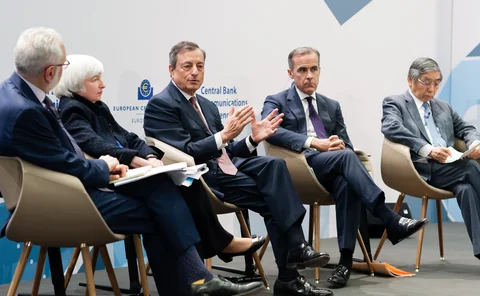
Communication key to convey policies and objectives to public, central bankers say
Yellen, Draghi, Kuroda and Carney reflect on reaction of markets and public to policy communication

Productivity puzzles and the neutral rate of interest
Monetary policy frameworks should be subjected to internal and external reviews to ensure they remain fit for purpose

Accommodative policies can continue in Europe due to weak inflation, IMF says
Reduction of non-performing loans in weak banks remains a priority
Riksbank’s executive board divided over QE programme
Some members advocate ending stimulus in December, others fear that could reduce inflation

No reason why central banks cannot be privatised, economists argue
Central banks may be better equipped to sustain market stability if privately owned, argues Juan Castañeda, with the private sector bailing out failed banks
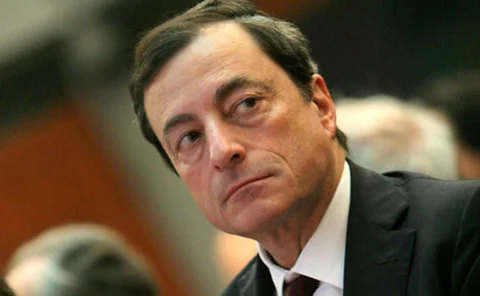
Supervision bolsters monetary policy transmission – Draghi
No sign of housing bubble developing across eurozone as a whole, ECB president says

German economic council urges ECB to tighten policy
Group of experts says stronger growth and loose policy could lead to higher financial risk

Eurosystem is less transparent and efficient than Fed, research finds
European central banking structure is twice as expensive as its US equivalent

New York Fed’s Dudley set to retire early
William Dudley says he wants to ensure a successor is in place “well before” the end of his term

ECB may change composition of QE, researchers say
Lower levels of sovereign bond acquisitions may allow the central bank to extend stimulus into 2019

Weidmann says ECB should have set time for end to asset purchases
Current policy risks blurring line between fiscal and monetary policy, Bundesbank president says

ECB QE lowers yields via portfolio reshuffling – research
Sovereign bond-buying programme sharply reduced 10-year Bund yields

Riksbank on hold despite above-target inflation
Central bank is cautious about moving too fast amid sluggish hikes elsewhere
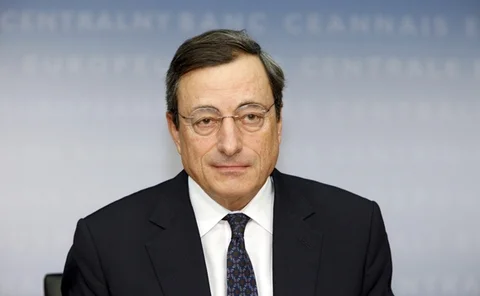
ECB to reduce monthly asset purchases to €30 billion
Central bank extends QE by nine months until September 2018, and keeps rates unchanged

Low inflation partly down to luck – CEPR report
David Miles and co-authors argue advanced economies’ luck on inflation could run out; recommend central banks prepare