
Dynamic stochastic general equilibrium (DSGE)

Sri Lanka on track to flexible targeting – deputy governor
The central bank has much of the infrastructure in place, but the pace needs to increase if 2020 deadline is to be met, says Weerasinghe

Interview: Edward Prescott
The Nobel Prize-winner speaks to Daniel Hinge about time inconsistency and real business cycle theory, and explains why there is no ‘productivity puzzle’

BoE paper adds time-varying parameters to DSGE model
Method allows parameters to shift over time as the structure of the economy changes, yielding improvements to forecasting

IMF’s Adrian sketches macro-financial model of term premium
Tobias Adrian outlines a new way of modelling financial cycles within a New Keynesian framework, which produces a good fit with empirical observations on the term structure

Survey data can help with modelling expectations – BoJ paper
Discussion paper outlines method of incorporating survey data as a proxy for expectations, with “promising” results for inflation modelling in the US and Japan

Book notes: Can We Avoid Another Financial Crisis?, by Steve Keen
Steve Keen challenges “mainstream” economic thinking in this concise book, hoping to shift the political debate on debt

BoE economists criticise DSGE inflation modelling
Team including MPC member Kristin Forbes criticises structural modelling approaches for failing to properly account for trend inflation

IMF economist builds agent-based banking system model
Model captures the diversity of agents and the use of rules of thumb; the author says the modular nature allows “straightforward” enhancements

Central banks should test robustness of their main macro models – paper
Bank of Canada paper says users of large-scale macroeconomic models should develop tools to assess whether non-linearities could be distorting results

Scrap micro-foundations to repair macroeconomics – Steve Keen
Professor says economy should be viewed as a dynamic system with credit playing a crucial role, arguing we should ditch models such as DSGE
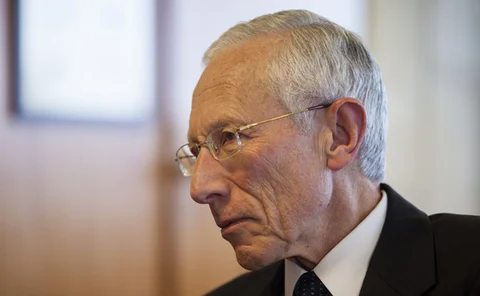
Fed’s Fischer: econometric models are still flawed
US Fed vice-chair says models still cannot capture the complexities and rapid evolution of the economy – despite his hopes as an undergraduate

Poloz considers the future of economic modelling
Theoretical and empirical two-pronged approach likely to stay, governor says, though economists are still on the hunt for the “holy grail” single model

RBNZ paper sheds light on core macro model
'NZSIM' is a semi-structural model, with a DSGE core augmented with a handful of additional equations

Haldane turns to other disciplines to solve big economic questions
BoE chief economist calls for an interdisciplinary approach to tackling the problems economics faces in understanding complex systems; warns of shortcomings in micro-founded models

BoE paper takes DSGE approach to deflation probabilities
Comparing simulations using a DSGE model estimated on different market-based measures of deflation probability helps to pick out causality, researchers say

Danish economist updates DSGE model with financial frictions
Jesper Pedersen adds imperfectly competitive banking system and housing market to improve model’s ability to explain crises

Climbing ‘Mount Economy’
The BIS’s quest for financial stability-oriented monetary policy throws up questions not only about decision-making but also how one should think about economics, as Claudio Borio explains

Blanchard sees reformed DSGE as ‘central’ to future of macroeconomics
Former IMF chief economist says DSGE models are “seriously flawed” but “eminently improvable”, and will have a leading role to play in the future

Building a fast, flexible and free DSGE model
A team at the New York Fed is part way through translating its DSGE model into Julia, a fast, open-source mathematical programming language

RBA establishes new macro modelling division
External review recommends new approach to “full-system” models at heart of policy analysis, warning modelling expertise is limited at the central bank

Riksbank paper finds BVAR models can outperform DSGE
Bayesian vector autoregressions often produce better forecasts than judgement-based or DSGE-based options, authors find – but DSGE is still more popular for policy-making

Economists still scrambling to adapt models to lower bound
Many traditional economic models perform poorly now major economies are near the effective lower bound, but economists at the RES annual conference offer a range of solutions

BIS paper says trade finance impacts global spillovers
Working paper emphasises importance of including trade finance when modelling global shocks, finding variations in price stickiness are important

Sarb research updates forecasting model
Refinements to central bank’s semi-structural general equilibrium model aim to better reflect the South African economy over the inflation-targeting period