
Central Banking Journal

The case for a real SDR currency board
An enhanced special drawing right, backed by a basket of goods, would provide the global currency the global economy craves, argues Warren Coats.

Interview: Alan Bollard
The governor of the Reserve Bank of New Zealand discusses the fallout from the financial crisis with Blair Baker.



Towards a global monetary policy
US monetary policy must change as the dollar’s dominance wanes, writes Allan H. Meltzer

Interview: Robert Mundell
The Nobel laureate explains what is needed to save Europe’s single currency and calls for greater global coordination of monetary policies, in conversation with Robert Pringle
The fractured global monetary system
Robert Pringle reflects on the 40th anniversary of Bretton Woods

Would Spain be better off out of the euro?
Domingo Cavallo compares the economic performances of the UK and Spain during the crisis to see if being ‘out’ is better than being ‘in’

Conflicts of interest in central banking
The crisis has highlighted how interests can diverge in the monetary policy-making bodies of federal central banks, writes Daniel Gros

History in the making
Robert Aliber is inspired by Allan Meltzer’s monumental history of the Federal Reserve to look again at US monetary policy in the latter half of the 20th century

Interview: Jaime Caruana
Jaime Caruana, the general manager of the Bank for International Settlements, talks to Catherine Snowdon about the institution’s role in responding to the financial crisis

A two-pillar strategy for macroprudential policy
Dirk Schoenmaker and Peter Wierts propose a way to formulate financial stability policy to tackle cyclical and structural risks

Central banking in an era of QE
The reserve currency centres must urgently restore fiscal and monetary discipline. If not, then inflation and the flight into gold will continue, warns Andrew Sheng

Nigeria banking gets back on its feet
Deputy governor Kingsley Chiedu Moghalu explains how the Central Bank of Nigeria has restructured the country’s banking sector and regulatory architecture since the financial crisis

More data, not theory
The crisis has shown the dangers of placing models at the heart of policymaking. An empirical approach is the answer, says Kevin Gardiner

Opposing fronts
Martina Horáková reports on two conflicting views of US regulatory reforms
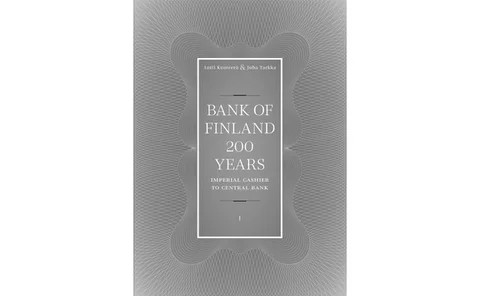


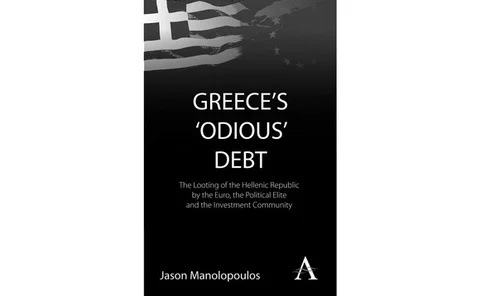

Philly Fed paper on economic effects of fiscal uncertainty
Philadelphia Federal Reserve study says fiscal uncertainty can have impact on economy equivalent to monetary tightening
Will the new monetary policy consensus work for a small, open economy?
A new consensus is emerging for how monetary policy should be conducted. However, using the Czech experience as an example, Jan Frait, Zlatuše Komárková and Luboš Komárek argue that it may be difficult to apply in small, open economies
The case for symmetrical monetary policy and its role in the new financial architecture
Central banks should adopt a more symmetrical approach to monetary policy in supporting financial stability. Bernd Braasch discusses how such an approach can best be implemented amid the jumble of policy strands competing for officials’ attention
Avoiding group think and conflicts of interest: widening the circle of central bank advice
Central banks may better serve the public by calling on a broader group of economists for advice, Gerald Epstein and Jessica Carrick-Hagenbarth believe