

An inside story on the central bank gold agreement
Robert Pringle reveals details of Mbeki’s appeal to central bankers


The annual Davos conference organised by the World Economic Forum, which sells itself as ‘the international organisation for public-private cooperation’, is a binge for the super-elite. It includes politicians, as well as opinion leaders in culture and many fields other than money and finance. It is used by the top financiers and policy-makers more as a way of disseminating their policies rather than to test ideas against peers during the period of policy formulation. The below is an example
Only users who have a paid subscription or are part of a corporate subscription are able to print or copy content.
To access these options, along with all other subscription benefits, please contact info@centralbanking.com or view our subscription options here: www.centralbanking.com/subscriptions
You are currently unable to print this content. Please contact info@centralbanking.com to find out more.
You are currently unable to copy this content. Please contact info@centralbanking.com to find out more.
Copyright Infopro Digital Limited. All rights reserved.
As outlined in our terms and conditions, https://www.infopro-digital.com/terms-and-conditions/subscriptions/ (point 2.4), printing is limited to a single copy.
If you would like to purchase additional rights please email info@centralbanking.com
Copyright Infopro Digital Limited. All rights reserved.
You may share this content using our article tools. As outlined in our terms and conditions, https://www.infopro-digital.com/terms-and-conditions/subscriptions/ (clause 2.4), an Authorised User may only make one copy of the materials for their own personal use. You must also comply with the restrictions in clause 2.5.
If you would like to purchase additional rights please email info@centralbanking.com
More on Gold

Singapore touts trust and neutrality to win central bank gold
MAS and SBMA believe there is room for multiple gold hubs; play down competition with Hong Kong
Ice launches gold futures trading in London
Contract gives market participants new risk management tools, head of Ice Europe says

BCRA challenges claim of $1bn loss on gold hedges
Central bank says derivatives transactions in 2025 reflected routine hedging operations

Venezuela in talks to move gold from London to New York
Any agreement should be accompanied by reforms such as central bank independence, lawyer says
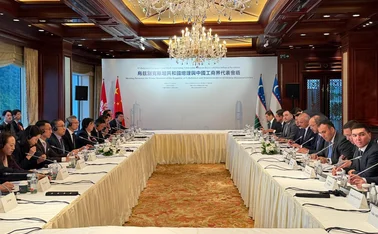
Uzbekistan and Hong Kong formalise gold trade co-operation
Uzbek central bank stresses need to diversify country’s precious metals sector
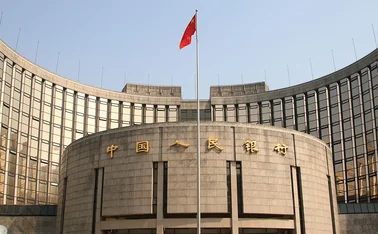
China ups gold reserves by largest amount in nearly three years
Monthly increase is biggest since 2023 as PBoC’s holdings hit 76.7m troy ounces

DNB moves North America-held gold, citing ‘geopolitical unrest’
Dutch central bank insists it has ‘excellent relationships’ with NY Fed and Bank of Canada
Ghana’s gold board rejects responsibility for $1.7bn losses
Dispute follows claim by politician citing a report by IMF