What is the future of banknotes?

Antti Heinonen searches for clues on the future of banknotes at central banks worldwide
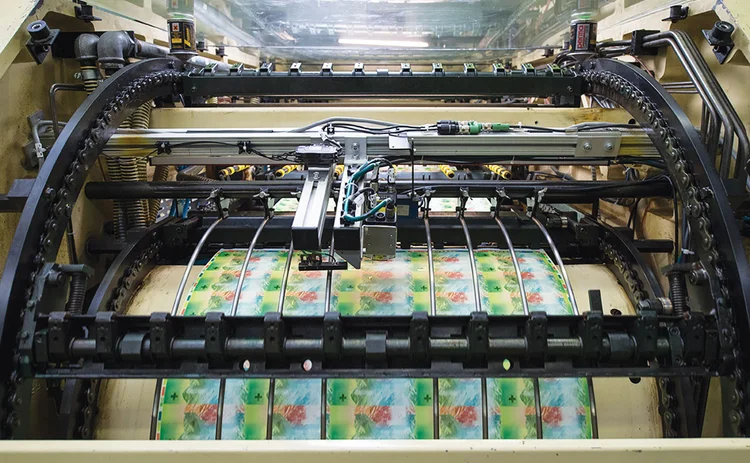
Swiss francs being printed
Printing Swiss banknotes
Swiss National Bank

What will the future of banknotes look like? It is evident that most central banks, not only in the developed world, are asking this same question. Investments in new cash centres, vaults or processing machines are long-term commitments, as well as the development of new banknote series. Therefore, in a world of continuously evolving new payment methods, those responsible for central bank cash operations would like to have a crystal ball regarding the future of banknotes.

To know the future, we should first know where are we today. For a global view, the websites of all central banks and monetary authorities are a good place to start.1 The first key indicator that comes to mind is the growth rate of the value of banknotes in circulation. By using, in some cases, good proxies like “banknotes and coins” or “banknotes and coins outside banks”, a figure on the growth of banknote circulation was available from 142 currencies.2

In general terms, three kinds of developments could be identified. In the case of more than one-third of the currencies, mainly in the developing world, the demand for banknotes is growing rapidly (in double digits). This growth is driven mainly by economic and population growth, and citizens having increasing access to the banking services. However, the highest growth rates (more than 30%) often refer to particular circumstances, such as hyperinflation.

A second group includes currencies of most developed economies, in which the demand for banknotes is still increasing but by a single-digit growth rate. This group includes also the median annual growth rate, 8.1%, among the 142 currencies.

The third group consists of 11 currencies with negative growth. However, only the Swedish and Norwegian currencies show a clear declining trend. In the case of others, for example the Indian rupee, the value of banknotes in circulation decreased by 20% following the demonetisation in November 2016, but increased during the following financial year by as much as 37.7%.

The foregoing refers to the growth of the value of banknotes in circulation. In view of the fact that the banknote community addresses mainly volumes, whether it is production, issuance, processing or logistics, it would be more appropriate to consider the developments in banknote volumes. Unfortunately, the number of banknotes in circulation is publicly available only from 66 currencies. The median volume growth of these currencies is 6.4%. This is in line with expectations; the growing banknote demand is explained partly by the store of value function of banknotes, for which the higher denominations are used.

So what can be concluded about future developments on the basis of the above? The first observation is that the growth rates of banknotes in circulation differ widely among these 142 currencies. So it is safe to assume that the developments will also differ widely during the next decade or so. On the other hand, when the infrastructure is there, consumer payment habits can change rapidly. The share of cash as the most commonly used payment method of daily consumer goods was 71% in Finland in 1999. Ten years later it was 35%, and by 2017 it had fallen to 18%.3 However, infrastructure does not only mean hard- and software, but also trust in institutions and appropriate regulations.

Citizens increasingly have access to electronic payments, such as mobile money accounts, however, this does not necessarily correlate negatively with the value of banknotes in circulation

Regarding the first group of currencies (double-digit growth), the growth rate will most probably decrease gradually in line with the evolving infrastructure, but will likely remain strongly positive for several more years. So no drastic changes are to be expected, even if there has been good progress in many developing countries regarding the financial inclusion. Citizens increasingly have access to electronic payments, such as mobile money accounts, however, this does not necessarily correlate negatively with the value of banknotes in circulation. In Kenya, an oft-cited example of the widespread penetration of mobile money, banknote demand has increased annually in recent years at an average rate of more than 8%.4

For developed economies it is more difficult to make a forecast. Payment habits can change rapidly, when the environment is supportive. The growth rate of UK banknotes has levelled off recently, having averaged more than 5% annually over the last decade

On the other hand, regarding the majority of the currencies from which information is available, the banknote volume is growing slower than the value, pointing to a continuing role for the store of value function of banknotes at a time of low inflation expectations and low interest rates. Various natural crises have shown that the banknotes are a kind of personal contingency plan and part of the national infrastructure. This characteristic may increase in importance and alleviate the decreasing share of banknotes in payment transactions, and cash operators should take note of this when planning for the future.

In concluding, one should emphasise that these two indicators, the value and volume growth of the banknotes in circulation give only a partial view of the situation. It would be great to make a similar global exercise of the banknote production volumes, new note issuance as well as of processing and destruction of banknotes. However, this will be possible only when a bigger number of central banks understand the importance of transparency and the benefit of publicly available information on various banknote developments.

Notes

1. Convenient access points include the Bank for International Settlements central bank hub and the Central Banking Directory.

2. The figures refer mostly to end of year 2017 or to the most recent figure available in case the financial year deviates from the calendar year.

3. See http://www.finanssiala.fi/materiaalit/SLM_2017_Tutkimusraportti.pdf and earlier reports.

4. See Demirgüç-Kunt, Asli, Leora Klapper, Dorothe Singer, Saniya Ansar and Jake Hess, 2018, The Global Findex Database 2017: measuring financial inclusion and the fintech revolution, Washington, DC, World Bank; and annual reports of the Central Bank of Kenya.

Only users who have a paid subscription or are part of a corporate subscription are able to print or copy content.

To access these options, along with all other subscription benefits, please contact info@centralbanking.com or view our subscription options here: www.centralbanking.com/subscriptions

You are currently unable to copy this content. Please contact info@centralbanking.com to find out more.

Merchants in the cash system

As policy-makers seek to protect cash acceptance and increasingly look to retailers to facilitate access to cash, Martina Horakova argues that merchants need adequate cash services themselves – and that providing cash to the public should not come at their expense
Most read articles loading...

You need to sign in to use this feature. If you don’t have a Central Banking account, please register for a trial.

Sign in
You are currently on corporate access.

To use this feature you will need an individual account. If you have one already please sign in.

Sign in.

Alternatively you can request an individual account

.