

Russia inches back toward dollar assets

Figures released by the Bank of Russia on Monday showed an increase in dollar asset holdings, as the central bank backed away from riskier assets in favour of the safety provided by Treasury bills, despite lower yields.
The data, contained in the central bank's third quarterly report on foreign currency assets, showed that it held 46.4% of its reserves, measured at the end of 2009, in dollar assets. On 1 January 2009, dollar assets accounted for 41.5% of its reserves. At the same time, the total
Only users who have a paid subscription or are part of a corporate subscription are able to print or copy content.
To access these options, along with all other subscription benefits, please contact info@centralbanking.com or view our subscription options here: www.centralbanking.com/subscriptions
You are currently unable to print this content. Please contact info@centralbanking.com to find out more.
You are currently unable to copy this content. Please contact info@centralbanking.com to find out more.
Copyright Infopro Digital Limited. All rights reserved.
As outlined in our terms and conditions, https://www.infopro-digital.com/terms-and-conditions/subscriptions/ (point 2.4), printing is limited to a single copy.
If you would like to purchase additional rights please email info@centralbanking.com
Copyright Infopro Digital Limited. All rights reserved.
You may share this content using our article tools. As outlined in our terms and conditions, https://www.infopro-digital.com/terms-and-conditions/subscriptions/ (clause 2.4), an Authorised User may only make one copy of the materials for their own personal use. You must also comply with the restrictions in clause 2.5.
If you would like to purchase additional rights please email info@centralbanking.com
More on Reserves

Reserve Benchmarks 2026 – model banks analysis
Additional data breakdowns shed light on AI use, liquidity lines and FX interventions

SNB could unwind tiering, but gain ‘not obvious’, Martin says
Vice-chairman defends Switzerland’s tiered approach to ample reserves
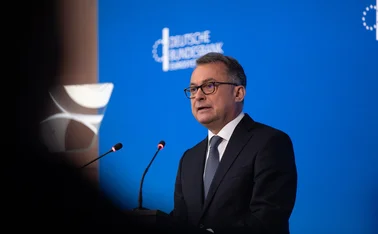
Gold is a good diversification strategy for central banks – Nagel
Geopolitical and credit risks strengthen case for bullion as reserve asset, says Bundesbank president

Reserve Benchmarks 2026 – executive summary
Data reveals diversification trend and sheds light on AI use in reserves management

Reserve Benchmarks 2026 report – investing in uncertain times
Benchmarks highlight trend towards diversification, AI use and a modest response to tariffs
Swap lines with PBoC outnumber those with ECB by factor of three
Benchmark respondent complains of limited access to dollar swaps
Quarter of central banks adjusted reserves strategy after tariffs
Managers mostly adjusted duration; most change comes from Asia-Pacific
Third parties manage roughly one-sixth of reserves
Compensation for external asset managers takes different forms across jurisdictions