

Venezuela to adopt a more flexible exchange rate
Analysts say liberalisation and US sanctions on oil industry are likely to further boost inflation
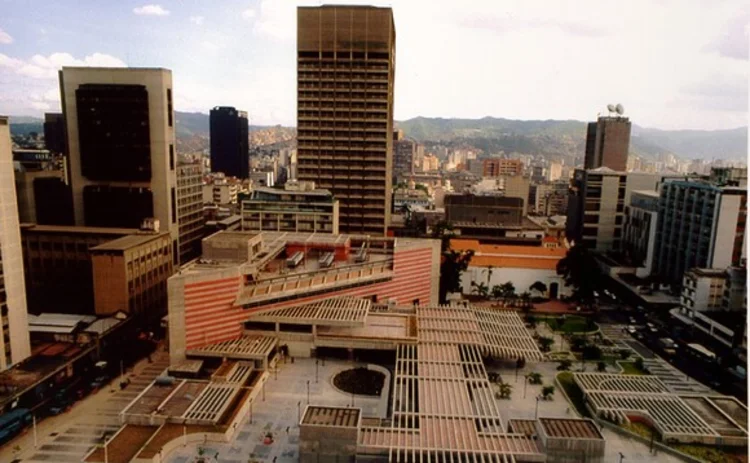
Venezuela announced a partial liberalisation of its restrictive exchange rate system on May 7 as the economy battles hyperinflation and US sanctions limit access to hard currency.
The new regulation allows local banks to act as intermediaries for exchange rate operations in the private sector for corporate and retail investors. The aim appears to be to achieve a more market-determined exchange rate and reduce the black market for the bolívar, although authorities did not explain the rationale behind its decision.
The document published by the Central Bank of Venezuela (BCV) allows the “purchase and sale of foreign currency by individuals and businesses”. The document does not indicate when the new regime will come into force.
Since 2003, the regime established by the late president Hugo Chávez has maintained a set of exchange rate controls. Currently, the bolívar’s official exchange rate is 5,200 bolívars ($521) per dollar, while on the black market, dollars are traded for 6,000 bolívars.
A source of corruption
Over the last decade, the bolivar’s black market emerged as a major source of corruption. Businesses, officials at the security and armed forces, and individuals close to the regime were able to buy dollars for just 10 bolívars. They in turn sold hard currency in the local market at much higher prices.
“It did a lot to create arbitrage opportunities that enriched the regime’s cronies,” Carlos de Sousa, lead economist at Oxford Economics in Zurich, tells Central Banking.
However US sanctions on Venezuela’s oil exports have deprived the regime of its main source of hard currency since late January 2019, rendering this patronage system useless. “These arbitrage opportunities are almost inexistent nowadays, given the public sector’s very limited ability to earn any FX, let alone supplying the private sector. Thus, the political cost of relaxing the exchange rate regime is much lower than before,” de Sousa says.
Nonetheless, it is unclear why the decision was taken now. “It is odd, to say the least,” adds de Sousa. “The best explanation is that capital controls imposed in 2003 were supposed to protect international reserves, which were relatively low at the time coming out of the 2002–03 oil strike, roughly $15 billion. After 16 years of this failed experiment, it’s obvious it did nothing to protect international reserves.”
Total international reserves stood at $8.8 billion in December 2018, according to central bank data.
“The exchange policy of the BCV is a real nonsense,” says José Guerra, economics professor and member of parliament for the opposition to the government of Nicolás Maduro. “For 16 years it maintained a control of iron with a fixed rate. Now, it takes a monumental leap and adopts, at least on paper, a clean flotation of the exchange rate. That is, the BCV would not sell dollars in the market.”
However, the new system would not completely remove controls. Venezuelans would still be unable to make international wire transfers or to use their Venezuelan credit cards abroad, “so we can’t say this is an elimination of the exchange controls”, says de Sousa.
Guerra questions where dollars are going to come from to supply the local market. “From the central bank? From the few private exporters? Questions without answers.”
“Regarding supply, we don’t expect PDVSA [Venezuela’s national oil company] to be offering any of it, as oil production continues to dwindle; we expect 100% of oil revenues to be used directly by the public sector,” says de Sousa. “Thus, the price will have to adjust until private-sector supply and demand meet.”
Hyperinflation
As a result, the hyperinflation Venezuela suffers is unlikely to improve with these modifications.
According to the Cato Institute’s Troubled Currencies Project, run by Johns Hopkins University economics professor Steven Hanke, inflation stood at 74,223% on May 2, 2019.
“The root cause of hyperinflation is still there, the monetisation of the fiscal deficit by the central bank,” says de Sousa at Oxford Economics.
Indeed, scant hard currency revenues are likely to boost inflation even higher. “The dollars coming from oil exports are for government imports. I do not see remittances coming in through banks. Whoever receives bolívars will buy dollars,” says Guerra.
Only users who have a paid subscription or are part of a corporate subscription are able to print or copy content.
To access these options, along with all other subscription benefits, please contact info@centralbanking.com or view our subscription options here: www.centralbanking.com/subscriptions
You are currently unable to print this content. Please contact info@centralbanking.com to find out more.
You are currently unable to copy this content. Please contact info@centralbanking.com to find out more.
Copyright Infopro Digital Limited. All rights reserved.
As outlined in our terms and conditions, https://www.infopro-digital.com/terms-and-conditions/subscriptions/ (point 2.4), printing is limited to a single copy.
If you would like to purchase additional rights please email info@centralbanking.com
Copyright Infopro Digital Limited. All rights reserved.
You may share this content using our article tools. As outlined in our terms and conditions, https://www.infopro-digital.com/terms-and-conditions/subscriptions/ (clause 2.4), an Authorised User may only make one copy of the materials for their own personal use. You must also comply with the restrictions in clause 2.5.
If you would like to purchase additional rights please email info@centralbanking.com
More on Foreign Exchange

China hits back at criticism of yuan policy
PBoC denies devaluation claims, says other nations are responsible for their declining competitiveness

Geopolitics voted top risk among reserve managers
Reserve Management Trends survey finds preparations made in peacetime are being put to the test

Taiwan asks foreign traders to improve FX compliance
Central bank says it is considering new regulations amid currency speculation concerns

IMF praises Nigeria’s FX reforms
Fund’s article IV review also calls on central bank to introduce disinflation path

Hong Kong intervenes once again to protect currency peg
Intervention is HKMA’s second at weak end of HKD/USD band in less than a week, with more likely

Hong Kong intervenes to protect currency peg
HKMA sells US$1.2 billion at HK$7.85 to the dollar as local currency hits weak end of FX band

Central banks shore up reserves against fallout from tariffs
Officials prepare to protect FDI and conduct FX interventions, Reserve Management Trends survey finds

Ukraine’s governor on central banking as war endures
Andriy Pyshnyy speaks about Ukraine’s financial stability and need for investment