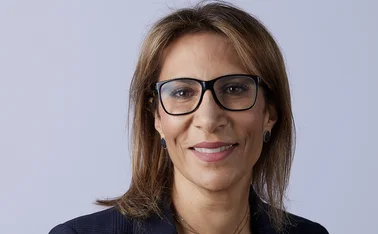
Bénédicte Nolens on the latest mBridge developments
The head of the Bank for International Settlements’ Hong Kong Centre speaks about cross-border CBDC governance, ongoing FX challenges and evolving technology
The Bank for International Settlements has published a new update on the mBridge cross-border wholesale central bank digital currency (CBDC) project today (October 31). Bénédicte Nolens, head of the Hong Kong Innovation Hub Centre, spoke to Central Banking on October 27 about governance, ongoing foreign exchange challenges and how technology on the custom blockchain is evolving.
The BIS, the Hong Kong Monetary Authority (HKMA) and the Bank of Thailand initiated the project in 2019, and the People’s Bank of China’s Digital Currency Institute and Central Bank of the UAE joined in 2021.
Now, more than 20 central banks around the world are known to have signed on as observers. Newly named observers include the European Central Bank and the central banks of Bahrain, Chile, France, Georgia, Hungary, Saudi Arabia and South Africa. These join those of Indonesia, Israel, Korea, Malaysia, the Philippines and Sweden, as well as staff from the New York Federal Reserve’s Innovation Centre.
“And I would just point out there may, in the future, be more,” Nolens tells Central Banking.
As the project continues to gain international interest, 11 central banks have been participating in a sandbox, testing the system mBridge participants used in last year’s pilot but with non real-value transactions. BIS put the sandbox in place “because we do think it’s very important for the central banks to collaborate”, says Nolens, “which is exactly why we have the observer mechanism for this project”.
Twenty commercial banks tested mBridge last year. “All four jurisdictions participating in the project brought in five commercial banks,” Nolens explains. Some of these were subsidiaries of banks, operating in multiple participating countries. Once mBridge reaches a new test phase, called minimum viable product (MVP), Nolens says she thinks the process of bringing in commercial banks will be similar, though there may be more or fewer involved.
Nolens also chairs mBridge’s steering committee. She explains the administrator function is still evolving, to the extent that she had meetings about it that afternoon. The current idea is that different central banks and parties contribute intellectual property to the mBridge project, which is registered with the administrator. These are then licensed out to participating central banks, which in turn licence out to commercial banks.
The mBridge governance structure includes four subcommittees: the compliance subcommittee (formerly the business subcommittee) and the policy, technology and legal subcommittees.
Why are APIs, ISO and LEI important? All of them are interoperability methodologies. We're trying to comply as much as possible with existing interoperability standards
Bénédicte Nolens, BIS
Nolens describes how the subcommittee governance structure evolved. Bank of Thailand is “very keen on matters of financial and monetary policy. So they became the policy lead”, Nolens says. The Central Bank of the UAE is “very much interested in use cases, they became the business subcommittee lead. The Digital Currency Institute of the PBoC is strong in blockchains, so they became the technology subcommittee lead.” HKMA drew on its experienced legal personnel and took the legal subcommittee lead. All subcommittees have representatives from all four central banks.
Nolens tells Central Banking that the BIS and its partners have not yet decided how they would include new partners in the governance structure: “If we really went to a next phase of the project, which is far out in the future, then we would need to discuss the seat allocations for central banks within the project.” But she adds, “we are not at a stage in the project to consider that yet”.
“Future stages of the project would have to be defined by the BIS,” she says.
Speaking about the schedule for mBridge, “given that these are central banks involved and that this is within a project framework, to go from MVP to production stage would be a long process and would still require decisions,” Nolens says. “A live production system would take a long time.”
The mBridge ledger is a custom-designed ledger, with engineers working from the BIS and the four active central banks. The mBridge code is fully visible, auditable and testable by all participating central banks, even if one takes the lead on the writing code, Nolens says. She adds the code is open source for all participants, and has been since mBridge’s precursor, the Inthanon-LionRock partnership between the HKMA and the Bank of Thailand.
Another change since last year is the shift in how transactions are authenticated, from Hotstuff+ to the Dashing consensus developed by the PBoC’s Digital Currency Institute in collaboration with Chinese universities.
The Dashing consensus was chosen because of its performance in terms of transactions per second. However, as the technology is tested, it too can be replaced if a better solution is found, Nolens says. Both Hotstuff and Dashing, she points out, are Byzantine fault-tolerant protocols, meaning the system can still operate if parts of them fail.
One aspect of the project that has not changed is that the FX price is still agreed off-platform. This is an area that is still challenging, Nolens says. “It’s not that people can’t agree on a price off-platform,” Nolens says. “They can. The question is: is the spread good enough?”
Spreads are often quoted versus highly liquid currencies, and if you need to cross between two less liquid currencies, the spread may be larger, Nolens says. “So we are actively looking for more FX solutions.”
As mBridge focuses on cross-border wholesale CBDC payments, a domestic CBDC is not a prerequisite for joining, Nolens says. Central banks can connect their RTGS systems to mBridge via application programming interfaces (APIs), and settle wholesale transactions on the ledger using M0 money. The ISO 20022 message standard is used to input the information into the mBridge system about the transaction as it crosses the border. The mBridge project is also compatible with Legal Entity Identifiers (LEIs).
“Why are APIs, ISO and LEI important? All of them are interoperability methodologies,” Nolens says. “We’re trying to comply as much as possible within the project with existing interoperability standards.”
However, project mBridge is not just about the technology. It is about designing the governance and legal aspects. If these three things are not addressed, it would not succeed, Nolens says.
Only users who have a paid subscription or are part of a corporate subscription are able to print or copy content.
To access these options, along with all other subscription benefits, please contact info@centralbanking.com or view our subscription options here: subscriptions.centralbanking.com/subscribe
You are currently unable to print this content. Please contact info@centralbanking.com to find out more.
You are currently unable to copy this content. Please contact info@centralbanking.com to find out more.
Copyright Infopro Digital Limited. All rights reserved.
As outlined in our terms and conditions, https://www.infopro-digital.com/terms-and-conditions/subscriptions/ (point 2.4), printing is limited to a single copy.
If you would like to purchase additional rights please email info@centralbanking.com test test test
Copyright Infopro Digital Limited. All rights reserved.
You may share this content using our article tools. As outlined in our terms and conditions, https://www.infopro-digital.com/terms-and-conditions/subscriptions/ (clause 2.4), an Authorised User may only make one copy of the materials for their own personal use. You must also comply with the restrictions in clause 2.5.
If you would like to purchase additional rights please email info@centralbanking.com test test test