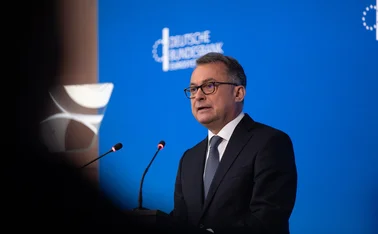
Political party calls on BoE to stop paying interest on banks’ reserves
Former bank official says Reform UK’s proposal would amount to unacceptable “breach of faith”
A rising political party in the UK has renewed its criticism of the Bank of England for paying out large sums in interest to commercial lenders on their reserves held with the central bank.
Richard Tice, deputy leader of Reform UK, wrote to the BoE governor Andrew Bailey on June 8 calling on the bank to stop paying out interest on reserves it had acquired from lenders through quantitative easing (QE).
His letter came ahead of chancellor of the exchequer (chief finance minister) Rachel Reeves’s delivery on June 11 of the UK spending review, in which she will detail the government’s spending plans over the coming years.
Tice said the interest paid out to lenders by the BoE was voluntary and that high interest rates in recent years had helped financial institutions to take in huge amounts. “These institutions cannot believe their luck,” he wrote.
He added that the BoE should not be selling UK government bonds, or gilts, back into the market under quantitative tightening (QT). Doing so, he wrote, had imposed “tens of billions of unnecessary losses on the taxpayer”.
He said the decision to pay interest on reserves amounted to fiscal policy.
“It would be negligent of us to ignore this very significant issue and leave it in the hands of unelected people,” Tice wrote. He asked Bailey for an open meeting to discuss this matter of “pressing national importance”.
However, he said Reform UK’s criticisms did not mean the party – which won 39% of the seats in England’s recent local elections – wished to erode the bank’s independence when it came to setting interest rates.
“The taxpayer is being ripped off and it has got to stop,” Tice tells Central Banking.
He also clarifies that Reform does not advocate the tiered system of remuneration proposed by some economists. “I am very clear, I am negotiating on behalf of the taxpayer, and on all the QE, [the interest] should be zero”.
Tice compares the situation to that of a household with a cash shortfall. “I print up a couple £20 notes out of my own printer and give it to you,” he says. “I’ve done you a favour getting you out of a hole. Why on earth would I pay interest to you, having got you out of a hole with the capital? It’s madness.”
Central Banking asked Tice if stopping interest payments would have a ripple effect on the market by forcing banks to invest in higher yield securities and thereby posing an upside risk to inflation. “If anything, because the government is paying this [interest] unnecessarily, what the government is potentially risking doing is increasing inflation,” he says.
He also criticises the UK parliament’s Treasury Select Committee for not asking what he feels would have been the right questions during the BoE governor’s regular appearances before it.
“They haven’t specifically asked, if you’re going to do QT, how many losses is it going to trigger to the government’s balance sheet?” says Tice. “If you pay this interest, how much is it going to cost? I don’t think they have asked searching enough questions.”
In Bailey’s most recent appearance before the committee, on June 3, he was not questioned on this matter. However, in a letter on May 28 to the committee chair, the governor said that “any presumed benefit to the public purse” from reducing or axing interest on reserves would be “illusory”.
He explained that reducing or tiering remuneration on reserves would prompt banks to invest in other high-quality liquid assets. He added that the commercial lenders would be deprived of a valuable source of liquidity that they could tap during periods of crisis.
Reform UK’s manifesto for last year’s UK general election included a policy of abolishing interest payments on reserves. The party claimed that ceasing interest payments to banks could save between £30 billion and £40 billion a year.
In his letter to Bailey, Tice said some former BoE deputy governors had voiced their support for his position. However, he tells Central Banking he does not know of anyone on the bank’s monetary policy committee at present who has endorsed the plan.
Scepticism among economists
Reform UK’s plans do not enjoy widespread support among economists. If the BoE were to stop paying interest on reserves, it is likely that its balance sheet would need to be much smaller. Otherwise, the excess liquidity in the financial system would drive market rates below the bank’s policy rate, which would prevent the bank from conducting monetary policy.
Some economists, including former members of the BoE’s monetary policy committee, have called for the bank’s balance sheet to be shrunk or for the use of tiered reserves to limit the amount of interest the bank would need to pay out.
However, Reform UK’s proposal to cancel QT would imply the BoE maintaining a large balance sheet. Such a situation would imply a permanent loss of control over interest rates.
William Allen, a former BoE official, tells Central Banking that abolishing interest payments on reserves would have potentially destructive consequences.
“First of all, it would be a huge breach of faith between the BoE and commercial banks,” he says. He explains that if the BoE said it would no longer pay interest on deposits, that would affect the amount of interest that commercial banks could pay to their depositors.
Allen says abolishing interest on reserve deposits would also constitute a breach of faith between the Treasury and the BoE, as the government indemnifies the central bank against losses.
Only users who have a paid subscription or are part of a corporate subscription are able to print or copy content.
To access these options, along with all other subscription benefits, please contact info@centralbanking.com or view our subscription options here: www.centralbanking.com/subscriptions
You are currently unable to print this content. Please contact info@centralbanking.com to find out more.
You are currently unable to copy this content. Please contact info@centralbanking.com to find out more.
Copyright Infopro Digital Limited. All rights reserved.
As outlined in our terms and conditions, https://www.infopro-digital.com/terms-and-conditions/subscriptions/ (point 2.4), printing is limited to a single copy.
If you would like to purchase additional rights please email info@centralbanking.com
Copyright Infopro Digital Limited. All rights reserved.
You may share this content using our article tools. As outlined in our terms and conditions, https://www.infopro-digital.com/terms-and-conditions/subscriptions/ (clause 2.4), an Authorised User may only make one copy of the materials for their own personal use. You must also comply with the restrictions in clause 2.5.
If you would like to purchase additional rights please email info@centralbanking.com