In-depth: have central banks worsened the secular slowdown?

IMF economist Bas Bakker shares his argument that central banks have misdiagnosed falling growth and long-run rates. He and several other economists are now calling for a rethink


arrow

The decline in neutral rates is “not directly affected” by Federal Reserve policy, chair Jerome Powell told lawmakers in November testimony. Powell’s statement reflects a broad consensus among central bankers. But not everyone agrees.

An economist from the International Monetary Fund, Bas Bakker, argues that instead, the decline in neutral rates (often known as r*) may very well be a direct result of central bank policy.

If correct, his orthodoxy-busting paper may provide novel answers to key questions in macroeconomics: why have central banks have not been able to return rates to normal following the 2008 financial crisis? Is investment too low in advanced economies? Do central banks have the firepower required to continue to protect macroeconomic stability?

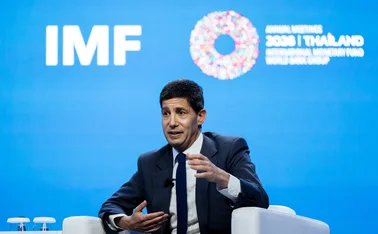
Central Banking spoke with Bakker, a division chief in the IMF’s western hemisphere department, on the sidelines of the IMF annual meetings last month.

“Many economists argue that r* is exogenous and that policy rates are low because r* is low,” Bakker says, stressing that the views expressed in his paper are his own and not necessarily the IMF’s. “I think there is also an important channel that works the other way around.”

Bakker’s paper lays out evidence that central banks may have incorrectly diagnosed the “secular slowdown” in global growth over the last few decades, treating it as a problem of insufficient demand and setting policies accordingly.

Joshua Felman, former head of the IMF office in India, frames the issue not so much as a misdiagnosis, but rather a contradiction between policy and analysis. Central banks and the IMF recognise the decline in potential growth, he says. “But at the same time, central banks have conducted policy as if the entire problem were a shortage of aggregate demand.”

By chasing elusive demand, central banks may have inadvertently created a downward spiral of low growth, dependence on investment despite poor returns and, increasingly, higher leverage.

Bakker explains that cutting rates in this scenario might mitigate a fall in output levels in the short term, but over the long run, growth rates will remain unchanged. Instead, the capital-output ratio will rise, net investment will fall, leverage will increase, and the central bank will need low rates to sustain growth in the future.

His work steps into the lively debate about why advanced economies have suffered persistently sluggish growth following the crisis. One of the leading contenders in the debate, Harvard economics professor Larry Summers’ theory of secular stagnation, highlights how structural problems may cause weak aggregate demand. Summers suggests monetary and fiscal stimulus is the answer.  

Bakker disagrees with the diagnosis. “Lack of demand might explain low growth in the years immediately post-crisis, when unemployment was high. But in the last six years unemployment has fallen like a stone, so it is hard to argue that this is the main problem,” he says.

The Okun curve

For the issue to be a demand-side problem, Bakker argues the “Okun curve” would show that economies should be facing much higher levels of unemployment than they are today. The curve, devised by American economist Arthur Okun in the 1960s, stipulates a negative relationship between cyclical unemployment and the output gap. A positive output gap implies low unemployment.

Bakker’s results suggest the Okun curve has shifted to the left, consistent with the idea that potential output has declined, not demand.

He argues that the fall in potential output was due to a slowdown in the growth rates of working-age population and total factor productivity – a possibility cited frequently by policy-makers. Bakker finds that in such a situation, central bank easing measures may have very little impact on long-run growth.

“Lower interest rates lead to higher investment rates. But higher investment rates have only a temporary impact on GDP growth,” Bakker says, in a nod to the 1950s Solow-Swan model. Initially, higher investment will lead to a faster growth of the capital stock – and thus faster GDP growth. But over time, the impact of higher investment rates on the growth rate of the capital stock – and thus GDP – peters out.

The reason for this, he says, is that the capital-output ratio starts to rise. Expanding the capital stock has declining marginal returns – “which is precisely why the additional investment is done only after interest rates are cut,” he says. As the capital stock expands, the ratio of additional capital to additional output rises, which means that the average capital-output ratio increases.

Lower interest rates lead to higher investment rates. But higher investment rates have only a temporary impact on GDP growth

Bas Bakker, International Monetary Fund

If the capital stock becomes larger relative to GDP, then capital consumption (the depreciation of the capital stock) will increase relative to GDP as well. That means the share of investment that goes to replacing “worn-out” capital increases, and the share that goes to expanding the capital stock (net investment) declines. 

This matters for growth, Bakker says, because gross investment may be permanently higher, but net investment will, after an initial boost, start to fall back. Moreover, as the capital-output ratio rises, the same net investment rate will lead to less GDP growth.

Not just theoretical

Bakker’s paper shows this is not just a theoretical concern, but something one can observe to varying degrees in several advanced economies.

For example, Japan’s GDP growth slowed from upwards of 4% in the 1980s to 1% in the 1990s, where it has since stabilised. Bakker shows this was due to a rapid decline in labour productivity and population growth. He argues that even at the low growth rates of today, Japan is still likely to be growing above potential.

After the Bank of Japan aggressively reduced rates in the early 1990s, gross fixed investment only declined gradually (it was 29% in both 1987 and 1997). The sustained high investment lead to a sharp increase in capital consumption, peaking at 25% of GDP in 2009, Bakker says. The capital-output ratio also increased sharply and the return on capital fell. As of this year, the economy has gross investment of around 24% of GDP, but capital consumption around 22% of GDP. This leaves net investment of only 2% of GDP, Bakker says.

In the US and the eurozone, comparable slowdowns in productive potential have occurred, Bakker shows. Like Japan, US and eurozone gross investment has remained relatively strong, but capital consumption has risen and net investment has weakened, consistent with Bakker’s results.

The data provides evidence against an often-held belief that investment levels are too low in advanced economies. “Investment of 24% of GDP for 1% growth is amazingly high,” Bakker says. “Poland has about 20% and they are growing by 4.5%.”

Bakker says central banks have no appealing option. Cut rates and they risk further worsening the capital-output ratio. Raise them and they risk triggering an economic contraction. The only way out is to boost productivity.

Current contradiction 

Leslie Lipschitz, former director of the IMF Institute, highlights the dilemma for central banks: “If the slowdown in growth is due to supply-side factors – which I think it is – and we try to counter it by lowering rates, we’re doomed to fail. Potential real output cannot be increased by simply stimulating demand.”

Over the past six months, many central banks have reduced rates to stimulate their economies in the face of a slowdown in global growth – attributed in large part to a disruption of trade. Lipschitz argues the slowdown is likely due to supply-side factors and not weak demand. The effects of the current disruption of trade on supply chains and, in the US, the waning fiscal stimulus, are shocks that cannot be countered by lowering interest rates and increasing leverage from already dangerously high levels, he says.

Bakker’s model predicts that without an increase in output potential, central banks may achieve a temporary boost to growth levels, but no long-term impact on the growth rate. Potentially more worryingly, however, low rates could trigger a further increase in leverage.

US non-financial debt is now almost back up to crisis-era levels (75% of GDP). In the eurozone, it has surpassed 2008 levels of roughly 90% of GDP, climbing to about 110% of GDP today.

If the slowdown in growth is due to supply-side factors – which I think it is – and we try to counter it by lowering rates, we’re doomed to fail

Leslie Lipschitz, former director of the IMF Institute

“What monetary stimulus is likely to do is to further increase leverage and exacerbate the vulnerability to another financial shock that brings a devastating downturn,” Lipschitz says. “So I think a central bank cannot take on that task of sustaining growth at a level above potential and, if they do, it will be detrimental.”

He notes that the build-up in leverage creates fragility or vulnerabilities in the financial system; a crisis only usually happens when a shock occurs in a vulnerable system. “For those shocks we have no probability distribution, we don’t have any way of predicting them,” he says. “All we know is that we are creating an increasingly fragile system.”

Possible solutions

Felman warns that in this situation, “central banks cannot solve all our problems”. He notes that “there’s been a dangerous trend since the global financial crisis to dump every economic task on to the lap of central banks. We seem to have forgotten the lesson of the 1970s: if you saddle central banks with too many objectives, they will end up failing on their more central objectives”.

Felman and Lipschitz both argue that the only solution is to increase productive potential through structural change. “The only policies that can work on productive potential are longer-term policies,” Lipschitz says. “And of course, politics doesn’t operate in the long term, so it’s a really hard thing to do.”

An upside would be new inventions, or a technology boom that would dramatically change productive potential, Bakker says. A recent paper written by Bank of Canada governor Stephen Poloz suggests an artificial intelligence revolution is currently in its early stages. Some view this as the answer. But even a boom comes with downsides; Poloz argues that technological revolutions require accommodative monetary policy to offset negative transitional effects.

A short-term priority for central banks is to get a better handle on estimating output potential, Lipschitz says. In doing so, policy-makers will be able to properly tailor their decisions to current conditions, he says.

In a similar vein, Bakker’s research intentionally excludes inflation; that too needs better understanding, Felman says. “Standard models posit a link between output gaps and inflation,” he notes. “But ever since the 2000s, this link seems to be much more tenuous, so one cannot say that low inflation proves that gaps are large and aggregate demand is weak.” Furthermore, if output gaps are subject to huge revisions, this further complicates policy-makers’ understanding of inflation.

Bakker’s work is not definitive. He emphasises that more research is required and focuses on evidence that it pays dividends for central banks to be wary about using interest rates for anything other than demand weakness.

If he is correct, Bakker’s work supports the notion that central banks have been overburdened for too long, and that only fiscal and structural measures will allow advanced economies to escape the low-growth trap they have fallen into.

Only users who have a paid subscription or are part of a corporate subscription are able to print or copy content.

To access these options, along with all other subscription benefits, please contact info@centralbanking.com or view our subscription options here: subscriptions.centralbanking.com/subscribe

You are currently unable to copy this content. Please contact info@centralbanking.com to find out more.

Most read articles loading...

You need to sign in to use this feature. If you don’t have a Central Banking account, please register for a trial.

Sign in
You are currently on corporate access.

To use this feature you will need an individual account. If you have one already please sign in.

Sign in.

Alternatively you can request an individual account

.