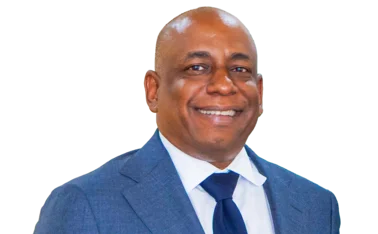
Shin promotes novel approaches in inaugural address at BoK
Ex-BIS chief economist formally appointed head of South Korean central bank
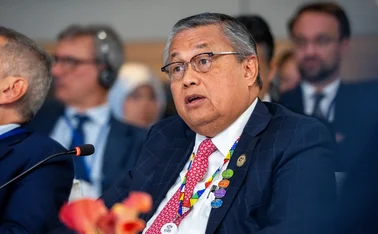
Hyun Song Shin has outlined the need for novel approaches to central banking amid “profound uncertainty and change”, as he formally took office as governor of the Bank of Korea.
In a speech following his inauguration today (April 21), Shin said that under his leadership the BoK would conduct flexible and prudent monetary policy, and approach financial stability from a new standpoint. South Korea’s central bank would also work to preserve trust in money and boost the won’s international usage, while playing an “integral” role in structural economic reforms to the country’s economy.
Shin said central banking practices had developed not by following established theory, but through experience. “The challenges we face today are no different,” he said. “We must find our answers through practice and, in doing so, develop new frameworks.”
The former Bank for International Settlements chief economist took on his current role after being nominated by South Korean president Lee Jae-myung in March and completing a parliamentary confirmation hearing last week. Economists predicted the BoK would tilt towards hawkishness under Shin, and that his experience at the BIS would influence the way he ran the institution.
In his inauguration speech, Shin said uncertainty surrounding inflation and growth had increased because of supply-side shocks stemming from the Middle East conflict. Alongside a “flexible and prudent monetary policy approach”, the BoK would also work to make its monetary policies more effective. This, he said, would involve greater interaction with the government and markets.
“We will reassess our policy instruments to better manage the trade-offs among policy objectives, and co-ordinate with the government where appropriate,” Shin said. He added that deepening communication with markets would mean finding approaches suited to South Korea’s domestic context.
The lines between banks and non-banks and domestic and cross-border activity were blurring rapidly as financial markets became more interconnected. “In this environment, traditional frameworks alone are no longer sufficient to fully identify and respond to emerging risks in the financial system,” he said.
Because of this, the BoK would strengthen its monitoring by using more market-based price indicators, alongside conventional prudential ones, Shin said. The BoK also needed to expand its analysis of non-bank financial institutions and non-traditional financial products.
Shin said that under his leadership, the BoK would work towards 24-hour foreign exchange market operations and the establishment of offshore won settlement systems. The internationalisation of the country’s currency was a “key task in building a monetary infrastructure commensurate with the stature of our economy”.
The central bank must also prepare for the future of the monetary system, Shin said. The BoK would continue work on its central bank digital currency and tokenised deposits, and strengthen the role of the won in digital payments through international co-operation. Safeguards were also needed to ensure that won internationalisation did not undermine the monetary system or financial stability, and the governor said the BoK would continue to consider the best macro-prudential frameworks for this.
Shin said the BoK would work with the government to ensure that won internationalisation, payment and settlement innovations, and South Korea’s macro-prudential framework became a “mutually reinforcing triad”. To achieve these aims, the BoK would increase its productivity by taking advantage of new technologies.
“There is a broad consensus among experts at home and abroad that meaningful gains in productivity are hard to come by without change in how we actually work,” Shin said. The governor said he would therefore work with all BoK staff to identify areas in which the bank’s organisation and operations could be improved.
The BoK would “strive to evolve into an institution that participates more actively in, and contributes more meaningfully to, discussions within the international community”, Shin said. This would include working more closely with the BIS, the International Monetary Fund and other international forums.
“Our economy now stands amid profound uncertainty and change, with many difficult challenges still before us,” he concluded. “If the Bank of Korea fulfils its role as a firm anchor of trust, it will be a source of real strength as our economy works through the difficulties it faces.”
Only users who have a paid subscription or are part of a corporate subscription are able to print or copy content.
To access these options, along with all other subscription benefits, please contact info@centralbanking.com or view our subscription options here: www.centralbanking.com/subscriptions
You are currently unable to print this content. Please contact info@centralbanking.com to find out more.
You are currently unable to copy this content. Please contact info@centralbanking.com to find out more.
Copyright Infopro Digital Limited. All rights reserved.
As outlined in our terms and conditions, https://www.infopro-digital.com/terms-and-conditions/subscriptions/ (point 2.4), printing is limited to a single copy.
If you would like to purchase additional rights please email info@centralbanking.com
Copyright Infopro Digital Limited. All rights reserved.
You may share this content using our article tools. As outlined in our terms and conditions, https://www.infopro-digital.com/terms-and-conditions/subscriptions/ (clause 2.4), an Authorised User may only make one copy of the materials for their own personal use. You must also comply with the restrictions in clause 2.5.
If you would like to purchase additional rights please email info@centralbanking.com