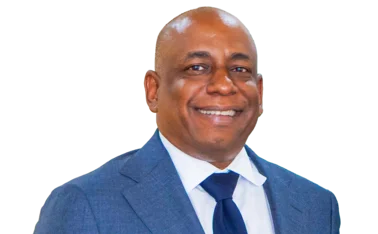
Obituary: Liu Hongru, 1930–2025

Former PBoC deputy governor left influential legacy in China’s modernisation of banking and finance
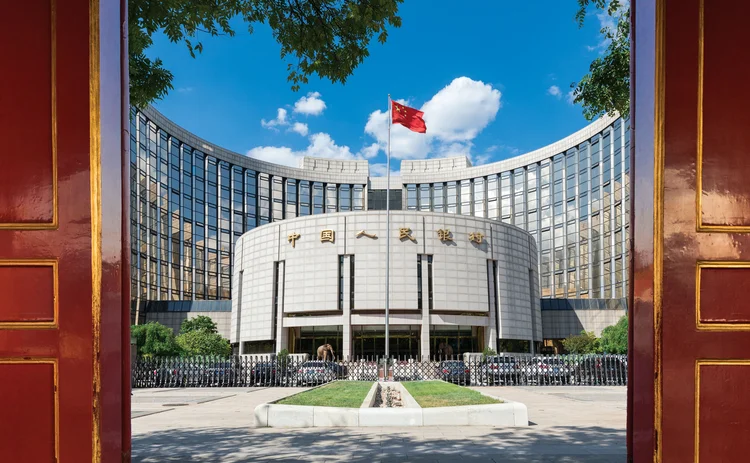

People’s Bank of China
The People's Bank of China

Liu Hongru, a deputy governor of the People’s Bank of China from 1980 to 1989, passed away on March 14.

A mostly under-the-radar figure, Liu was an influential official during China’s financial reforms in the 1980s that saw the transformation of the PBoC into a modern central bank.

Born in 1930, Liu joined the Chinese Communist party in 1948 and was selected by the state three years later to study finance at the Renmin University of China. He was again a beneficiary of the party’s initiatives to nurture talent as he was sent to the Soviet Union in 1955. He obtained a doctorate in money and banking in 1959 from the Moscow Finance Institute, known today as the Financial University under the Government of the Russian Federation.

Liu returned to China upon his graduation and shortly afterwards joined the PBoC, which at the time was the only bank in the country. As a planned economy, China in the 1960s and 1970s had limited financial intermediation activities. Liu’s expertise would not be extensively consulted until 1978, when China kicked off its reform and opening-up era.

His first task was to revive the Agricultural Bank of China, which was created and abolished three times between 1951 and 1964 as the financing of rural agricultural activities ultimately came back under the PBoC’s remit. In February 1979, the Agricultural Bank was, for the fourth time, established as a state-owned institution to provide financial services to farmers. Liu was moved from the PBoC to become its vice-president and facilitate its formation.

Liu returned to the PBoC in 1980 as deputy governor. At that time, the PBoC had spun off more of its commercial banking activities but was still providing credit to and taking deposits from businesses in urban areas. In a memoir, Liu recalled people describing the PBoC as “both the referee and the player”.

In 1982, the PBoC established a working group on reforming China’s banking system, with Liu as the main convener. A year later, the PBoC was confirmed as China’s central bank proper, and its remaining commercial functions were spun off into the Industrial and Commercial Bank of China.

Liu recalled the debates on whether to keep or change the PBoC’s name. Yao Yilin, China’s vice-premier at the time, suggested the PBoC be made into a commercial bank and for a separate “Central Bank of China” to be created. Others argued that commercialising the PBoC could confuse the public as it had been China’s central bank since 1948. They added that the PBoC had been issuing the yuan and that changing the banknote production process could be complicated.

“From a personal perspective, I have always advocated for calling it the ‘Central Bank’, as it is legitimate and can reduce the need for explanation,” Liu said in the memoir. “Of course, if the name ‘People’s Bank’ is retained, over time people will become familiar with it and there will be no need for much explanation. In the end, the state council accepted [the latter option].”

As deputy governor, Liu continued his work on banking reforms throughout the 1980s. In 1984, the state council established a working group on reforming the financial system. Once again, Liu was asked to lead the working group. Participants included Wu Xiaoling, a future head of the state administration of foreign exchange, Lou Jiwei, a future finance minister, and Zhou Xiaochuan, a future governor of the PBoC.

Men Chuang, a professor of Chinese economy at Osaka Sangyo University in Japan, describes Liu’s role in China’s banking reforms as that of a “technical bureaucrat”. Although Liu might not have made the final decisions, he was always gathering opinions and providing policy advice to more senior officials, Men tells Central Banking.

He notes that Liu stood on the side of reform at a time of debates on if and how China should make changes to its financial system. He adds that as the trend in the 1980s gradually leaned towards reform, Liu’s influence became more apparent.

However, Men argues that Liu’s legacy was more profound in his nurturing of talents at the PBoC.

In 1981, Liu founded the PBoC Graduate School, which was focused on training the next generation of experts in economics and finance. He also took on a professorship himself.

Men says Liu’s role as a teacher was particularly significant. Liu was, Men says, quite open to ideas from his pupils that were seen as avant-garde, such as establishing a corporate shareholding system. Under Liu’s leadership, the Graduate School became known as the “cradle of financial reformists” and produced policy experts such as Wu Xiaoling, Hu Xiaolian and Zhang Qingsong, who all went on to become PBoC deputy governors.

Hui Feng, a senior lecturer at the School of Government and International Relations at Griffith University in Australia and author of The Rise of People’s Bank of China, agrees that Liu’s instrumental impact on China’s financial reforms was evident through the Graduate School.

“The academic arm of the central bank has helped deliver a modern and capable team of central bankers and, in a wider sense, liberal reformers for financial reforms in China who have been active in the last several decades across various financial sectors,” Feng tells Central Banking.

He adds that Liu had wide connections with the government in the 1980s and the 1990s and that his style was more “inclusive” and “accommodating” than many of his peers at that time.

“I did not have the opportunity to interview him, but I have talked a lot of people who were close to him,” Feng says. “Their general impression is that he was a pragmatist, down-to-earth, and was good at working around formal rules to get things done.”

Perhaps inspired by his students’ vision, Liu was a firm supporter of creating a vibrant stock market in China. In 1990, one year after he left the PBoC, Liu had a fruitful discussion on a plane journey with Jiang Zemin, the Communist party general secretary, on whether China should move forward with its stock market reforms. The country had been testing the shareholding system and allowing trading in various cities, but some leaders were concerned that such activities would drive the country too far away from its socialist principles.

During the two-hour flight, Liu told Jiang: “The pilot stock markets should not be cancelled. Reforms must align with the trend of economic development and cannot be reversed.” Within two months, China opened the Shanghai Stock Exchange and the Shenzhen Stock Exchange.

A market crash in January 1992 prompted the government to accelerate its efforts on financial regulation. In October of that year, the China Securities Regulatory Commission was established. Liu became its first-ever chairman and held the position until his retirement in 1995.

After his exit from policy, Liu took on teaching roles while becoming a non-executive director of several listed companies. In 2012, he became an honorary board chairman of the PBoC Graduate School as it was merged into Tsinghua University.

In a blogpost published after his passing, the Graduate School alumni association summarised Liu’s legacy: “From the 1980s to the mid-1990s, in a golden period of China’s financial reform and a key period of financial system transition, Liu was involved in nearly all major reform initiatives. He was one of the most important pioneers, organisers, designers, and practitioners of China’s financial system reform.”

Only users who have a paid subscription or are part of a corporate subscription are able to print or copy content.

To access these options, along with all other subscription benefits, please contact info@centralbanking.com or view our subscription options here: www.centralbanking.com/subscriptions

You are currently unable to copy this content. Please contact info@centralbanking.com to find out more.

Most read articles loading...

You need to sign in to use this feature. If you don’t have a Central Banking account, please register for a trial.

Sign in
You are currently on corporate access.

To use this feature you will need an individual account. If you have one already please sign in.

Sign in.

Alternatively you can request an individual account

.