

Proportion of women working in central banks dips
On average, women make up 45% of central bank workforce

The number of women working in central banks on average dropped slightly in 2019, according to the most recent data from the Central Banking Directory.
Women currently make up 45% of employees at central banks around the world, while in 2018 they accounted for 46.4%. This is the second year Central Banking has surveyed central banks on their gender ratio; in our 2019 survey, we collected data from 101 central banks as opposed to 91 in 2018.
The Central Bank of Bahamas and the Croatian
Only users who have a paid subscription or are part of a corporate subscription are able to print or copy content.
To access these options, along with all other subscription benefits, please contact info@centralbanking.com or view our subscription options here: www.centralbanking.com/subscriptions
You are currently unable to print this content. Please contact info@centralbanking.com to find out more.
You are currently unable to copy this content. Please contact info@centralbanking.com to find out more.
Copyright Infopro Digital Limited. All rights reserved.
As outlined in our terms and conditions, https://www.infopro-digital.com/terms-and-conditions/subscriptions/ (point 2.4), printing is limited to a single copy.
If you would like to purchase additional rights please email info@centralbanking.com
Copyright Infopro Digital Limited. All rights reserved.
You may share this content using our article tools. As outlined in our terms and conditions, https://www.infopro-digital.com/terms-and-conditions/subscriptions/ (clause 2.4), an Authorised User may only make one copy of the materials for their own personal use. You must also comply with the restrictions in clause 2.5.
If you would like to purchase additional rights please email info@centralbanking.com
More on Organisation

Croatian central bank website cloned in scam operation
Fabricated “national financial access programme” offers fake handouts

CNB to create dedicated department to implement AI
Bank builds self-hosted capabilities to ensure data safety, with plans for hybrid solution

MAS heralds progress on cutting carbon emissions
Central bank reports reductions in climate impact across its operations and investment portfolio

Indonesia amends law to expand BI’s growth focus
Rupiah hits new low as lawmakers are given greater oversight over central bank

Behind the scenes of the Bundesbank’s capacity-building programme
A multi-year effort has helped shore up expertise at West Balkan central banks. Will African and former-CIS institutions be equally responsive to Eurosystem technical assistance?

Waller proposes consolidating regional Fed operations
HR, finance and procurement should be done by Washington instead of locally, governor says

BdF ‘not involved’ with French government’s move to Linux
Initiative aims to ‘reduce dependence’ on IT systems from outside Europe
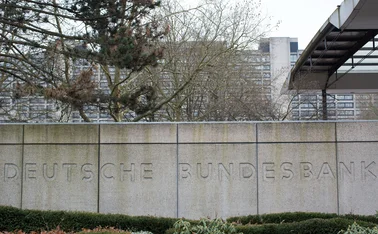
Bundesbank gives up on renovating old headquarters
Bank to buy new HQ as renovation and maintenance would have cost too much