‘They could do nothing’: insights into political interference at the Fed
Interviews with former Fed chiefs reveal what it is like to be chair when politicians want their way
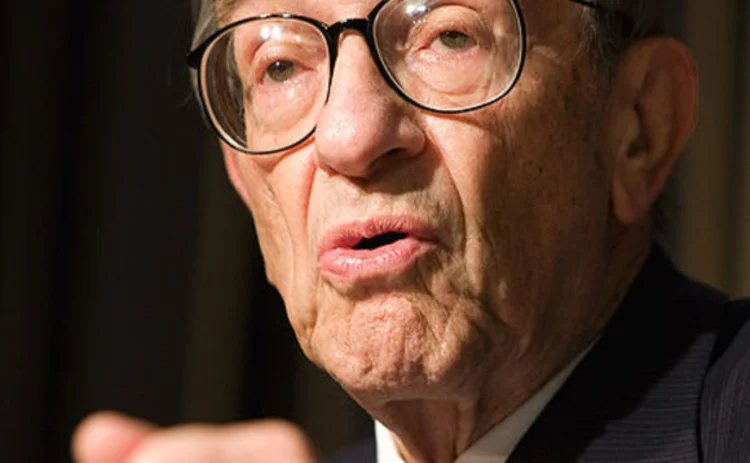
The Federal Reserve has one trump card, and that is, “you can’t force us to do anything”, former Fed chief Alan Greenspan said in an interview reflecting on his time at the central bank.
If you have to work with the executive branch, “it is very simple. There is a simple word that has got two letters in it – it’s called ‘N-O’”, he said.
In publishing a wealth of interviews with former senior officials, the Fed has revealed important details of how it deals with government – co-operatively or otherwise.
In the US, after years of relatively subdued relations between the central bank and the government, issues have started to emerge. For almost a year, president Donald Trump has been persistent in his criticism of the Fed’s monetary policy, with a string of tweets and public remarks calling the bank “crazy” and “loco”.
Most recently, he urged the Fed to resume its crisis-era quantitative easing. In a tweet on April 14 he claimed that “if the Fed had done its job properly” the stock market would have been 5,000–10,000 points higher and GDP would have been “well over 4%”.
“Quantitative tightening was a killer, should have done the exact opposite!” he wrote.
“They could do nothing”
The Federal Reserve recently published several lengthy interviews with former officials, which it conducted as part of its centennial anniversary in 2013. Across more than 50 interviews, former chairs, board members and staff cover a broad range of topics, including important economic, monetary policy and regulatory events during their careers.
The interviews reveal the extent of political pressure over the years. Greenspan, who served through four presidents, recalls having often to sit down and look into the “steely eyes of discontent” of the secretary of the Treasury and say: “We just raised discount rates”.
“It’s an uncomfortable issue,” he said. “But it does not in any way affect the policy.”
He said he was accused of all sorts of things by politicians during his time at the Fed. But he was always confident that the authority they had over the central bank was limited.
“I knew that they had very little capability of doing anything about what they were saying, despite the fact that they could order a nuclear attack on somebody else,” he said. “It just was a fact that, if I stood my ground, they could do nothing.”
Greenspan highlights the resilience the culture within the central bank provides against partisan influence. He said that during his 18 years at the Fed it was “very rare” that he could determine someone’s political preferences.
I can think of one or two exceptions when the [Federal] Open Market Committee was literally discussing politics and elections and what it may do, and even in that context, it had to do with the technical aspects of what would be going on in the marketplace
Alan Greenspan
“I can think of one or two exceptions when the [Federal] Open Market Committee was literally discussing politics and elections and what it may do, and even in that context, it had to do with the technical aspects of what would be going on in the marketplace,” he said.
“There’s a formality in the Federal Reserve that I originally, when I joined the Fed, felt very uncomfortable with,” he said. “There’s a formal way that everyone is called by their titles, not by their first names, and that gives you a certain sense of responsibility.”
The fact that the policy is being made by a committee also insulates the Fed from political pressure. Greenspan added.
“I never had the capacity to move the FOMC, except by persuasion, and were I ever to try to make a deal with the secretary of the Treasury, which was never my wont, I couldn’t implement it because I couldn’t get it past the committee,” he said.
‘Extraordinary pressure’
In one case, he recalls, the Fed was under “extraordinary pressure” from the government to hand over the recording of the Federal Open Market Committee’s monetary policy meeting.
“[The chairman of the House Banking Committee] expected that the Federal Reserve was involved in all sorts of political manipulations as to what should be said and how they would say it,” Greenspan said.
The Fed board compromised and had a select group of people listen to the recording of the FOMC. Afterwards, one member reportedly said to Greenspan, “that was just an extraordinary thing to listen to and that should be placed in every civics course in high schools around the country”.
“We never heard about that issue again,” Greenspan said. “What that said to me was that people don’t realise that the Federal Reserve is not a political organisation.”
‘Abolishing the independent Federal Reserve’
Former chair Paul Volcker arguably sat through one of the more politicised periods for the Fed. In the interviews he reflects on the now-infamous meeting in the White House library with president Ronald Reagan and then chief of staff James Baker.
“It is engraved in my mind,“ he says. The command from Baker to not raise rates was “not jovial, but President Reagan’s silence seemed to reflect some discomfort”.
Before that meeting, Volcker describes a time when the Republican administration, its adviser Milton Friedman and others such as the former chief executive of Citigroup, Walter Wriston, held an informal meeting to talk about “abolishing the independent Federal Reserve”.
“In the interregnum between Carter and Reagan there was some conclave of Republican economists in California talking about how they were going to take over economic policy and other things,” he said. “Apparently, number one on the agenda was taking over the Federal Reserve.”
Arthur Burns, former Fed chair and a leading Republican economist at the time, attended the meeting, Volcker says.
“[Burns] flew back to Washington, invited me back to his apartment, and told me about this meeting. I thought he was going to have a stroke,” Volcker recalls. “He was upset because they were all attacking the Federal Reserve and talking about how they were going to introduce legislation and when they should do that.”
“Milton Friedman and Bill Simon were leading the parade,” Volcker said. “The other people sat around there and were perfectly silent with this attack on the sacred institution of the Federal Reserve. Burns flew back to tell me what I was up against. He was really upset.
“The Treasury people all dumped on the Fed, but we had the fortunate fact that the Treasury had both strong monetarists and supply-siders. They spent so much time disagreeing with each other that it moderated the joint attack on the Federal Reserve,” he said.
Volcker said he doesn’t know how serious a threat the meeting was, but it appears nothing significant came of it.
Extracting blood
In an episode with President Lyndon Johnson, while Volcker was at the Treasury, Volcker describes a time when he was in favour of William Martin’s desire to increase rates. Johnson, secretary of the Treasury Henry Fowler and newly appointed board member Dan Brill, however, were not.
“So the Treasury staff guy would support it, but the Federal Reserve staff guy did not,” Volcker said.
Martin held a meeting with Johnson and Fowler to discuss raising rates, which former vice-chair Donald Kohn describes as “not a great idea, among other things” in the interview transcript.
“Chairman Martin thinks it’s necessary to raise interest rates,” Fowler reportedly said to kick-start the meeting.
Johnson interrupted: “You mean he wants to extract more blood out of the American people?”, Volcker recalled. Johnson made it clear he did not think the Fed should raise rates, and reportedly later accused Martin of “subverting the whole presidency of the United States”.
“But Johnson really would berate. Boy, it was known at the time,” Volcker said.
Johnson reportedly then said: “You can’t do this. I’ve got to go to the hospital to have my gall bladder taken out, Bill.”
He added: “You wouldn’t do it when I’m in the hospital, would you?”
Martin said that he wouldn’t do it while Johnson was in hospital, implying that “we’ll do it when you get out of the hospital”, Volcker said.
Martin did wait, he said, and the Fed raised the discount rate on December 3, 1965.
What saves the Federal Reserve in the long run is the Congress doesn’t want the administration to have control of the Fed, and the administration doesn’t want the Congress to have control of the Fed
Paul Volcker
Powell-Trump meeting
Meetings between the president and the Fed chair appear to be relatively infrequent, but they can clearly be a means for the president to seek to influence the central bank.
In February this year, chairman Jerome Powell and Trump had an informal dinner at the White House, marking their first meeting since the president nominated Powell to the post. The Fed typically doesn’t comment on informal meetings between central bank officials and the administration, but chose to issue a press release announcing the dinner and what was discussed.
The Fed reported that Powell “did not discuss his expectations for monetary policy, except to stress that the path of policy will depend entirely on incoming economic information and what that means for the outlook”.
The Fed had paused increasing rates further in the FOMC meeting a few days earlier. The shift in Powell’s stance has led to suspicion that the Fed had acceded to the White House’s preferences, which Powell has denied. The shift in stance did also coincide with a global growth slowdown.
The Fed likely announced the meeting in anticipation of the news being leaked and arousing more concern and gossip. But if Greenspan and Volcker’s experiences still hold true, it is likely that Trump would have been able to exert very little leverage.
Despite the episodes and periods of increased threat against Fed independence over the years, Volcker said there is a mechanism at play that kept the Fed protected.
“What saves the Federal Reserve in the long run is the Congress doesn’t want the administration to have control of the Fed, and the administration doesn’t want the Congress to have control of the Fed. That is the unique aspect of the Federal Reserve, and it saves you,” he said.
Only users who have a paid subscription or are part of a corporate subscription are able to print or copy content.
To access these options, along with all other subscription benefits, please contact info@centralbanking.com or view our subscription options here: www.centralbanking.com/subscriptions
You are currently unable to print this content. Please contact info@centralbanking.com to find out more.
You are currently unable to copy this content. Please contact info@centralbanking.com to find out more.
Copyright Infopro Digital Limited. All rights reserved.
As outlined in our terms and conditions, https://www.infopro-digital.com/terms-and-conditions/subscriptions/ (point 2.4), printing is limited to a single copy.
If you would like to purchase additional rights please email info@centralbanking.com
Copyright Infopro Digital Limited. All rights reserved.
You may share this content using our article tools. As outlined in our terms and conditions, https://www.infopro-digital.com/terms-and-conditions/subscriptions/ (clause 2.4), an Authorised User may only make one copy of the materials for their own personal use. You must also comply with the restrictions in clause 2.5.
If you would like to purchase additional rights please email info@centralbanking.com