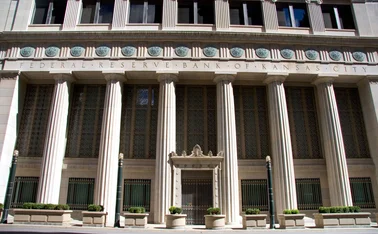
Fed considering imposing local liquidity requirements on foreign banks
The proposal will likely be one of the first of its kind in international regulation
In an unprecedented move, the Federal Reserve is considering imposing local liquidity requirements on US branches of foreign banks, it announced on April 8.
The proposal reflects the Fed’s recent moves to better align the risks a financial institution poses to the system with the regulatory requirements it faces. The support among the Fed board for the suggestions, however, is not unanimous.
“Introducing this concept is novel in the realm of international regulation (in contrast to supervision, where there is precedent),” Fed vice-chair for supervision Randal Quarles says in his statement on the proposals.
The liquidity requirement is part of a wider proposal to modify the regulation of foreign banks, separating firms into tranches that represent different sizes, activities and risks. The Fed also proposes to adjust the timing and content requirements for resolution plan submissions for foreign banks.
Quarles, says the US’s exposure to a host of large foreign banks has created “severe liquidity strain” since the financial crisis.
The Fed is using the proposal to consider the optimal balance of certainty for host supervisors and domestic banks during times of stress and freely available liquidity for home supervisors and consolidated firms in good times, Quarles says in his statement on the proposals.
“Some degree of certainty about available local resources would form a basis for trust among regulators that might mitigate the human tendency to freeze all available resources in a stress,” he said. Global standards for total-loss absorbing capacity establish local requirements for capital and bail-inable bonds, but not liquidity.
The central bank also aims to understand whether the connections between foreign banks’ US branches and their non-US affiliates create similar risks to those created by US banks’ cross-border exposures.
Fed chair Jerome Powell says in his statement: “Because the US operations of most foreign banks tend to have a larger cross-border profile, greater capital markets activities and higher levels of short-term funding, they often present greater risk than a simpler, more traditional domestic bank.”
Board split
The support for the proposal among the board, however, is not undisputed. Governor Lael Brainard argues that the proposals weaken regulatory requirements at a time when the system has “comfortably” met the post-crisis reforms while providing sufficient credit to the system and enjoying sizable profits.
“While I am encouraged that it would apply the liquidity coverage ratio and net stable funding ratio requirements to the intermediate holding companies of foreign banks, today’s proposal does not address the important liquidity risks associated with the US branch and agency networks of these firms,” she says in her statement.
The more important risks, Brainard argues, are associated with the heavy reliance of US branches of foreign banks on runnable short-term wholesale funding. They rely on the funding roughly twice as much as US banks, she says.
In the run-up to the 2008 financial crisis, dollar assets, such as mortgage-backed securities, accounted for around half of eurozone banks’ foreign exposure, an economic letter published by the New York Fed in 2011 says. The exposures for the eurozone, UK and Switzerland reportedly exceeded $8 trillion.
Like today, much of the funding for these assets relied heavily on short-term wholesale markets, because foreign firms often lack access to more stable dollar deposits from individuals and households. During the crisis, when the funding market dried up, many of the foreign branches were the most vulnerable and thus active users of the Fed’s discount window.
Brainard advocates imposing a “standardised liquidity requirement for the branches and agencies for foreign banks”.
“This would reduce the incentive to shift assets to branches from IHCs [intermediate holding companies], which is important in light of the fact that branch assets have grown as a percentage of foreign bank activities in the United States since the IHC requirements were put in place,” she says.
In the announcement, however, the Fed “is not proposing but is requesting comment” on the approach Brainard advocates.
Tranching foreign branches
Part of the Fed’s proposal involves creating categories for foreign banks with over $100 billion in assets based on their risk profiles. The banks would be sorted into the four tranches with increasingly stringent regulatory requirements for the higher-risk firms.
“The requirements under each category would be based on the risk profile of a foreign banking organisation’s combined US operations or US intermediate holding company, as measured by their size and the materiality of the following risk-based indicators: cross-jurisdictional activity, non-bank assets, off-balance sheet exposure and weighted short-term wholesale funding,” the proposal says.
Resolution plan requirements
One difference for each category is the frequency in which banks would have to submit resolution plans to the Fed. A resolution plan, also known as a living will, is a description of the company’s strategy for orderly resolution in the event of insolvency.
“Cross-jurisdictional activity may present increased challenges in resolution because there could be legal or regulatory restrictions that prevent the transfer of financial resources across borders where multiple jurisdictions and regulatory authorities are involved,” the proposal says.
Brainard also differs from her board colleagues on this proposal, saying it “weakens the resolution plan process” and leaves the system “less safe”.
Under the proposal, she explains, most banks with assets of between $100 billion and $250 billion will now be excused from submitting a resolution plan. And for those with $250 billion–700 billion in assets, the proposal would only require a plan submitted once every six years.
Beyond this, she says, even the “largest and most systemic” banks could request to be excused from some elements of the resolution plan, and if one agency does not “proactively disapprove” of the request it will be granted.
“I see no change in the financial environment that would require us to weaken protections that are vital to a safe and sound financial system and ensure large banks – and not taxpayers – are on the hook,” Brainard says.
Only users who have a paid subscription or are part of a corporate subscription are able to print or copy content.
To access these options, along with all other subscription benefits, please contact info@centralbanking.com or view our subscription options here: www.centralbanking.com/subscriptions
You are currently unable to print this content. Please contact info@centralbanking.com to find out more.
You are currently unable to copy this content. Please contact info@centralbanking.com to find out more.
Copyright Infopro Digital Limited. All rights reserved.
As outlined in our terms and conditions, https://www.infopro-digital.com/terms-and-conditions/subscriptions/ (point 2.4), printing is limited to a single copy.
If you would like to purchase additional rights please email info@centralbanking.com
Copyright Infopro Digital Limited. All rights reserved.
You may share this content using our article tools. As outlined in our terms and conditions, https://www.infopro-digital.com/terms-and-conditions/subscriptions/ (clause 2.4), an Authorised User may only make one copy of the materials for their own personal use. You must also comply with the restrictions in clause 2.5.
If you would like to purchase additional rights please email info@centralbanking.com