

IMF: Central banks ‘must' ease if inflation expectations drop
This should be done through ‘other means' if interest rates are at ZLB, Fund argues in WEO update

Central banks in advanced economies "must" continue easing policy to prevent a rise in real interest rates if falling oil prices cause inflation expectations to drop further, the International Monetary Fund (IMF) argues in an update of its World Economic Outlook report.
This should be done through "other means" if benchmark rates have reached the zero lower bound, adds the Fund in the report, published today.
Meanwhile, lower oil prices could alleviate inflation pressures and external vulnerabilities in many emerging markets, giving room to central banks to delay raising policy interest rates, according to the report.
Global oil prices have fallen sharply in the past few months, transforming the macroeconomic backdrop of both developed and developing economies.
"[But] even with the sharp oil price decline – a net positive for global growth – [the] economic outlook is still subdued," according to the Fund, which revises down its global growth forecast for 2015 by 0.3% to 3.5% due to a decline in potential output.
"Factors supporting growth – lower oil prices, but also depreciation of euro and yen – are more than offset by persistent negative forces, including the lingering legacies of the crisis and lower potential growth in many countries," the Fund adds.
"The cross currents make for a complicated picture," says Olivier Blanchard, the IMF's director of research. "It means good news for oil importers, bad news for oil exporters... Good news for countries more linked to the euro and the yen, bad news for those more linked to the dollar."
In advanced countries, cheaper oil is delivering a "welcome" boost to demand, but could also increase the risk of deflation, the IMF warns.
"If the further declines in inflation, even if temporary, lead to additional downdraft in inflation expectations in major economies, monetary policy must stay accommodative through other means to prevent real interest rates from rising," the report argues.
The IMF also foresees slower growth in emerging and developing economies, owing to a slowdown in China and Russia, and the related hit to commodity exporters' terms of trade.
In addition, the boost from lower oil prices to importers in the developing world "is less than in advanced economies, as more of the related windfall gains accrue to governments", for example in the form of lower energy subsidies, the report notes.
The weaker global growth forecast underscores the need to raise actual and potential growth "in most economies", according to the IMF. "This means a decisive push for structural reforms in all countries, even as macroeconomic policy priorities differ."
Only users who have a paid subscription or are part of a corporate subscription are able to print or copy content.
To access these options, along with all other subscription benefits, please contact info@centralbanking.com or view our subscription options here: www.centralbanking.com/subscriptions
You are currently unable to print this content. Please contact info@centralbanking.com to find out more.
You are currently unable to copy this content. Please contact info@centralbanking.com to find out more.
Copyright Infopro Digital Limited. All rights reserved.
As outlined in our terms and conditions, https://www.infopro-digital.com/terms-and-conditions/subscriptions/ (point 2.4), printing is limited to a single copy.
If you would like to purchase additional rights please email info@centralbanking.com
Copyright Infopro Digital Limited. All rights reserved.
You may share this content using our article tools. As outlined in our terms and conditions, https://www.infopro-digital.com/terms-and-conditions/subscriptions/ (clause 2.4), an Authorised User may only make one copy of the materials for their own personal use. You must also comply with the restrictions in clause 2.5.
If you would like to purchase additional rights please email info@centralbanking.com
More on Monetary Policy

RBNZ delivers surprise hold in split decision
Quarter point hike voted down by 4-3 as all board members agree tightening is likely to be needed

Inflation fears prompt Pakistan to tighten policy by 50bp
Although price growth has eased slightly, it remains well above 5–7% target range

Arcontech enhances central banks’ market‑sensitive data publishing with end-to-end encryption
Monetary policy decisions and auction results are safeguarded against cyber security threats.

Lagarde sees slower pass-through after bond sell-off
Higher yields will limit knock-on effects from energy shock, ECB president tells IMF meeting
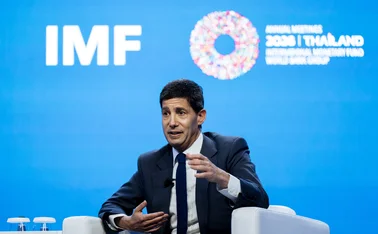
Warsh: I’ve focused too much on monetary policy
Fed chair vows to pay more attention to supervision, payments systems and consumer affairs

Little evidence of second-round inflation in UK – Bailey
BoE governor says economy more resilient than expected, amid signs of AI investment
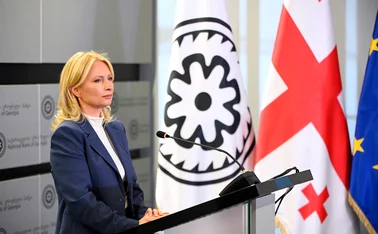
Pre-emptive policy has built credibility, says Georgian governor
Enriched monetary policy toolkit assesses whether shocks are transitory in a volatile world

Fiscal consolidation still possible in France – Moulin
BdF governor says Europe facing twin shock from surge in energy costs and bond yields