

Banks could be forced into Euribor submission
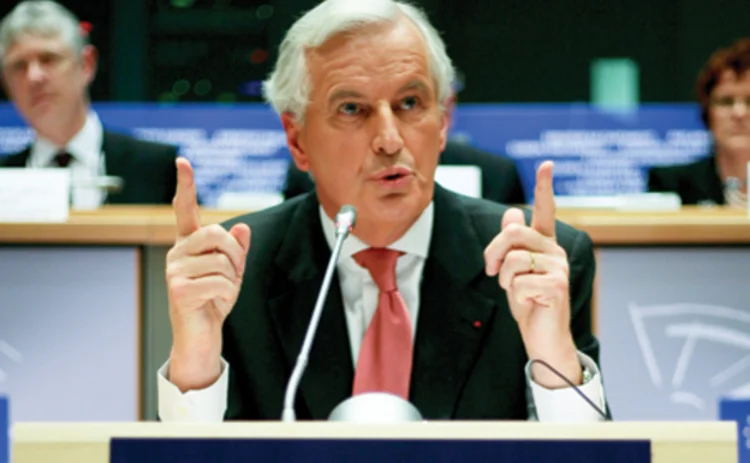

Banks could be forced to submit information for the Euro Interbank Offered Rate (Euribor) under new legislation, European Commissioner Michel Barnier said today.
The new laws, which the European Commission will propose in the second quarter of 2013, will attempt to bolster the integrity of Europe's interbank benchmarks and draw a line under the rate-setting scandals that have surfaced across the globe.
Barnier today insisted the benchmarks were in the interests of the market and the general
Only users who have a paid subscription or are part of a corporate subscription are able to print or copy content.
To access these options, along with all other subscription benefits, please contact info@centralbanking.com or view our subscription options here: www.centralbanking.com/subscriptions
You are currently unable to print this content. Please contact info@centralbanking.com to find out more.
You are currently unable to copy this content. Please contact info@centralbanking.com to find out more.
Copyright Infopro Digital Limited. All rights reserved.
As outlined in our terms and conditions, https://www.infopro-digital.com/terms-and-conditions/subscriptions/ (point 2.4), printing is limited to a single copy.
If you would like to purchase additional rights please email info@centralbanking.com
Copyright Infopro Digital Limited. All rights reserved.
You may share this content using our article tools. As outlined in our terms and conditions, https://www.infopro-digital.com/terms-and-conditions/subscriptions/ (clause 2.4), an Authorised User may only make one copy of the materials for their own personal use. You must also comply with the restrictions in clause 2.5.
If you would like to purchase additional rights please email info@centralbanking.com
More on Financial Stability

Yue: China’s growth issues won’t impact yuan internationalisation
HKMA chief also says rising long-term bond yields have not affected Hong Kong

Supervisory culture at Fed a ‘decades-long problem’ – Bowman
Vice-chair says there will be restructuring, while ‘tailoring’ of regulations will also change

FSB outlines principles to guide regulatory ‘modernisation’
‘We have not seen people implement our recommendations and then move back,’ says John Schindler

AI, debt and cyber risk threaten financial stability – IMF
Combination of risks ‘may have much broader systemic implications’, says institution’s Vamvakidis

Stablecoins could let US firms prioritise some creditors – study
FDIC may be on hook if a bank issues coins before failing, Cleveland Fed researchers say

FSB calls for ‘urgent action’ on public liquidity backstops
Many jurisdictions at risk of having to ‘improvise under pressure’, report says

As NBFI sector grows, so do its risks and benefits – Knot
Former FSB chair discusses implications of sector’s increasing dominance

Kansas City Fed warns of long-term AI financing risks
Highly leveraged entities may cause financial stress to spill over to broader economy