

Nobel laureate Paul Samuelson dies at 94
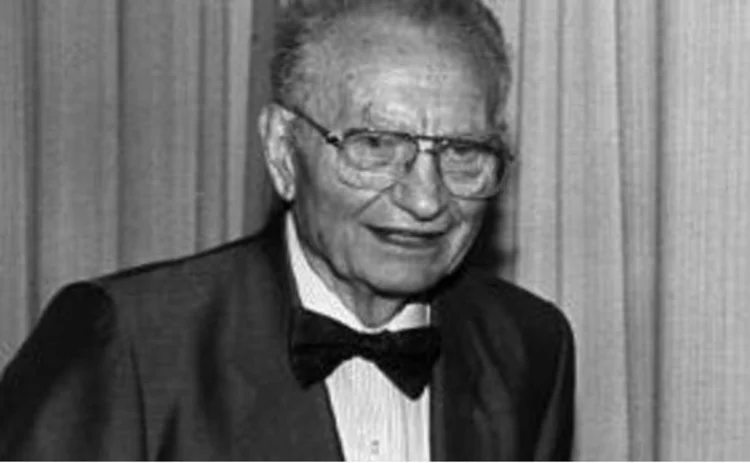
Paul Samuelson, a Nobel laureate and economist at the Massachusetts Institute of Technology (MIT), on Sunday died at the age of 94. Samuelson passed away at his home in Belmont, Massachusetts following a short illness.
He was regarded as one of the most influential economists of the past century and was feted for his wide-ranging contributions to economics, writing prolifically on welfare, economic growth and international trade. Samuelson, who regarded himself as "the last generalist in economics", picked up the Nobel Prize in Economics the year after it was founded for his efforts to incorporate scientific methods into the study of the subject. The Royal Swedish Academy of Sciences, which selects the laureates, said at the time that Samuelson had "done more than any other contemporary economist to raise the level of scientific analysis in economic theory."
Robert Solow, a long-time colleague, said on Sunday: "If you did a time and motion study of what any modern economist does at work, you would find an enormous proportion of standard mental devices trace back to Paul Samuelson's long lifetime of research. What I can add about my beloved friend of 60 years is that he had a marvellous intuition about how a market economy had to be. ‘It must work like this', he would say. ‘Now all we have to do is prove it.'"
Presenting him with a National Medal of Science, the highest award for science in America, in 1996, Bill Clinton, then president, said he had made "fundamental contributions to economic science, specifically general equilibrium theory and macroeconomics, and to economic education and policy over a period of 60 years."
Samuelson joined MIT's economics department in 1940 and remained there many years after his official retirement in 1985. He lent his name to the Stolper-Samuelson trade theorem which describes the relationship between the relative prices of output goods and real wages and returns to capital, and introduced a forerunner to the concept of revealed preference in his first academic article, published when he was 23. He served as an economic adviser to both John Kennedy and Lyndon Johnson, and was one of ten Nobel laureates who signed a public document in 2003 opposing George W. Bush's tax cuts. He also wrote an influential and celebrated textbook, Economics: An introductory analysis which has sold 4m copies.
He is survived by his wife Risha Samuelson and six children from his first marriage to the late Marion Samuelson. A memorial service is to be organised.
Click here to read his 1970 Nobel lecture, ‘Maximum principles in analytical economics'
Click here to read his remarks on the evolution of the MIT's economics department
Only users who have a paid subscription or are part of a corporate subscription are able to print or copy content.
To access these options, along with all other subscription benefits, please contact info@centralbanking.com or view our subscription options here: www.centralbanking.com/subscriptions
You are currently unable to print this content. Please contact info@centralbanking.com to find out more.
You are currently unable to copy this content. Please contact info@centralbanking.com to find out more.
Copyright Infopro Digital Limited. All rights reserved.
As outlined in our terms and conditions, https://www.infopro-digital.com/terms-and-conditions/subscriptions/ (point 2.4), printing is limited to a single copy.
If you would like to purchase additional rights please email info@centralbanking.com
Copyright Infopro Digital Limited. All rights reserved.
You may share this content using our article tools. As outlined in our terms and conditions, https://www.infopro-digital.com/terms-and-conditions/subscriptions/ (clause 2.4), an Authorised User may only make one copy of the materials for their own personal use. You must also comply with the restrictions in clause 2.5.
If you would like to purchase additional rights please email info@centralbanking.com
More on People
Schnabel to join IMF as financial counsellor
ECB official to step down early, creating another opening at the top of the bank

People: Union leader among BoE’s new non-execs
Plus RBNZ assistant governor to leave and Fnality appoints three ex-central bankers

Schnabel could leave ECB early to join IMF – German media
Germany may find itself without representative on bank’s governing board

Mozambique’s ‘debt scandal’ casts shadow over governor appointment
Activist says president’s U-turn is likely to have been prompted by public outcry

Indonesian lawmakers approve Damayanti as BI governor
Parliament also confirms deputy governors, with formal appointments set for next month
People: July to September 2026
A round-up of central bankers in the news and on the move during the past three months
Brian Langrin takes helm at Bank of Jamaica
Former head of financial stability succeeds Richard Byles as governor

People: BoJ payments chief to join IMF
Plus: Australia appoints new monetary policy board member; Harrison to head comms at BoC