

Australia cuts on signs of slower growth ahead
The Reserve Bank's rate-setting board cut the benchmark cash rate from 7.25% to 7% on Tuesday. Glenn Stevens, the governor of the Reserve Bank, said after the decision that "tight financial condition, in conjunction with other factors including higher fuel costs and low asset values, have exerted the needed restraint on demand."
The governor noted favourable
Only users who have a paid subscription or are part of a corporate subscription are able to print or copy content.
To access these options, along with all other subscription benefits, please contact info@centralbanking.com or view our subscription options here: www.centralbanking.com/subscriptions
You are currently unable to print this content. Please contact info@centralbanking.com to find out more.
You are currently unable to copy this content. Please contact info@centralbanking.com to find out more.
Copyright Infopro Digital Limited. All rights reserved.
As outlined in our terms and conditions, https://www.infopro-digital.com/terms-and-conditions/subscriptions/ (point 2.4), printing is limited to a single copy.
If you would like to purchase additional rights please email info@centralbanking.com
Copyright Infopro Digital Limited. All rights reserved.
You may share this content using our article tools. As outlined in our terms and conditions, https://www.infopro-digital.com/terms-and-conditions/subscriptions/ (clause 2.4), an Authorised User may only make one copy of the materials for their own personal use. You must also comply with the restrictions in clause 2.5.
If you would like to purchase additional rights please email info@centralbanking.com
More on Monetary Policy

ECB should become global lender of last resort – report
Academics put forward policy recommendations to further internationalise euro

Book notes: The unanchored central banker, by Manoj Pradhan and Charles Goodhart
A book sparkling with provocative opinions that challenges readers to rethink central banking amid evolving macro trends

Sarb hikes rates 25bp, citing persistent global supply shock
Global economy not in a healthy space, governor says

Nigeria makes biggest rate cut since 2007
CBN also recalibrates standing facilities corridor to strengthen policy transmission

Adapting to AI crucial to central banks’ credibility, Panetta says
Bank of Italy governor tells Kyiv conference tech-driven investment will alter inflation

UK mortgages out of sync with BoE policy
Average two-year rates for home loans have risen since March, despite BoE’s extended pause
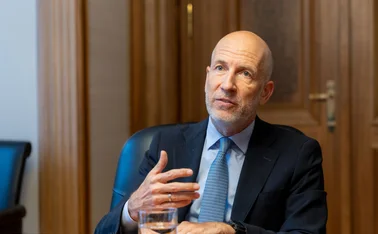
The OeNB’s Martin Kocher on the Eurosystem’s inflation outlook
The Austrian governor speaks about ECB succession, forward guidance and eurobonds, and access to cash and the digital euro

BoJ raises rates to 31-year high
Ueda says ‘policy phase has changed’ and focus now is on ensuring inflation does not exceed 2%