

Connectivity makes payments faster and cheaper – panel
Officials at Summer Meetings discuss need to facilitate cross-border payment systems

Central bankers from countries with large migrant populations have said connecting payment systems would enable faster and cheaper cross-border transactions.
Speaking at a panel discussion at the Central Banking Summer Meetings on June 12, one senior official said there was significant demand for quick and affordable remittance payments in their country, many of whose citizens worked overseas. The official said reliance on correspondent banks – and the “less than favorable” exchange rates they
Only users who have a paid subscription or are part of a corporate subscription are able to print or copy content.
To access these options, along with all other subscription benefits, please contact info@centralbanking.com or view our subscription options here: www.centralbanking.com/subscriptions
You are currently unable to print this content. Please contact info@centralbanking.com to find out more.
You are currently unable to copy this content. Please contact info@centralbanking.com to find out more.
Copyright Infopro Digital Limited. All rights reserved.
As outlined in our terms and conditions, https://www.infopro-digital.com/terms-and-conditions/subscriptions/ (point 2.4), printing is limited to a single copy.
If you would like to purchase additional rights please email info@centralbanking.com
Copyright Infopro Digital Limited. All rights reserved.
You may share this content using our article tools. As outlined in our terms and conditions, https://www.infopro-digital.com/terms-and-conditions/subscriptions/ (clause 2.4), an Authorised User may only make one copy of the materials for their own personal use. You must also comply with the restrictions in clause 2.5.
If you would like to purchase additional rights please email info@centralbanking.com
More on Payments

Russian finance ministry begins paying salaries in CBDC
All Russian citizens can request to convert salaries into digital ruble, ministry says
Commercial value must drive digital asset adoption – Mills
BoE’s executive director for FMI says bank will not pick winning token, ledger or business model

ECB and BCB to explore linking Tips and Pix
Feasibility assessment could take a year or more before link is approved
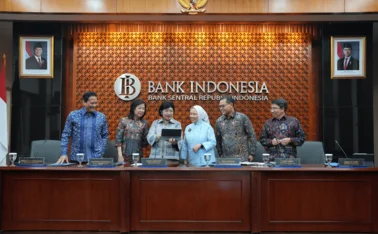
Indonesia holds and enacts new measures to protect rupiah value
Damayanti’s first rate decision as governor comes as BI and HKMA advance payments co-operation

Kenya publishes draft national payment system policy and law
Payment ecosystem should draw on lessons from India and Brazil, National Treasury says

Payment fraud rose 27% in 2025, says Irish central bank
Fraudulent cross-border transactions outside EEA grew by 54.8%, report shows

Colombian reserve requirements impact settlement timing – paper
Cut contributed to ‘pronounced shift’ towards late-day settlement, authors say

Visa joins MAS’s Bloom
Payments router announces participation in multi-currency tokenised deposit and stablecoin project