

Eurosystem sees small rise in counterfeiting over 2024
€20 and €50 notes remain the most popular denominations to replicate

The European Central Bank recorded a small increase in the number of counterfeit euro banknotes in circulation last year.
The most popular to fabricate were the €20 and €50 notes, which accounted for more than 75% of all notes that the ECB withdrew from circulation, the bank said in a statement today (February 21). Some 97.8% of all counterfeits were found in the eurozone, while 1.3% were submitted from non-euro-using European Union member states and 0.9% from “other parts of the world”.
The ECB added that the “public does not need to be concerned about counterfeiting, but should remain vigilant”. In 2023, the bank had recorded 16 counterfeit notes per million in circulation – a figure that increased to 18 per million in 2024.
Germany’s central bank saw a higher increase than the eurozone average. In its own statement, the Deutsche Bundesbank reported a 28% increase in counterfeits in Germany.
“The number of counterfeits detected rose in 2024, but, at the same time, the loss arising from counterfeiting went down,” said Burkhard Balz, the Bundesbank executive board member responsible for cash management.
“This is because perpetrators have again tended increasingly towards introducing simple counterfeits of low denomination into transactions.”
The Bundesbank noted that, as in 2023, a large proportion of the fake notes could be easily recognised, as they had the words ‘MovieMoney’ or ‘Prop copy’ printed on them, and lacked the security features found on genuine notes. It added that, on some bills, the label ‘MovieMoney’ had been covered and replaced with an imitated signature.
Germany also reported an increase in counterfeit coins, from 115,900 in 2023 to 141,300 in 2024. The Bundesbank explained that some companies had accumulated coins that they found suspicious over several years and had submitted them as a batch in 2024.
Austria’s counterfeits are continuing to go back to “pre-pandemic levels”, the country’s central bank wrote in a statement, although it recorded an increase nevertheless. The bank seized 10,213 counterfeit banknotes from circulation in 2024 – 2,371 more than in 2023.
In Austria, too, the €50 note was the most popular to counterfeit, making up 41.7% of all bills seized from circulation. This was followed by the €100 note – which accounted for one-quarter of all fakes – and the €20 note, which came in third with 21.1%.
The National Bank of Austria emphasised that cash remained “the safest means of payment of all time”, and that its use protected people against “phishing, cyber crime and internet fraud”.
“If one compares the fraud value for cash and non-cash payments, the misuse of cards and account details for transfers amount to a mid-double-digit-million amount,” the bank said. It stated that the fraud value of cash, on the other hand, amounted to just a few hundred thousand euros.
Belgium saw a 30% increase in counterfeiting, but said levels remained “historically low”. The National Bank of Belgium said it withdrew 14,341 fake notes in 2024 – 3,285 more than in 2023. In Belgium – as in Germany – the €20 and €50 denominations were the most popular to fake, making up 34% and 47% of all fakes respectively.
The Netherlands Bank said in a statement that it saw a 40% increase in the amount of counterfeits that it had to remove in 2023. This, it said, reflected a “limited number of fraud cases involving low-quality counterfeit banknotes”, mostly in the €200 denomination.
The Bank of Finland said it took 714 fake notes out of circulation in 2024, compared with 653 in 2023 and 469 in 2022. Here, too, the most popular note to copy was the €20 denomination – some 386 of them were found, followed by the €50 note, at 197, and the €10 note, at 71.
Slovakia reported a 9.40% increase in counterfeits to 1,857 last year. The National Bank of Slovakia said the number of counterfeit euro notes had “been stable over the long term”, and was “relatively low” compared with other eurozone countries.
Only users who have a paid subscription or are part of a corporate subscription are able to print or copy content.
To access these options, along with all other subscription benefits, please contact info@centralbanking.com or view our subscription options here: www.centralbanking.com/subscriptions
You are currently unable to print this content. Please contact info@centralbanking.com to find out more.
You are currently unable to copy this content. Please contact info@centralbanking.com to find out more.
Copyright Infopro Digital Limited. All rights reserved.
As outlined in our terms and conditions, https://www.infopro-digital.com/terms-and-conditions/subscriptions/ (point 2.4), printing is limited to a single copy.
If you would like to purchase additional rights please email info@centralbanking.com
Copyright Infopro Digital Limited. All rights reserved.
You may share this content using our article tools. As outlined in our terms and conditions, https://www.infopro-digital.com/terms-and-conditions/subscriptions/ (clause 2.4), an Authorised User may only make one copy of the materials for their own personal use. You must also comply with the restrictions in clause 2.5.
If you would like to purchase additional rights please email info@centralbanking.com
More on Banknotes
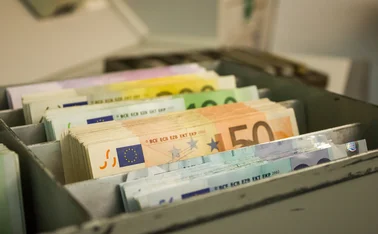
Rethinking the narrative on cash
Antti Heinonen explores recent developments of cash that go against the prevailing narrative
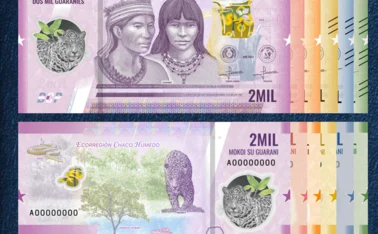
Paraguay’s central bank unveils new series of banknotes
Designs come with updated security and accessibility features

Banknotes: July to September 2026
A round-up of news and salient issues that have affected central bankers in the past three months
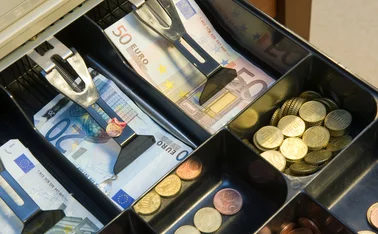
Merchants in the cash system
As policy-makers seek to protect cash acceptance and increasingly look to retailers to facilitate access to cash, Martina Horakova argues that merchants need adequate cash services themselves – and that providing cash to the public should not come at their expense
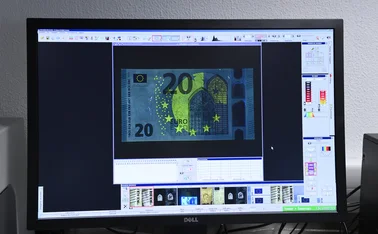
Germany sees surge in €100 fakes amid overall counterfeit decline
Deutsche Bundesbank says overall levels of forged money remain low
Iraq receives $500m from Fed as government faces cash shortage
Oil-exporting country’s income comes under strain as Hormuz uncertainty persists

ECB unveils shortlist of new euro banknote designs
Bank invites public to share their views, offers vertical designs for first time

Sudan to withdraw low-value notes from circulation
Smaller denominations have lost purchasing power amid inflation and currency depreciation