

Trump claims Fed is giving China the upper hand
Chinese president “can do whatever he wants”, Trump complains

President Donald Trump renewed his criticism of the Federal Reserve on May 10, saying the central bank is giving China the upper hand in the ongoing trade negotiations.
“We should be entitled to have a fair playing field, but even without a fair playing field – because our Fed is very, very disruptive to us – even without a fair playing field we are winning,” Trump told CNBC.
“[China] devalue their currency, they have for years: It’s put them at a tremendous competitive advantage. And we don’t have that advantage because we have a Fed that doesn’t lower interest rates,” he said.
“Don’t forget: the head of the Fed in China is President Xi … he can do whatever he wants,” he said.
Expecting a cut
The president’s comments mark the latest in a series of attacks on the central bank’s monetary policy. He has frequently called on the Fed to reduce rates since taking office. But following the outbreak of trade tensions, the president has increased the intensity of his remarks, urging the Fed to help him win the trade war.
The Fed has so far resisted the president’s calls. But incoming data and market sentiment might force the central bank to dance to Trump’s tune in the coming months.
Headline inflation has been below the Fed’s 2% target for the first four months of this year, at 1.5% in April, up from 1.4% in March. And slowing job growth data released last week further spurred calls for a rate cut.
CME Group’s ‘Fedwatch’ tool indicates that markets think a rate cut is possible as soon as July, with an implied probability of just over 77%. This is up from June 4, when it was at just over 50% probability. By the September policy meeting, the tool indicates a probability of nearly 91% for at least one rate cut.
“They certainly didn’t listen”
Trump previously criticised the Fed’s December rate hike, its most recent, calling the move a step too far and claiming the Fed doesn’t have a “feel for the market”. His disappointment has also extended to chairman Jerome Powell, saying last year he is “not even a little bit happy” with the chair, though it was Trump who appointed him.
“It’s more than just Jay Powell,” Trump added in his comments to CNBC. “We have people on the Fed that really weren’t – they’re not my people. They certainly didn’t listen to me because they made a big mistake: They raised interest rates far too fast. That’s number one.”
“Number two: they did quantitative tightening: They were taking in $50 billion a month – $50 billion a month. And they’ve now eased that, but it’s still $25 billion a month, which is ridiculous. Now, China’s doing just the opposite. They’re pumping money in. So I’m winning, but I’m not winning on a level table,” he said.
In a possible contradiction of his calls for lower rates, Trump took to Twitter today (June 11), saying low inflation is “a beautiful thing”.
Since the December rate increase, the Fed has moved to a more dovish stance. In the first few months of the year it repeatedly communicated its “patient” and “data-dependant” approach. In a speech on June 4, Powell went one step further, saying the Fed stands ready to “act as appropriate to sustain the expansion”.
Only users who have a paid subscription or are part of a corporate subscription are able to print or copy content.
To access these options, along with all other subscription benefits, please contact info@centralbanking.com or view our subscription options here: www.centralbanking.com/subscriptions
You are currently unable to print this content. Please contact info@centralbanking.com to find out more.
You are currently unable to copy this content. Please contact info@centralbanking.com to find out more.
Copyright Infopro Digital Limited. All rights reserved.
As outlined in our terms and conditions, https://www.infopro-digital.com/terms-and-conditions/subscriptions/ (point 2.4), printing is limited to a single copy.
If you would like to purchase additional rights please email info@centralbanking.com
Copyright Infopro Digital Limited. All rights reserved.
You may share this content using our article tools. As outlined in our terms and conditions, https://www.infopro-digital.com/terms-and-conditions/subscriptions/ (clause 2.4), an Authorised User may only make one copy of the materials for their own personal use. You must also comply with the restrictions in clause 2.5.
If you would like to purchase additional rights please email info@centralbanking.com
More on Monetary Policy

ECB says no options ‘off the table’ on green dual rates
French parliamentary report claims cheaper lending for transition projects needs no treaty change
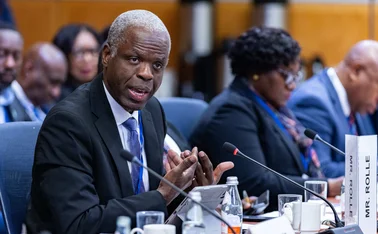
Bahamian economy faces ‘elevated’ downside risks – Rolle
FX reserves more than adequate to support currency’s US dollar peg, central bank governor says
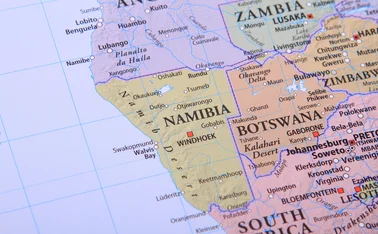
Botswana holds, while Namibia hikes to protect currency peg
Southern African neighbours diverge as inflation takes different directions

RBNZ delivers surprise hold in split decision
Quarter point hike voted down by 4-3 as all board members agree tightening is likely to be needed

Inflation fears prompt Pakistan to tighten policy by 50bp
Although price growth has eased slightly, it remains well above 5–7% target range
Arcontech enhances central banks’ market‑sensitive data publishing with end-to-end encryption
Monetary policy decisions and auction results are safeguarded against cyber security threats.

Lagarde sees slower pass-through after bond sell-off
Higher yields will limit knock-on effects from energy shock, ECB president tells IMF meeting
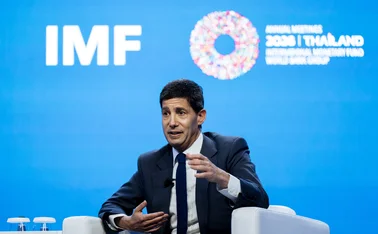
Warsh: I’ve focused too much on monetary policy
Fed chair vows to pay more attention to supervision, payments systems and consumer affairs