

Fiji governor unveils first polymer banknote
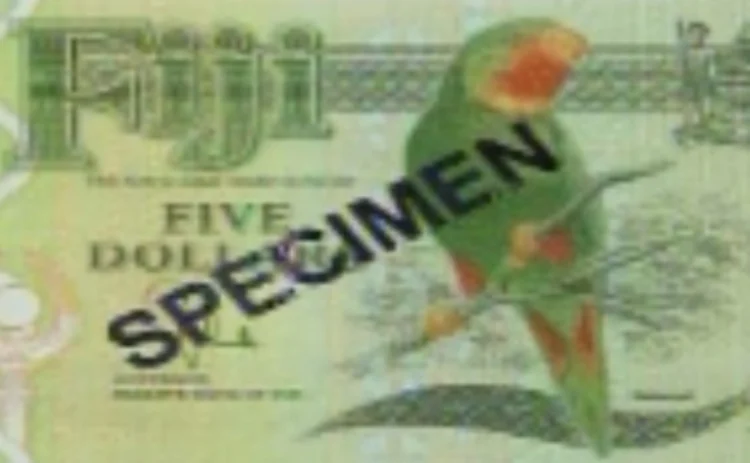

Barry Whiteside, the governor of the Reserve Bank of Fiji, has unveiled the first polymer banknote in the country's history, alongside a coin to replace the $2 note.
The new $5 note incorporates new security features, Whiteside said, as well as being more durable. The polymer notes should last about 2.5 times as long as paper notes but will cost 1.5 times more. "Print and copy technology development moves so fast now and it is imperative that we move with the changes," the governor said. "If we
Only users who have a paid subscription or are part of a corporate subscription are able to print or copy content.
To access these options, along with all other subscription benefits, please contact info@centralbanking.com or view our subscription options here: www.centralbanking.com/subscriptions
You are currently unable to print this content. Please contact info@centralbanking.com to find out more.
You are currently unable to copy this content. Please contact info@centralbanking.com to find out more.
Copyright Infopro Digital Limited. All rights reserved.
As outlined in our terms and conditions, https://www.infopro-digital.com/terms-and-conditions/subscriptions/ (point 2.4), printing is limited to a single copy.
If you would like to purchase additional rights please email info@centralbanking.com
Copyright Infopro Digital Limited. All rights reserved.
You may share this content using our article tools. As outlined in our terms and conditions, https://www.infopro-digital.com/terms-and-conditions/subscriptions/ (clause 2.4), an Authorised User may only make one copy of the materials for their own personal use. You must also comply with the restrictions in clause 2.5.
If you would like to purchase additional rights please email info@centralbanking.com
More on FMI

Canada fights stigma over standing liquidity facility
Deputy governor outlines new plans for repo operations and central clearing

Washington is guarding against the wrong dollar threat
Brics nations did not launch a common currency in New Delhi. The payment networks they are building may matter more

CFTC uses emergency powers to overturn prediction market ban
Temporary US-wide ban would make financial instruments “waste away”, chairman says

ECB’s T2 suffers second ‘incident’ as Euronext reports outage
Euro and krone T2 settlements queued for 30–40 minutes following system update last month

Tokenisation poses monetary operations challenges – panel
Officials tell Central Banking London Meetings that 24/7 markets can bring new dilemmas

Busting Mythos: how Europe is responding to the latest AI model
Experts emphasise heightened importance of focusing on basics

G7 central banks warn quantum is in ‘early stages of experimentation’
Readying financial system for Q-day is ‘not a simple substitution exercise’, say authorities

ECB reveals longer-term DLT strategy
Bank to focus on building ‘entirely innovative and integrated’ tokenised asset ecosystem