Elderfield details Ireland's new risk assessment model
matthew-elderfield

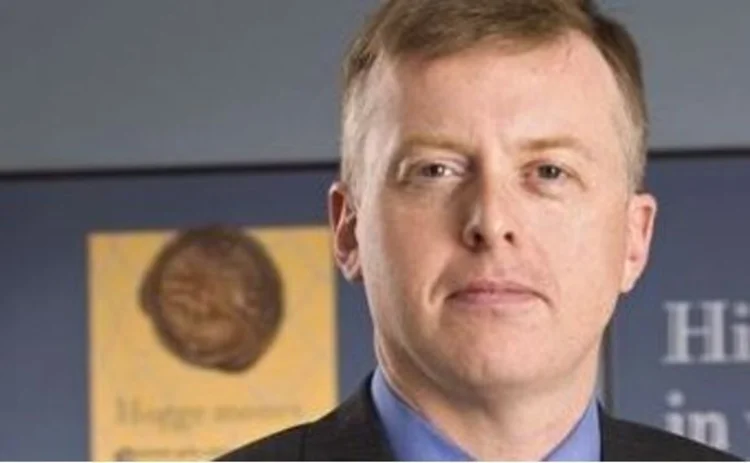
Matthew Elderfield, the head of financial regulation at the Central Bank of Ireland, on Thursday revealed details of a new risk assessment model for financial institutions operating in Ireland.

Banks will be categorised as high impact, medium-high impact, medium-low impact or low impact, under the model and scrutinised accordingly.

"We [the central bank] regulate 14,100 financial services firms all of which pose potential risks, to differing degrees, to the economy or to consumers," said Elderfield during a speech to the Galway Chamber. "Our job is to regulate these firms, to manage these risks. Risk is everywhere... the central bank has to think very carefully about where to look in the firms we regulate and how to use our limited resources to best effect for Irish citizens and the Irish economy."

To that end, Elderfield said the central bank will implement the new "formal risk assessment framework" at the end of this year. The model will be called the probability risk and impact system, or Prism.

"As the name implies, this is designed to allow a more structured approach to assessing financial firms based on the impact they have on the economy or consumers if things go wrong and the probability that problems arise," said Elderfield.

The impact categorisation of firms will be based on quantitative metrics flowing from Consultation Paper 49. "Probability risk factors will be assessed and scored using supervisory judgement supported by the use of key risk indicators," a spokesperson for the central bank told CentralBanking.com.

Elderfield said that one of the "clear organisational lessons" learned from the financial crisis was that central banks "spent too little time rigorously challenging the really high-impact firms, those firms whose failure, even if low probability, can seriously damage the economy of a country."

He said the Irish central bank wanted to now find a "better way of applying resources to risk, based on impact; a higher level of engagement and scrutiny with those highest impact firms, taking much less on trust; a more systematic way of assessing the probability of a problem occurring; and, above all, a system which obliges supervisors to follow up on risks in a conclusive manner where they have been identified."

Following industry consultations, Elderfield that the central bank is beginning to rank all regulated firms using quantitative metrics "to determine their relative impact".

"This is a difficult exercise that involves judgement as much as science," he said.

At the end of this process, all financial service firms operating in Ireland will be categorised as either high impact, medium-high impact, medium-low impact or low impact.

High impact
"There will be very few high-impact firms but they will be the firms that really matter for the future of the Irish economy," said Elderfield. "I'm not saying for a moment that large firms are necessarily the engines of growth going forward, but I am asserting that they are the firms that will really damage Ireland if they get into trouble – as a regulator you should always have a tendency to look on the dark side."

Alongside the four impact categories, the central bank will have four engagement models.

The highest impact firms will have dedicated supervision teams following a "pro-active programme of supervision" to ensure that the central bank is constantly in the know about their strategy and business model.

"By this I mean what makes them tick, what pays the bills and makes the profits," said Elderfield. "Supervisors will be resourced to have a deep knowledge of the financials and of the men and women who govern these firms. We will expect firms to co-operate with this level of supervision though we don't expect them to particularly enjoy it, we will make judgements on their leadership and the judgement shown by that leadership which will, at times, be uncomfortable for them."

Elderfield described financial services firms' business models, financials and governance structures as being "key pillars" of the new risk assessment system.
Going beyond these he said "in terms of deciding what else we should routinely look at in our probability assessment, we have reviewed international best practice. Based on this international review and our own experience we will assess credit risk, market risk, operational risk, insurance risk, liquidity risk, capital risk, environmental risk and conduct risk."

Any alarming spike in a particular risk type, a particular sector or a particular firm will prompt "early and intense" supervision in the hope of mitigating the issue before it becomes a crisis.

"All our staff must go beyond this analysis phase, and not merely work out that they have a problem but work out how to solve it," said Elderfield.

Risks have already been identified at some institutions, with remedial actions called for. Elderfield remained defiant that his staff should not be swayed by counter arguments from the firms they are assessing.

"Generally analysis is easier than problem solving," he said. "We will be intolerant of firms that don't solve their problems but simply send us further analysis as to why something may not be a problem if only we shared their view of the world."

The middle tier
A similar process will be followed, albeit with a lower level of resourcing, for "important medium-high impact firms".

"Every medium-high impact firm will be relationship-managed by a named supervisor who will meet key management and review financial returns for that firm," said Elderfield. "We will conduct full risk assessments of all medium-high impact firms on a rolling cycle."

For medium-low impact firms, the central banks will conduct assessments in a more "focused manner" and on a sampled basis.

"We hope this will incentivise them to conduct themselves in a prudent manner, treating their customers well," said Elderfield.

"We will use our enforcement tools to deal robustly with those who fail to meet our standards, irrespective of their size," he added.

Low impact firms
For the many thousands of low-impact firms, Elderfield said he planned to increasingly "use technology to help us to supervise them in an efficient way... Our objective is to have the capacity to get automatic alerts to dedicated triage teams when a low-impact firm fails key financial health checks."

Elderfield called for improvement in basic compliance among a "substantial portion" of smaller low-impact firms.

"For example, about half of the retail intermediaries who are supposed to file returns with us do not do so," he said. "That is unacceptable and has to change."

The provision of an electronic filing facility should advance the situation. "But we will also start to use our powers to fine or revoke authorisations of firms that refuse to pay their levy or who fail to file timely regulatory returns," said Elderfield.

Elderfield admitted staffing may be a problem lower down the risk spectrum.

"We will have to deploy a relatively small number of our regulators to deal with a very high number of small firms," he said. "We will have an expert team to cover each type of financial services firm but they will be supervising reactively, not conducting probability-scoring assessments and instead dealing with firms usually just when they go wrong. In taking this approach we are making a conscious choice to focus our finite supervisory staff on our most important firms because those are the ones that we and Ireland cannot afford to have fail in a disorderly manner."

Realistic
Maintaining an air of practicality, Elderfield conceded that no system could ever prevent firms failing. "Even in a reformed and risk-based approach to regulation, failures will happen," he said. "They won't ever be welcome, desirable or pain-free, but if we are doing a better job they will be acceptable when they occur with our lower-impact firms if that is the hard trade-off for keeping the high-impact firms from damaging the economy."

Beyond the new model, Elderfield acknowledged there was more to change. "Systems and processes, while important, are only part of the challenge. Supervision is done by individuals, even if they work in institutions and apply agreed processes. So reforming regulation is also about culture and people," he said.

On this note, Elderfield moved on to focus on the shortcomings of the central bank. "We still need to make a lot of changes to encourage what one of my board members, Mike Soden, describes as "open dissent". We are still very hierarchical and need to work in a more joined-up way, encouraging debate and challenge between areas."

"If we aren't better at challenging each other about management of risk, we won't be able to raise our game to challenge the CEOs of the high-impact firms we supervise," he said.

The financial regulation chief knows that the road ahead will not be smooth, yet he remained determined. "We are going to continue to make difficult choices – unpopular choices even – to ensure that our frontline staff can focus on the firms that really matter to Ireland," he said.

A spokesperson for the central bank told CentralBanking.com that implementation of the system will begin "on a phased basis" in November.

Elderfield said his "goal is to ensure that the new risk assessment system is up and running fully in the next couple of years".

Only users who have a paid subscription or are part of a corporate subscription are able to print or copy content.

To access these options, along with all other subscription benefits, please contact info@centralbanking.com or view our subscription options here: www.centralbanking.com/subscriptions

You are currently unable to copy this content. Please contact info@centralbanking.com to find out more.

Most read articles loading...

You need to sign in to use this feature. If you don’t have a Central Banking account, please register for a trial.

Sign in
You are currently on corporate access.

To use this feature you will need an individual account. If you have one already please sign in.

Sign in.

Alternatively you can request an individual account

.