

Bank of Canada researchers claim breakthrough in credentialisation
System’s creators use a Merkle tree to create “secret-free and quantum-safe” method

Researchers with the Bank of Canada say they have created a system for substantiating credentials that is anonymous and immune to quantum computer hacking.
“In this work, we construct the first secret-free and quantum-safe credential mechanism,” authors Raza Ali Kazmi and Cyrus Minwalla say. A “secret-free” approach means an organisation would not have to safeguard a set of numbers known as a key to verify individuals.
Kazmi is a cryptographer with the Bank of Canada, while Minwalla is a
Only users who have a paid subscription or are part of a corporate subscription are able to print or copy content.
To access these options, along with all other subscription benefits, please contact info@centralbanking.com or view our subscription options here: www.centralbanking.com/subscriptions
You are currently unable to print this content. Please contact info@centralbanking.com to find out more.
You are currently unable to copy this content. Please contact info@centralbanking.com to find out more.
Copyright Infopro Digital Limited. All rights reserved.
As outlined in our terms and conditions, https://www.infopro-digital.com/terms-and-conditions/subscriptions/ (point 2.4), printing is limited to a single copy.
If you would like to purchase additional rights please email info@centralbanking.com
Copyright Infopro Digital Limited. All rights reserved.
You may share this content using our article tools. As outlined in our terms and conditions, https://www.infopro-digital.com/terms-and-conditions/subscriptions/ (clause 2.4), an Authorised User may only make one copy of the materials for their own personal use. You must also comply with the restrictions in clause 2.5.
If you would like to purchase additional rights please email info@centralbanking.com
More on Fintech
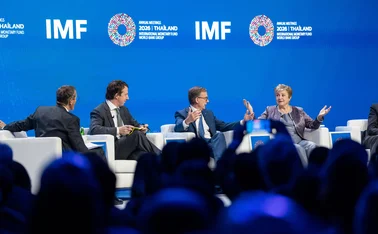
Georgieva: love it, hate it or fear it, AI is here
IMF MD’s ambivalence contrasts with Macklem’s cautious optimism and Anthropic policy chief’s bullishness

GFTN’s Maha El Dimachki on the tech forces facing central banks
Tokenisation, AI and quantum are converging as global financial corridors evolve

Bailey calls for AI kill switch ahead of regulation
FPC says technology is escalating financial stability risks and making them more intertwined
Podcast: Cyber security threats to financial stability in the age of AI
Nation-state espionage, malware and ransomware but with agentic AI swarms

Bank of Korea reveals staff data was hacked this year
Contractor notified central bank a month after employees’ personal details were compromised
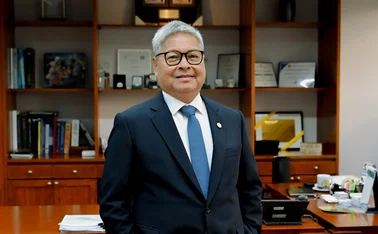
Mamerto Tangonan on the Philippines’ glocal digital ecosystem
Deputy governor shares insights on the nexus of wCBDC and digital sovereign bonds, multilateral payments governance and 'smart' global trade
EU central banks want more sovereign bonds in stablecoin reserves
Micar review proposals include severing crypto interdependence with rival banks

BIS economists take aim at crypto industry data
Central banks should consider blockchain stats ‘noisy approximations’ of actual economic activity