
Central Banks

BoE’s Cunliffe sheds light on investment issues
One in five firms report constraints on credit access reduced investment, BoE deputy says, while restrictions on internal fund usage have worsened the problem

Philippines central bank enforces virtual currency regulation
Exchanges will have to apply for certificate of registration and implement specific risk management framework; central bank imposes transaction limit

Consumption shows asymmetric response to shocks – BoE paper
Households appear to respond more strongly to temporary negative shocks than positive ones, and effects are different for borrowers and savers

Staff incentive schemes lead to bad deals for consumers – paper
Colombian paper examines the effect of bank incentive schemes on consumers; transparency index reveals staff often do not disclose information about the price of financial products

ZLB magnifies impacts of uncertainty shocks, paper says
Differences caused by zero lower bound are “economically important”, researchers say

Ukrainian central bank protests over senior official's arrest
Move comes amid political attacks on NBU governor Gontareva

Fed paper flags risk of low rates misallocating capital
Where firms rely heavily on intangible capital, lower rates could harm firms’ investment and contribute to secular stagnation, economists warn
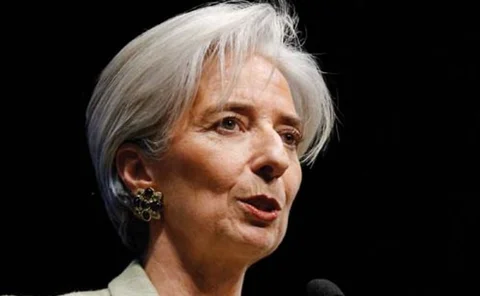
Future of Greek austerity divides IMF board
Some directors dissent from call to reduce mid-term primary surplus target

Graeme Wheeler to stand down this year
RBNZ governor will not seek a second term; deputy to take interim role as succession process complicated by elections

Angola disregards IMF advice on exchange rate overhaul
Angolan authorities disagree with IMF over suggested exchange rate framework changes but agree to a banking sector clean-up

Banque de France paper models ‘pandemic’ impact of shocks
Researchers build on other recent models of financial markets

Some credit unions don’t vet senior staff – Irish central bank
“Fitness and probity” requirements are not being followed by all unions, the report says

Mongolia sees hope of recovery after rough year
The commodity reliant country faced slowing growth and inflation in 2016, but the outlook for this year is somewhat brighter

Draghi: eurozone ‘bad bank’ would not be ‘panacea’ for NPLs
ECB president also rejects criticisms made by the US president’s trade adviser

Capital account management could prevent ‘commodity curse’, BIS paper shows
Authors suggest options for small open economies dealing with commodity booms; solutions could prevent reductions in welfare and support the tradable sector

Fed unveils stress scenarios under revised testing approach
Tests now include model enhancements, new phase-in methods and lighter requirements for some banks; the severe scenario has been turned up a notch

National Bank of Poland to release new highest value banknote
500-zloty note will enter circulation on February 10 and be the last of the new series, which was first announced in 2014

Kazakhstan’s Akishev sets sights on lower inflation
Governor hails success with inflation targeting and says central bank now plans to push inflation even lower; NBK also working on new banking supervision framework

Macro-prudential spillovers may grow, paper argues
Bundesbank paper uses IBRN data to analyse cross-border effects of policy

Ingves sees cross-border resolution lessons from Swedish crisis
Crisis in the early 1990s prompted Swedish authorities to take early action on cross-border resolution, the Riksbank governor says

US congressman: Yellen must stop international negotiations
Fed must allow President Trump to appoint new officials, Republican lawmaker says; calls for “fundamental review” of Basel III and other recent accords

BoJ acts to thwart pressure on yields
Central bank commitment to yield curve control faces first serious test; BoJ launches unlimited purchases to hold yield down

Esma sets out 2017 work programme
Strategy and governance among key priorities, Maijoor says

GDP calculation needs double deflation, says IMF paper
Single deflation techniques introduce errors which can be significant, authors argue, concluding all nations should use double deflation