

Cuba will again allow dollar cash deposits
Decision reverses ban in place since June 2021
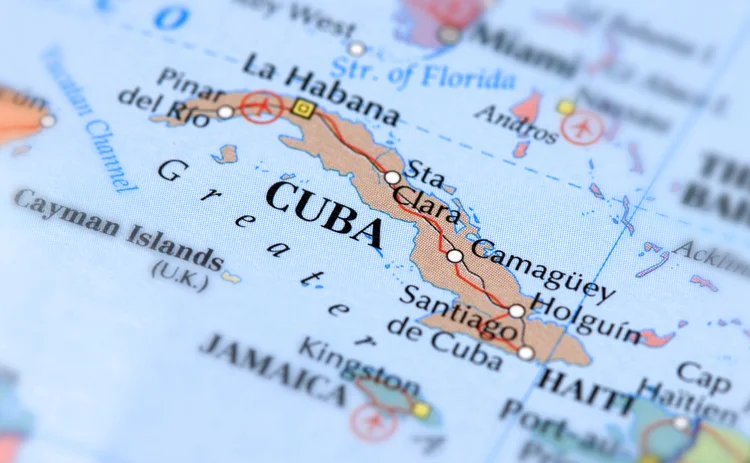

The Central Bank of Cuba will allow residents to deposit US dollars in cash at banks, reversing a prohibition on such deposits in June 2021.
The resolution explains that the end of the Covid-19 pandemic and revival of tourism have eased the economic crisis that compelled the deposit ban.
The resolution also referred to an August 2022 measure, which authorised the purchase of US dollars at close to the market rate. The reform “has created the conditions for [banks] to be able to accept US dollar deposits in financial institutions, and to receive that money in cash, from currency exchange operations”.
Previously, the Cuban peso had traded at 24 to the dollar. After the August reform, the central bank offered to buy dollars at a rate of 120 pesos to the dollar.
A gap remains between the official and informal exchange rates. According to the independent website El Toque, the peso currently trades at 185: $1 on unregulated markets.
The new regulation was adopted on April 6, and took effect once published in Cuba’s official gazette on April 10.
Alejandro Gil Fernández, the economy minister, tweeted that “banking the [dollars] supports the gradual recovery of the economy”. The move means that Cubans can add dollars to convertible-currency payment cards.
“We are going in the correct direction,” Gil Fernández added.
When it first banned the deposit of US dollars in cash, the central bank explained that US sanctions – in place since 1960 – made it difficult to do business with dollars internationally.
The weak currency and a lack of imports has saddled Cuba with high inflation. Cuba’s statistical agency put year-on-year inflation at 44.5% in February. Steve Hanke, a professor of applied economics at The Johns Hopkins University, estimates that inflation was even higher – 80% that month.
Pavel Vidal, a Cuban economist and professor of economics at the Javerian Pontifical University in Calí, Colombia, tells Central Banking that Cuba faces a dilemma. It has difficulty using the US dollar in trade because of sanctions, but it cannot create a stable foreign exchange regime either.
The Cuban authorities have struggled with this dilemma since the 1990s, when the end of the Cold War compelled a degree of market liberalisation. “Therefore partial dollarisation is once again the solution,” Vidal says.
Ricardo Torres, a research fellow at American University in Washington, DC, explains that “dollarisation started long ago in Cuba, at least since November 2019 with the opening of stores selling products exclusively in MLC, the government euphemism for dollars”. MLC stands for moneda libre convertible (freely convertible currency).
Torres says dollarisation is a spontaneous byproduct of “a severe balance-of-payments crisis”. The regime tried to combat dollarisation with the 2021 deposit ban, only to accept the market for dollars in 2022 with the exchange-rate reform.
“Dollarisation is here to stay, and they want state banks to play a more central role in the process,” Torres states.
“The new central bank president is accepting the new reality of the Cuban economy,” he adds. The Cuban government appointed a new central bank governor, Joaquín Alonso Vázquez, in February. He succeeded Marta Sabina Wilson González, who had been in office since December 2019.
Torres says Cuba also needs dollars because Western Union, the US money transfer service, restored service to the island in early 2023. US sanctions on the Cuban military forced Western Union out of the Cuban market in 2020.
“They need dollars in Cuban institutions if WU is ever to pay remittances in dollars to their Cuban customers,” Torres says.
Finally, he says Cuba may be following Venezuela’s lead in adopting the dollar, which has proved successful for that country.
Emily Morris, a development economist at University College London, says US dollars are “still very difficult for Cuban entities to use for international transactions”. The central bank may “still prefer foreign currency deposits to be in alternative currencies”, she says.
But with US tourists returning, the Cuban authorities may want to encourage people to bank the dollars and use them in MLC stores. “At least in this way the state will benefit from the sales tax”, she adds. Cubans may have some concerns that the authorities will restrict access to bank accounts, but Morris doubts the authorities would do this except in a severe crisis.
Although dollars do circulate widely in the country, Morris does not believe the reform is “a major move towards dollarisation”.
Vidal says “redollarisation is easier in the short term” than undertaking a full-scale liberal reform of the economy. That would involve “implementing austerity measures, raising taxes, reducing expenditures and closing state-owned enterprises”, he says.
But expanding the use of the dollar is a sub-optimal solution, “since it generates segmentation, financial distortions and inequalities”, Vidal continues. The MLC stores allow Cubans with access to dollars – for example, those who work in tourism – to purchase scarce imported consumer goods.
Though Cuba is embracing the dollar, the country remains estranged from the US. Last month, the Russian ambassador to Cuba said the country was completing preparations to connect to Russia’s Mir payment card system.
Only users who have a paid subscription or are part of a corporate subscription are able to print or copy content.
To access these options, along with all other subscription benefits, please contact info@centralbanking.com or view our subscription options here: www.centralbanking.com/subscriptions
You are currently unable to print this content. Please contact info@centralbanking.com to find out more.
You are currently unable to copy this content. Please contact info@centralbanking.com to find out more.
Copyright Infopro Digital Limited. All rights reserved.
As outlined in our terms and conditions, https://www.infopro-digital.com/terms-and-conditions/subscriptions/ (point 2.4), printing is limited to a single copy.
If you would like to purchase additional rights please email info@centralbanking.com
Copyright Infopro Digital Limited. All rights reserved.
You may share this content using our article tools. As outlined in our terms and conditions, https://www.infopro-digital.com/terms-and-conditions/subscriptions/ (clause 2.4), an Authorised User may only make one copy of the materials for their own personal use. You must also comply with the restrictions in clause 2.5.
If you would like to purchase additional rights please email info@centralbanking.com
More on Foreign Exchange

Syria clamps down on unlicensed exchange and transfer activity
Central bank and interior ministry issue 755 warnings following field inspections

Philippines’ FX reserves fall to three-year low
BSP says levels sufficient following period of currency interventions and devaluations
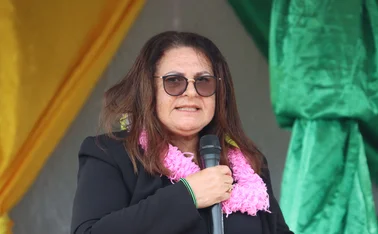
Pacific series: PNG’s governor on 40 years at the central bank and her plans for its future
Elizabeth Genia speaks about reaching remote communities, FX, green finance and leadership
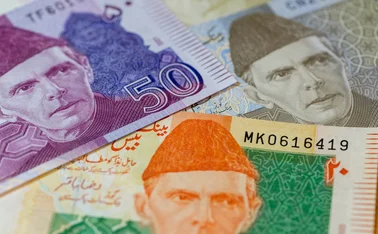
Pakistan to offer cash prizes to boost remittance flows
Eligible beneficiaries of remittances will be entered into lottery-style draw

Washington is guarding against the wrong dollar threat
Brics nations did not launch a common currency in New Delhi. The payment networks they are building may matter more
Book notes: The almighty dollar, by Brendan Greeley
The history of the currency that came to be ‘the dollar’ is the centrepiece in an otherwise confused book

Joint US-Japan FX intervention could advance BoJ tightening
Experts say tighter policy needed to lock in yen gains over the long term

BoJ holds as yen and won both rise on suspected interventions
Japan’s central bank more hawkish than at previous meetings as it keeps rates at 1%