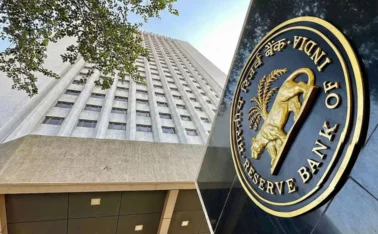
PBoC unveils major stimulus package

Central bank cuts key rate and reserve requirements, boosts support for property and stock markets
Yuan

China’s central bank announced a slew of stimulus measures today (September 24) to boost the country’s flagging economy. These include cutting both a key policy rate and reserve requirements for banks, and bringing in support measures for the property sector and the stock market.

The announcement came after recent data suggested the economy remains bogged down by weak domestic demand and an ongoing downturn in the real estate sector.

The People’s Bank of China (PBoC) governor Pan Gongsheng said that in the near future it would cut banks’ reserve requirement ratios (RRRs) by 50 basis points. At a rare press conference – alongside the heads of the National Financial Regulatory Administration and the China Securities Regulatory Commission – Pan said the cut in the proportion of cash that banks must hold as reserves would free up about 1 trillion yuan ($142 billion) of liquidity in the banking system.

Pan said the move would bring the weighted average of banks’ RRRs down from 7% to around 6.6%. He added that the PBoC might cut the RRR by a further 25bp to 50bp later this year, depending on the need for liquidity in the market.

He also announced that the central bank would cut the seven-day reverse repurchase rate, its short-term policy rate, by 20bp to 1.5%. He added that the PBoC would guide commercial banks to lower their loan prime rates and deposit rates accordingly to maintain the stability of their net interest margins.

Pan said the medium-term lending facility rate was expected to drop by around 30bp and that the LPRs and banks’ deposit rates might fall by 20 to 25bp.

On September 23, the PBoC cut its 14-day reverse repo rate by 10bp to 1.85%. The move raised analysts’ expectations that the bank would soon cut the seven-day reverse repo rate.

Property support measures

To support the property sector, Pan said the PBoC would guide banks to lower the interest rates for existing mortgages by an average of around 50bp.

The central bank would also cut the minimum downpayment requirement on all types of homes to 15% – including the ratio for second-hand homes, which is currently 25%. The PBoC lowered the downpayment ratio for first-hand homes to 15% in May when it rolled out  support measures for the housing sector.

The PBoC will provide more incentives for banks to take part in the 300 billion yuan re-lending programme it announced in May, which is aimed at “destocking” developers’ large inventories of unsold homes.

Under the scheme, the PBoC has provided cheap funding to financial institutions to encourage them to lend to regional state-owned enterprises (SOEs). The aim is to enable the SOEs to buy up unsold homes at reasonable prices and convert them into social housing.

Pan said the PBoC would cover 100% of the cheap loans that banks would issue to SOEs. It currently covers 60%.

Analysts have observed that SOEs and developers lack the incentives to take part in the programme because turning unsold properties into social housing is generally a loss-making proposition for both parties.

Stock market stimulus

The PBOC introduced two new tools to support the stock market.

The first will involve setting up a 500 billion yuan swap programme for funds, insurers and brokers to buy stocks. These institutions will be able to exchange assets such as bonds, exchange-traded funds and equities of blue chip mainland companies for highly liquid assets, such as government bonds and central bank bills.

Pan said the programme would allow institutions to obtain more high quality and highly liquid assets, which would better enable them to obtain capital and invest in equities. Funds obtained through this new tool can only be used for investment in the stock market, he said.

The governor said the central bank could launch a second or a third round of the swap programme, depending on the situation.

The second tool will involve the PBoC providing up to 300 billion yuan in cheap loans to commercial banks to help them fund listed companies or major shareholders’ share purchases and buybacks.

Market reaction

The CSI 300 Index, which tracks the top 300 stocks traded on the Shanghai and Shenzhen stock exchanges, rose 4.3% today. Hong Kong’s Hang Seng Index rose 4.1%.

Larry Hu and Yuxiao Zhang, economists at Macquarie Group, said in a note that the stimulus package was “another highly co-ordinated policy announcement” from financial regulators, which had jointly cracked down on the property sector in late 2020.

“This time, the target is the prevailing deflationary pressures in the Chinese economy,” they wrote.

“To be sure, the PBoC alone can’t accomplish the task of fighting deflation, given the lack of credit demand. The most likely path to reflation, in our view, is through fiscal spending on housing, financed by the PBoC’s balance sheet.”

They nevertheless added that the PBoC’s announcement today was still significant, as it signalled a broader shift in policy than was the case in late 2020.

“It may be the beginning of the end of China’s longest deflationary streak since 1999,” they said.

ING chief economist Lynn Song believes the PBoC’s measures are a step in the right direction. In a note, he gave the central bank credit for announcing multiple support measures in one go, rather than spacing out individual piecemeal measures.

With most global central banks now beginning to cut rates, he said there would be more room for the PBoC to further ease policy in the months ahead. “If we see a large fiscal policy push as well, momentum could recover heading into the fourth quarter,” he wrote.

Despite the support measures for the property sector, Song believes that additional city-level measures will be needed.

“We have seen plenty of property support measures this year, but they have thus far been insufficient to establish a trough,” he said. 

Only users who have a paid subscription or are part of a corporate subscription are able to print or copy content.

To access these options, along with all other subscription benefits, please contact info@centralbanking.com or view our subscription options here: subscriptions.centralbanking.com/subscribe

You are currently unable to copy this content. Please contact info@centralbanking.com to find out more.

Most read articles loading...

You need to sign in to use this feature. If you don’t have a Central Banking account, please register for a trial.

Sign in
You are currently on corporate access.

To use this feature you will need an individual account. If you have one already please sign in.

Sign in.

Alternatively you can request an individual account

.