

ECB approves proposed Latvian central bank reforms
Law gives Latvian government power to dismiss governors found guilty of gross misconduct
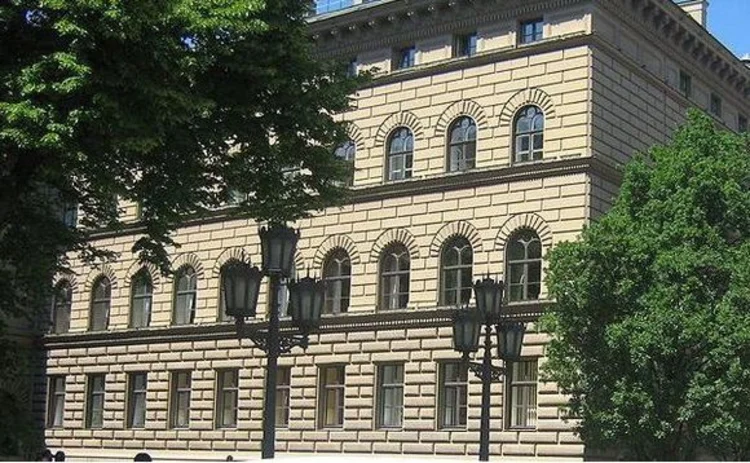
The European Central Bank has largely approved a draft Latvian law on the country’s central bank, the latest measure prompted by a series of scandals.
The draft law will give Latvia’s lawmakers the power to dismiss governors if they have been found to breach the law governing eurozone central banks. It also obliges the government to start the process of putting the country’s market regulator under central bank control.
The Latvian government’s reform efforts were prompted by several major controversies involving the country’s financial regulators. Bank of Latvia governor Ilmārs Rimšēvičs is due to step down from his post very shortly after having served three consecutive terms in the role since 2001.
Rimšēvičs is due to face trial on extortion charges after he was arrested by Latvia’s anti-corruption police in February 2018. He strongly denies the charges and has said he was falsely accused by vested interests angry at his supervision of the banking sector.
At almost the same time as his arrest, the US Treasury department publicly accused Latvia’s third-largest commercial bank of involvement in massive money laundering. The ECB was forced to close the bank after US authorities made it clear they would not allow it access to dollars.
One significant provision of the draft law gives Latvia’s parliament the ability to vote to remove central bank governors or other senior officials from office, which it did not previously have. The parliament can do this if a governor has been found guilty of serious misconduct or no longer fulfils the conditions required under the treaty that governs eurozone central banks, the draft law states.
The ECB said in an official opinion that it “welcomes this technical amendment”. It said the change brought the Bank of Latvia’s governance into line with the practice in most other Eurosystem countries.
The Latvian parliament passed a vote of no confidence in Rimšēvičs shortly after his arrest, but he refused to leave office. A Latvian court also ruled that he could not leave the country or enter central bank premises, effectively removing him from office. The ECB appealed against this ruling to the European Court of Justice, which overturned the Latvian court’s ruling.
Another provision in the draft law cuts the number of terms that a governor can serve to a maximum of two. It also reduces the length of terms for the governor, deputy governors and council members from six years to five, and cuts the central bank’s board from six members to four.
A previous Latvian law made major changes to the country’s financial markets regulator, the FKTK. The law effectively removed the authority’s director, Peters Putniņš, and its entire board from office. The Latvian government stated in March that Putniņš could re-apply for the post, but he resigned instead. The new law says the government must submit another draft law to absorb the FKTK into the central bank.
The ECB did raise reservations over the way the law largely maintains the current treatment of any profit made by Latvia’s central bank. The Bank of Latvia must pay the state a charge of 50% of any profit into state coffers, plus the corporate tax rate on the profit. The central bank’s board can decide to reduce payments if it believes the central bank needs to boost its capital reserves.
The ECB suggested either scrapping the dual charge on central bank profits, or putting a system in place for the Bank of Latvia’s board to agree contributions with the government.
Only users who have a paid subscription or are part of a corporate subscription are able to print or copy content.
To access these options, along with all other subscription benefits, please contact info@centralbanking.com or view our subscription options here: www.centralbanking.com/subscriptions
You are currently unable to print this content. Please contact info@centralbanking.com to find out more.
You are currently unable to copy this content. Please contact info@centralbanking.com to find out more.
Copyright Infopro Digital Limited. All rights reserved.
As outlined in our terms and conditions, https://www.infopro-digital.com/terms-and-conditions/subscriptions/ (point 2.4), printing is limited to a single copy.
If you would like to purchase additional rights please email info@centralbanking.com
Copyright Infopro Digital Limited. All rights reserved.
You may share this content using our article tools. As outlined in our terms and conditions, https://www.infopro-digital.com/terms-and-conditions/subscriptions/ (clause 2.4), an Authorised User may only make one copy of the materials for their own personal use. You must also comply with the restrictions in clause 2.5.
If you would like to purchase additional rights please email info@centralbanking.com
More on Governance
Venezuela seeks shift to inflation targeting in medium term
Minister says dollarisation not ‘right answer’ and debt sustainability analysis to be published soon

Trump sets up committee to investigate Cook
Courts had previously ruled US president had not followed due process in trying to fire Fed governor

BCRA challenges claim of $1bn loss on gold hedges
Central bank says derivatives transactions in 2025 reflected routine hedging operations

BIS’s Hernández de Cos on AI, non-bank risk and tokenisation
General manager talks about how the BIS is navigating a complex global environment
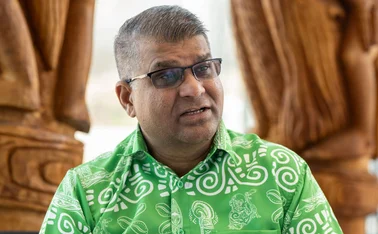
Pacific series: Climate is top issue for Fiji’s governor Ariff Ali
Head of central bank speaks about climate, inclusion, modernisation and vulnerability ahead of his likely retirement next year, following 30 years at institution

Populism casts long shadow over central bank policy – NBER paper
Countries with history of monetary financing make extra effort to show anti-inflationary credentials

Deregulation weakens resilience, does not spur lending, says Buch
ECB supervisory board chair calls for more ‘watchers’ of bank regulators

Ukraine’s ESG lessons from a war zone
NBU governing council member Olena Shcherbakova speaks about how environmental, social and governance rules can be adapted for dual-use and defence requirements