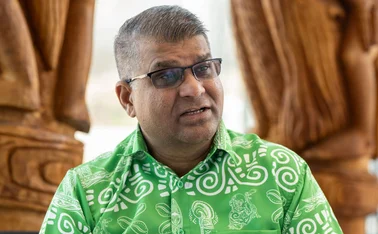
National Bank of Romania resists the populists – for now
Veteran governor Mugur Isărescu has defended the central bank’s independence
The National Bank of Romania joined the growing list of central banks under sustained pressure from central and eastern European governments, when members of the country’s ruling Social Democratic Party launched a series of assaults over the past year on the integrity of the 139-year-old institution.
Attacks on the credibility of the central bank and its governor were made by a number of lawmakers, notably allies of so-called ‘kingmaker’ Liviu Dragnea (the speaker of the lower house of parliament and leader of the Social Democrats, whose three-and-a-half year jail sentence was upheld after appeal in late May). They accused the central bank’s long-serving governor, Mugur Isărescu, of “collaborating” with opposition politicians.
Notably, the National Bank of Romania was cut out of any discussions about the introduction of a controversial new tax on banks. Emergency Ordinance 114/2018, which was rushed into law by the Romanian government on December 28 last year, required the country’s banks to pay higher taxes if the Romanian interbank offered rate (Robor) exceeded 2%. But the passage of the emergency decree took place without consultation with either the NBR or the European Central Bank (ECB).
With European and presidential elections this year, the spat between ruling lawmakers and the central bank appeared to become increasingly fractious. Some Social Democrats even proposed putting forward a new law that would lift immunity from prosecution for central bank board members and wanted Isărescu to step down.
Central bankers in Cyprus, the Czech Republic, Hungary, Latvia, Poland and Slovenia will be familiar with some of the problems faced by their peers in Romania. Pressure from government has resulted in the early resignations of at least two governors (Cyprus and Slovenia), while Latvia’s governor has fought against a year-long effort that has effectively prevented him from doing his job.
In an interview with Central Banking, Isărescu, who came into office 30 years ago as strongman Nicolae Ceaușescu was toppled from power, depicts “a ‘post-truth’, hybrid war” that is “undermining the reputation and credibility of central banks in eastern Europe”.
But Isărescu appears to have emerged from the episode in Romania in better shape than many of his peers.
Two factors may have played in his favour: first, the authorities in Frankfurt and Brussels took clear action to support Romania’s central bank (and its legal system). And second, the NBR – and Isărescu – enjoy a strong reputation among Romania’s public.
Bank tax now “bearable”
The bank levy has now been recalibrated, although not reversed. “Through negotiations, talks between the government and the banking sector, as well as communication with both the European Commission (EC) and the ECB, an improved, clearer document has resulted,” Isărescu tells Central Banking. “The final form is deemed bearable.”
ECB board member Yves Mersch issued a public letter to Romania’s financial minister Eugen Teodorovici on February 5 criticising the government’s conduct. Mersch reminded Teodorovici that, under European Union law, the Romanian government should have consulted the ECB over the new law, as it was likely to “materially influence the stability of financial institutions and markets” and called upon it to avoid such breaches in the future.
Following criticism from the ECB and with Romania facing a possible credit rating downgrade, the National Committee for Macroprudential Oversight – an independent body that includes representatives of the ministry of finance, the NBR and the Financial Supervisory Authority – was tasked with looking at ways to improve the decree.
After two meetings, the committee advised that the Robor reference be scrapped and some assets, such as minimum reserves, be excluded from the tax. In addition, the level of the tax levy was reduced, according to Isărescu. “More importantly, the ministry of finance has discussed these changes with the industry, with the banking sector – this was a step forward – and has also announced details to the ECB,” Isărescu adds.
Board functions as normal
Unlike in Cyprus, where board members were changed in a manner former governor Panicos Demetriades felt undermined his authority, the attacks from politicians in Romania has not resulted in changes to the NBR’s board. Isărescu says there was no real effort to force changes on the central bank’s board and he had “never been asked to resign”. The NBR governor adds that the minister of finance, who has the right to sit in on central bank board meetings, never even exercised this right, despite the spat between the central bank with ruling lawmakers.
In a democratic system, an independent body needs to be accountable. But the accountability is not to the government, to the minister of finance or parliament – it is to the public
Mugur Isărescu, National Bank of Romania
A difference of opinion
The source of tension in Romania stems largely from a difference of opinion between the government and the central bank on how to raise wages and help limit a ‘brain drain’ of Romania’s most qualified professionals, as well as the appropriate calibration when it comes to boosting consumption versus investment.
The central bank wants wage rises to be linked with increases in productivity and believes efforts should be focused more on improving investment rather than overly focused on consumption, so it helped to ensure policy changes are sustainable. The government favours a big rise in minimum wages and a boost to consumption. “We need to be aware that if we continue on a path of a widening trade balance, wage increases and too-high levels of consumption for the potential of the economy, one day there will be a correction that could create more problems than what was trying to be solved,” says Isărescu.
Public officials in Bucharest also point out that the government’s attacks on Isărescu may have disenfranchised some in the general public. The NBR has played an important role in Romania’s transition to a market-based economy, with Isărescu at the helm for the entire 30 years. In addition, Isărescu is remembered as the man who helped to fast-track Romania’s membership of the European Union, when he took leave from the central bank in 1999–2000 to serve as prime minister.
“After 2009–10, we have witnessed almost a generalised attack on the idea of independence,” says Isărescu, discussing central and eastern Europe as a whole. “It is clear there is a need for transparency and accountability. In a democratic system, an independent body needs to be accountable. But the accountability is not to the government, to the minister of finance or parliament – it is to the public.”
Multi-layered communication by the NBR to engage with all stakeholders, including the general public, will be vital in future to protect the integrity and operational independence of the central bank. But that in itself will present its own set of challenges.
Only users who have a paid subscription or are part of a corporate subscription are able to print or copy content.
To access these options, along with all other subscription benefits, please contact info@centralbanking.com or view our subscription options here: www.centralbanking.com/subscriptions
You are currently unable to print this content. Please contact info@centralbanking.com to find out more.
You are currently unable to copy this content. Please contact info@centralbanking.com to find out more.
Copyright Infopro Digital Limited. All rights reserved.
As outlined in our terms and conditions, https://www.infopro-digital.com/terms-and-conditions/subscriptions/ (point 2.4), printing is limited to a single copy.
If you would like to purchase additional rights please email info@centralbanking.com
Copyright Infopro Digital Limited. All rights reserved.
You may share this content using our article tools. As outlined in our terms and conditions, https://www.infopro-digital.com/terms-and-conditions/subscriptions/ (clause 2.4), an Authorised User may only make one copy of the materials for their own personal use. You must also comply with the restrictions in clause 2.5.
If you would like to purchase additional rights please email info@centralbanking.com