

Hungarian central bank may face police investigation
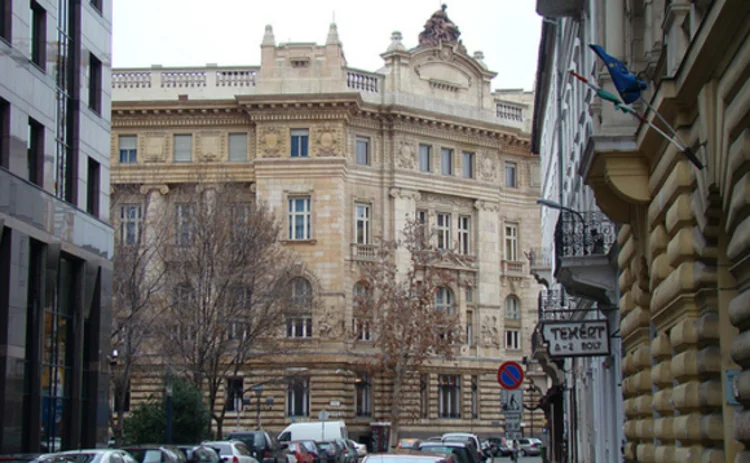
The National Bank of Hungary (NBH) may face a police investigation into allegations it revealed data "considered business secrets" to the International Monetary Fund (IMF), after Hungary's State Audit Office (SAO) said today it had notified "competent authorities" of its recent controversial audit findings.
The SAO, which alleged it had found unlawful behaviour at the central bank following a recent audit, said it "did not press charges" against the NBH as it is "not an investigative authority" and "not authorised to investigate".
But the SAO confirmed today it had passed on information to authorities that can launch such an investigation, with media reports stating the Hungarian police had launched an investigation into the central bank's activities.
A National Bank of Hungary spokesperson told CentralBanking.com, however, that the central bank had "not received any information from the authorities" about any new investigation, including one by the police. The Hungarian police did not respond to requests for comment before this article was published.
According to legislation brought in by the current government in 2011, the SAO "may initiate proceedings with the competent authority against the audited entities and the persons responsible" for anything it finds that it presumes unlawful.
The most serious of a number of allegations made by the SAO was that the NBH transmitted data "considered as business secrets" to the IMF, concerning "credits drawn by the Hungarian state from international organisations". The SAO says the data was transmitted "in an identifiable manner about seven Hungarian commercial banks from November 2008 to August 2010."
The current head of the SAO, László Domokos, was appointed by prime minister Viktor Orbán in 2010.
Orbán's appointees to the central bank monetary policy committee have consistently voted against the governor, András Simor, and his deputy governors in recent months – and one expert, who spoke to CentralBanking.com on condition of anonymity, says the SAO investigation into the central bank was a result of a "political vendetta" between Orbán and Simor.
Simor's term as governor expires next month, at which point he is widely expected to be replaced by an Orbán loyalist.
Only users who have a paid subscription or are part of a corporate subscription are able to print or copy content.
To access these options, along with all other subscription benefits, please contact info@centralbanking.com or view our subscription options here: www.centralbanking.com/subscriptions
You are currently unable to print this content. Please contact info@centralbanking.com to find out more.
You are currently unable to copy this content. Please contact info@centralbanking.com to find out more.
Copyright Infopro Digital Limited. All rights reserved.
As outlined in our terms and conditions, https://www.infopro-digital.com/terms-and-conditions/subscriptions/ (point 2.4), printing is limited to a single copy.
If you would like to purchase additional rights please email info@centralbanking.com
Copyright Infopro Digital Limited. All rights reserved.
You may share this content using our article tools. As outlined in our terms and conditions, https://www.infopro-digital.com/terms-and-conditions/subscriptions/ (clause 2.4), an Authorised User may only make one copy of the materials for their own personal use. You must also comply with the restrictions in clause 2.5.
If you would like to purchase additional rights please email info@centralbanking.com
More on Governance

Venezuela seeks shift to inflation targeting in medium term
Minister says dollarisation not ‘right answer’ and debt sustainability analysis to be published soon

Trump sets up committee to investigate Cook
Courts had previously ruled US president had not followed due process in trying to fire Fed governor

BCRA challenges claim of $1bn loss on gold hedges
Central bank says derivatives transactions in 2025 reflected routine hedging operations

BIS’s Hernández de Cos on AI, non-bank risk and tokenisation
General manager talks about how the BIS is navigating a complex global environment
Pacific series: Climate is top issue for Fiji’s governor Ariff Ali
Head of central bank speaks about climate, inclusion, modernisation and vulnerability ahead of his likely retirement next year, following 30 years at institution

Populism casts long shadow over central bank policy – NBER paper
Countries with history of monetary financing make extra effort to show anti-inflationary credentials

Deregulation weakens resilience, does not spur lending, says Buch
ECB supervisory board chair calls for more ‘watchers’ of bank regulators

Ukraine’s ESG lessons from a war zone
NBU governing council member Olena Shcherbakova speaks about how environmental, social and governance rules can be adapted for dual-use and defence requirements