Q&A: New York Fed’s Stiroh on climate change and Covid

Co-chair of Basel task force discusses possible supervisory approaches to climate risk
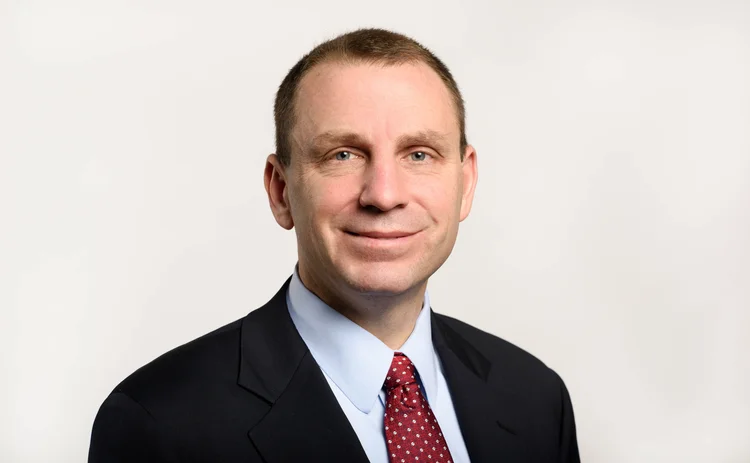
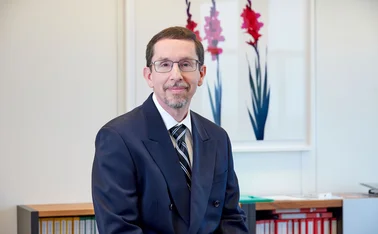
Courtesy of the Federal Reserve Bank of New York
Kevin Stiroh: “We’re in the process of building a framework for understanding climate risk transmission channels”
Photo: Courtesy of the Federal Reserve Bank of New York

The coronavirus pandemic had the potential to push climate risk cleanly off the global regulatory agenda, much as the financial crisis had done more than a decade earlier. Instead, central bankers have doubled down on multilateral plans since March, treating the economic wreckage of the virus as a warning of the kind of shocks that will occur with alarming frequency due to climate change.

In May, Luiz Pereira da Silva, deputy general manager of the Bank for International Settlements (BIS), explicitly connected the Covid-19 crisis and climate change risk, describing both as “Green Swan” events. Both are massive global negative externalities that arise from changes in natural ecosystems, wreaking extensive economic and financial damage and directly affecting human lives, he wrote.

For financial regulators, these events pose a uniquely difficult challenge. Despite scientists’ near-certainty climate change will occur, the global financial system has failed to account for the huge potential costs and to integrate these into risk frameworks and market pricing.

Observing an absence of action back in 2017, a coalition of central banks formed “to fill a gap”, according to Morgan Després, head of the Network for Greening the Financial System secretariat and a senior banker at the Banque de France.

“Our primary objective when we kicked off the NGFS was to encourage the Basel Committee and the other bodies to step in and do their job,” Després told an event earlier this month.

That moment is drawing near. In February, the Basel Committee on Banking Supervision established a Task Force on Climate-Related Financial Risk. As the only formal body with the power to set global banking regulatory standards for climate risk, it has more bite and clout than the NGFS. And even more so, because while US regulators have not joined the NGFS, one of them is chairing TFCR – Kevin Stiroh, a senior staffer of 20 years and head of supervision at the Federal Reserve Bank of New York.

This makes Stiroh one of the most senior US officials working directly on climate-related financial risk policy in a global forum. The Trump administration withdrawal from the Paris Agreement in June 2017 has seen the US take a back seat on climate risk, which remains a highly divisive and partisan issue in the US.

While the NGFS counted China as a founding member, the Federal Reserve has not yet joined. Chair Jerome Powell has indicated that the Fed plans to do so, but observers note the central bank would inevitably face accusations of politicisation if it is seen to take a position on the issue.

Climate change is clearly an emerging risk that has the potential to impact firms’ ability to provide their services through a number of different channels
Kevin Stiroh, Federal Reserve Bank of New York

Since November 2019, however, Stiroh has been one of the most vocal advocates for climate risk-related financial regulation in the US. In speeches to Harvard Business School and to the Garp Global Risk Forum in March and November, he outlined the challenges posed by climate risk and the terminologies risk managers should expect to use.

His latest speech about supervisors’ role was unequivocal: “Supervisors can and should use our oversight tools to ensure financial institutions are prepared for and resilient to all types of relevant risks, including climate-related events.”

Stiroh, who played a leading role in the development of the US’s Supervisory Capital Assessment Program and the Comprehensive Capital Analysis and Review stress test programmes, during and after the financial crisis, represents growing action in climate risk behind the scenes within the Federal Reserve system.

Speaking with Central Banking’s sister title Risk.net, Stiroh reveals that the Federal Reserve is devoting “a lot of resources” into climate change risk research, and that most major US banks are reviewing their risk management processes and capabilities, even without direction from regulators.

The US may eventually join Australia, France and the UK in running climate risk prudential stress tests. Or it may follow the ECB, which has published an ambitious consultation proposing integrating climate risk into its supervisory practices, including potential capital add-ons. But those decisions will rest on the outcome of November’s presidential election.

When I talk about the financial risks associated with climate change, it is very much from the perspective of a bank supervisor

The Democrat candidate Joe Biden has pledged a green recovery, whereas incumbent President Trump views climate change as a “hoax”. Within the financial sector, there are many market participants who acknowledge climate change risk exists. But some perceive tackling it is a job best left to the market, or at a push to politicians, rather than to regulators.

Meanwhile, the TFCR published its first report in April – a “stocktake” of central banks’ progress on climate risk. Most central banks are undertaking climate risk work, it found, and two-fifths are issuing principles-based guidance, but the majority have not worked out how to mitigate the risks in prudential capital frameworks.

The TFCR is acting urgently, with plans to produce a framework for climate risk supervision and regulation as early as 2021, which may include capital requirements for global banks.

Here, Stiroh discusses the significant work ahead for the TFCR, as well as the ongoing impact of the Covid-19 crisis on the New York Fed’s current and future supervisory practices.

How do you approach issues relating to climate risk in your capacity as a member of the TFCR and as head of supervision at the New York Fed? 

Kevin Stiroh: When I talk about the financial risks associated with climate change, it is very much from the perspective of a bank supervisor. And the overall goal of bank supervision is to ensure financial institutions are resilient and robust to a wide range of risks, so that they can continue to provide critical financial services through different scenarios, including those related to climate change.

Climate change is clearly an emerging risk that has the potential to impact firms’ ability to provide their services through a number of different channels. You can think of the credit risk associated with certain exposures, the market risk associated with changes in asset values, as well as operational risks that might emerge from changing weather patterns. 

All of this is very much within the remit of traditional supervision. What differs, however, is the source of the shock, and that it is a shock that comes from a wide range of external events.

So this was the motivation behind the speeches I gave in March and last November

The overall goal of bank supervision is to ensure financial institutions are resilient and robust to a wide range of risks

The same supervisory perspective underpins the Basel Committee’s TFCR. We’re in the process of building a framework for understanding climate risk transmission channels, as well as how banks would measure, quantify and assess the potential severity of these different risks and, ultimately, what supervisory practices might be developed to respond to them. 

We’re still working on some of the logistics of the timeline, and although Covid-19 has clearly impacted the working group and shifted some short-term priorities, we remain committed and hope to have supervisory practices in place in 2021.

How does the work of the NGFS, a coalition of like-minded central banks devoted to climate risk research, feed into the TFCR? How do the two bodies co-ordinate and avoid duplicating work?

KS: That’s an ongoing question. There is a lot of climate risk research coming out of several central banks and from academics, thinktanks and the private sector. And one of our goals within the task force is to leverage such work, particularly around the development of scenarios and frameworks, and to use it as a foundation from which to consider these issues from a bank supervisor’s perspective.

[Dutch National Bank head of supervision] Frank Elderson, the chair of the NGFS, is also the co-lead of the Basel Committee Working Group, so the TFCR has a good understanding of the NGFS’s work and we intend to leverage that as much as we can. 

Do you have a sense of when the US will join the NGFS, as chair Powell has suggested? In your view, does the US’s absence affect the work the NGFS produces?

KS: I don’t think I can comment on how that impacts the working of the NGFS because I’m not part of that organisation, but the Federal Reserve has attended NGFS meetings as a guest and we continue to explore ways to participate further. 

Ultimately, the board of governors will decide how they want to participate going forward. We do work very closely with our colleagues from other central banks and around the globe on building capacity for understanding emerging risks and we remain actively involved from a research perspective and a capacity-building perspective.

Within the existing Basel framework, where would we expect the TFCR’s climate risk recommendations to fit?

KS: There are a couple of different questions to ask around that. One is whether or not the recommendations will focus on regulation or supervision? Another would be whether they will focus on particular types of mitigations? 

Clearly, this is a risk management issue that could be hardwired and quantified through tools like capital requirements. It could also be included under supervisory expectations for what effective risk management looks like: outlining the types of issues financial firms should think about as they determine their governance structure, risk appetite and how they disclose information. 

I think these are all potential candidates. It really is too early to tell in terms of what the NGFS’s specific recommendations might be or how they would fit into the existing framework.

The ECB released a consultation recently that proposes integrating climate risk across its supervisory practices, with capital add-on implications. Are capital requirements a useful approach?

KS: We should come out with a broad set of possibilities. In theory, there’s a well-established framework for the types of problems capital requirements are designed to solve – for example, to absorb unexpected losses, and to provide incentives against certain types of behaviours. 

From a macroprudential perspective, I think those are all possibilities for further recommendations that could come out of the Task Force, but again, it’s just too early to say what might be a possible or likely set of recommendations.

Have you observed US banks developing some of the capabilities we’ve discussed, such as scenario analysis, or do they appear to be waiting for supervisors to lead before making major investments?

KS: I think banks understand as well as anyone the types of risks related to climate change. As we observe firms’ risk management frameworks, we’ve seen changes to governance, risk identification, the modelling on things like credit risk and market risk and definitely the development of scenario analysis. 

In some cases, climate risk features as an expansion of business continuity planning and resiliency planning, through the incorporation of different shocks than [those plans] would have 10 years ago.

I think banks understand as well as anyone the types of risks related to climate change

Finally, it appears under disclosures. Across all firms, we see pressure both from the investment community and from the official sector to increase disclosure and transparency in this space.

I think it’s too early to say that there are clearly identified best practices – and we certainly see variation across firms – but this is not something firms are waiting for explicit and final supervisory guidance on before acting.

Across the Federal agencies and Federal Reserve Bank system, we see disparate working groups and workstreams devoted to climate change risk. How might these initiatives coalesce to form a more centralised approach to climate risk supervision?

KS: Within the Federal Reserve System we are in the process of developing that infrastructure. Initiatives like the NGFS are a good focal point and a lot of our resources are contributing to capacity-building efforts. 

The research community within the Federal Reserve is leveraging what I think is its greatest feature: the ability for different researchers to identify a range of problems and address them with different empirical and theoretical approaches. 

This quantity of academic research being produced by economists and financial economists on climate risk across the system is really building the foundations and common understanding that will be needed to make policy down the road. 

We’re very much in a capacity-building mode right now. The infrastructure is being built and over time that will coalesce into the Fed’s ability to contribute to the TFCR, the Financial Stability Board’s work on disclosures and other international efforts. The more intellectual firepower and rigorous analytical work we do, the better we’ll be able to contribute to this discussion.

Where is the team that contributes to the TFCR located within the Federal Reserve System?

KS: We tap expertise across the system. As a general matter, the Board and the New York Fed have formal participation rules in the Basel Committee, so that’s where the work has traditionally been focused.

Climate change and covid
How might Covid-19 affect trends or forces that were emerging in banking prior to the crisis?

Coming on to the Covid-19 crisis, how is the New York Fed balancing the need to minimise operational challenges relating to supervision against the need to keep a close eye on risks arising from the crisis?

KS: The New York Fed has delegated responsibilities from the Board of Governors as part of the Federal Reserve System, but we work collectively with our colleagues at the Board and other Reserve Banks. 

The Fed has taken a number of steps to enhance and modify our supervisory programme over the last few months to be responsive to the challenges from Covid-19. 

I think some of the Board’s most important policies include strong encouragement to financial institutions to work with their borrowers to help them manage situations where there might be liquidity challenges. We’ve given clear guidance about how that might be reflected in supervisory assessments after the fact.

Some of the Board’s most important policies include strong encouragement to financial institutions to work with their borrowers to help them manage situations where there might be liquidity challenges

Also, our initial shift in focus was from less important exam work towards enhanced monitoring of the financial situation and the performance of firms. This was done partly to reduce the burden on firms and to allow them to manage risks with respect to their staff, as well as encouraging them to continue to work with borrowers. The Board has recently announced the resumption of exams [June 15]. 

We’ve put out guidance encouraging firms to use their capital and liquidity buffers in a prudent and safe and sound way to help their customers and borrowers.

More broadly, this is something we regularly engage on with firms of all sizes to understand where they face challenges, where there might be frictions and what steps the Fed might be able to take to help these firms continue to provide these critical financial services through this very challenging period.

What risks across the sector is the New York Fed keeping a particular eye on?

KS: As part of the broader effort at the system-level on how we assess risks, there are traditional models that look at potential losses, balance sheet composition, funding structure which we monitor using our traditional tools. We’re also thinking through how to modify those tools to reflect the current environment. 

One obvious example of the type of risk we are focusing on more now (which has also gotten a lot of publicity in the financial press), is where firms are drawing down on committed lines of credit, and what that means for banks in terms of their ability to provide liquidity while also taking on potential credit risks.

Another good example is the heterogeneity of the impacts across firms and geographies – the type of exposures firms have, whether the firm is more focused on consumers or exposed to a particular industry that has been hit hard by a combination of Covid-19 economic slowdown and oil price shocks. All of these variables have differential impacts across different types of borrowers from a banking perspective. 

Are there areas you would have liked more information or visibility on when entering this crisis that may change how you think about supervision at the other end of the crisis?

KS: Maybe I’ll answer a slightly different question. One of the questions arising from the Covid-19 crisis is how it will impact trends or forces that were emerging in banking prior to the crisis and how it might accelerate those changes. 

For example, digital banking and the relative ability of institutions that might have a different capacity to change their operations or change their products in response to crisis. [And] you might think about the growth of non-bank providers of financial services.

So from a forward-looking perspective, we need to think about both the immediate impact – what must be done to ensure banks continue to provide their critical financial services in a prudent manner – as well as the longer-term structural implications.

This article first appeared in sister title Risk.net.

Only users who have a paid subscription or are part of a corporate subscription are able to print or copy content.

To access these options, along with all other subscription benefits, please contact info@centralbanking.com or view our subscription options here: www.centralbanking.com/subscriptions

You are currently unable to copy this content. Please contact info@centralbanking.com to find out more.

Most read articles loading...

You need to sign in to use this feature. If you don’t have a Central Banking account, please register for a trial.

Sign in
You are currently on corporate access.

To use this feature you will need an individual account. If you have one already please sign in.

Sign in.

Alternatively you can request an individual account

.