Bafin says it did not supervise scandal-hit Wirecard
Official tells Central Banking he is “not aware” of any agency supervising firm implicated in fraud
Senior officials at Germany’s financial supervisory authority say the institution is not responsible for supervising Wirecard, the financial services firm accused of major fraud.
“Wirecard is not supervised by Bafin,” Oliver Struck, of Germany’s Federal Financial Supervisory Authority, Bafin, said in a June 22 email to Central Banking. Struck is Bafin’s head of press and public relations, and its press officer for banking supervision.
The statement comes as Wirecard’s new CEO said billions of euros were missing from the firm’s accounts, apparently due to fraud.
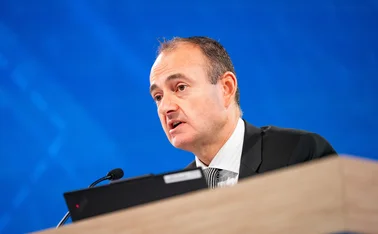
Struck’s comments were echoed at a public video conference on June 22 by Bafin’s president, Felix Hufeld, according to a report by the news agency Bloomberg. The agency paraphrases Hufeld as saying that “as a technology company, Wirecard wasn’t considered a financial institution directly supervised by Bafin”.
Daniel Davies, an executive at Frontline Analysts and the author of Lying for Money, a history of financial crime, says Bafin’s statement that it was not responsible for supervising Wirecard is “hard to understand”.
He continues: “As supervisors of the licensed bank Wirecard Bank, Bafin has to be responsible for the fitness and properness of its management and that must mean the whole group.”
Wirecard is the parent firm that manages subsidiaries including Wirecard Bank, which holds a German banking licence.
When asked by Central Banking which German federal agencies were responsible for supervising Wirecard if Bafin was not, Struck replied: “I am not aware of any separate entity that is in charge of supervision of Wirecard.”
Allegations of fraud
On June 22, Wirecard’s CEO, James Freis, said up to €1.9 billion ($2.1 billion) that the company had listed on its accounts could not be traced. Freis said the money may never have existed, raising the possibility of major fraud by people inside the company.
Markus Braun resigned as Wirecard’s chief executive on June 19 after 18 years in charge. Munich prosecutors announced today (June 23) that he has been arrested. The value of Wirecard’s shares fell by more than 80% in the three days to June 22.
Braun’s resignation followed 18 months of allegations of fraud by Wirecard from the Financial Times. The London-based newspaper reported in January 2019 that whistleblowers within the company had raised alarms about massive fraud and money laundering in Wirecard’s Singapore office.
Central Banking asked Struck when Bafin had last carried out an on-site inspection of Wirecard. Struck replied that Bafin did not supervise Wirecard: “It is therefore not possible for the Bafin to conduct on-site inspections at Wirecard.” Struck referred all questions about the investigation into allegations of fraud at Wirecard to the Munich public prosecutor’s office.
Despite saying it does not supervise Wirecard, Bafin has taken several actions with regard to the firm in recent years. In February 2019 Bafin imposed a two-month ban on all market participants starting or enlarging short-selling positions on Wirecard’s equities. Two months later, Bafin fined Wirecard €1.52 million for failing to file annual accounts on time.
Asked about these points by Central Banking, Struck said the two examples “are measures under the Securities Trading Act. They have nothing to do with banking supervision. Wirecard does not have a licence.”
Wirecard does not have a banking licence in Germany, although Wirecard Bank does. But German law appears to state that a company like Wirecard should be supervised by Bafin, even without a banking licence.
Bafin’s website implies the regulator would have responsibility for a firm with Wirecard’s involvement in financial services. The website says: “Under its solvency supervision, Bafin helps ensure the ability of banks, financial services institutions and insurance undertakings to meet their payment obligations. Through its market supervision, Bafin also enforces standards of professional conduct which preserve investors’ trust in the financial markets. As part of its investor protection, Bafin also seeks to prevent unauthorised financial business.”
According to the website of the Deutsche Bundesbank, Germany’s “payment services supervision act”, or Zahlungsdiensteaufsichtsgesetz, makes Bafin responsible for companies like Wirecard. The Bundesbank says that “an institution wishing to provide payment services as a payment institution in Germany, commercially or on a scale which requires a commercially organised business undertaking, needs written authorisation from the Federal Financial Supervisory Authority”. Wirecard’s main business is providing electronic and card-based payment services.
Criminal complaint
In April 2019, according to a Financial Times report, Bafin filed a formal complaint of possible criminal conduct against people it believed were engaging in a conspiracy to short Wirecard equities. The report said Bafin’s complaint named two journalists from the Financial Times and around 10 financial market participants.
The Bloomberg report says that at the June 22 conference, Bafin president Hufeld defended his agency’s decision to act against short-sellers in 2019. When asked by Central Banking whether the agency would withdraw its complaints of criminal conduct against the Financial Times journalists, Bafin’s Struck did not comment.
Finance minister backs Bafin
Bloomberg also reported that Germany’s finance minister, Olaf Scholz, told the same conference that the country’s supervisors had done a good job in regulating Wirecard. This claim has already been contested by the Financial Times, which played the lead role in alleging wrongdoing at the firm.
A string of allegations by the Financial Times throughout 2019 led to pressure from Wirecard shareholders on the firm’s management. Wirecard commissioned a forensic audit from KPMG. The management of Wirecard released statements in March and April saying KPMG had so far found no major anomalies in the firm’s books.
But on April 28, KPMG contradicted this in a statement saying that it had not been given independent confirmation that Wirecard had over €1 billion deposited in two large banks in the Philippines. On June 21, the Philippines’ central bank governor said the money had never entered the country and had been invented “in an attempt to cover the perpetrators’ track”.
Further reading
Only users who have a paid subscription or are part of a corporate subscription are able to print or copy content.
To access these options, along with all other subscription benefits, please contact info@centralbanking.com or view our subscription options here: www.centralbanking.com/subscriptions
You are currently unable to print this content. Please contact info@centralbanking.com to find out more.
You are currently unable to copy this content. Please contact info@centralbanking.com to find out more.
Copyright Infopro Digital Limited. All rights reserved.
As outlined in our terms and conditions, https://www.infopro-digital.com/terms-and-conditions/subscriptions/ (point 2.4), printing is limited to a single copy.
If you would like to purchase additional rights please email info@centralbanking.com
Copyright Infopro Digital Limited. All rights reserved.
You may share this content using our article tools. As outlined in our terms and conditions, https://www.infopro-digital.com/terms-and-conditions/subscriptions/ (clause 2.4), an Authorised User may only make one copy of the materials for their own personal use. You must also comply with the restrictions in clause 2.5.
If you would like to purchase additional rights please email info@centralbanking.com