

Changing funding patterns cut both ways for emerging markets, central bankers say
There are risks associated with greater reliance on capital markets

Patterns of financial intermediation in emerging markets are changing, bringing some benefits for monetary policy but also new risks, according to a set of papers published by the Bank for International Settlements (BIS).
The papers, including some from the BIS and many more from emerging market central banks, were published on November 16, though they were prepared for a meeting of central bankers in February.
Although most emerging markets remain heavily reliant on bank funding, the direction
Only users who have a paid subscription or are part of a corporate subscription are able to print or copy content.
To access these options, along with all other subscription benefits, please contact info@centralbanking.com or view our subscription options here: www.centralbanking.com/subscriptions
You are currently unable to print this content. Please contact info@centralbanking.com to find out more.
You are currently unable to copy this content. Please contact info@centralbanking.com to find out more.
Copyright Infopro Digital Limited. All rights reserved.
As outlined in our terms and conditions, https://www.infopro-digital.com/terms-and-conditions/subscriptions/ (point 2.4), printing is limited to a single copy.
If you would like to purchase additional rights please email info@centralbanking.com
Copyright Infopro Digital Limited. All rights reserved.
You may share this content using our article tools. As outlined in our terms and conditions, https://www.infopro-digital.com/terms-and-conditions/subscriptions/ (clause 2.4), an Authorised User may only make one copy of the materials for their own personal use. You must also comply with the restrictions in clause 2.5.
If you would like to purchase additional rights please email info@centralbanking.com
More on Financial Stability

Stablecoins could let US firms prioritise some creditors – study
FDIC may be on hook if a bank issues coins before failing, Cleveland Fed researchers say

FSB calls for ‘urgent action’ on public liquidity backstops
Many jurisdictions at risk of having to ‘improvise under pressure’, report says

As NBFI sector grows, so do its risks and benefits – Knot
Former FSB chair discusses implications of sector’s increasing dominance

Kansas City Fed warns of long-term AI financing risks
Highly leveraged entities may cause financial stress to spill over to broader economy

IMF flags gaps in Somalia’s financial reform efforts
Fund notes progress, but says central bank should go further to safeguard stability
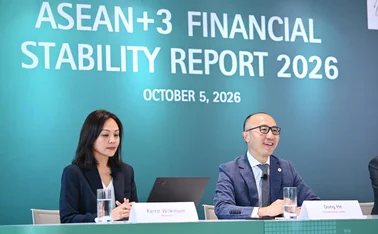
Divergence from global cycles gives Asia policy room – Amro
Change may allow Asean+3 central banks to focus on domestic rather than global conditions, report says

BIS’s Hernández de Cos on AI, non-bank risk and tokenisation
General manager talks about how the BIS is navigating a complex global environment

RBA says stability risks mainly come from abroad
Bank’s finstab report says financial system resilient but points to AI and geopolitical concerns